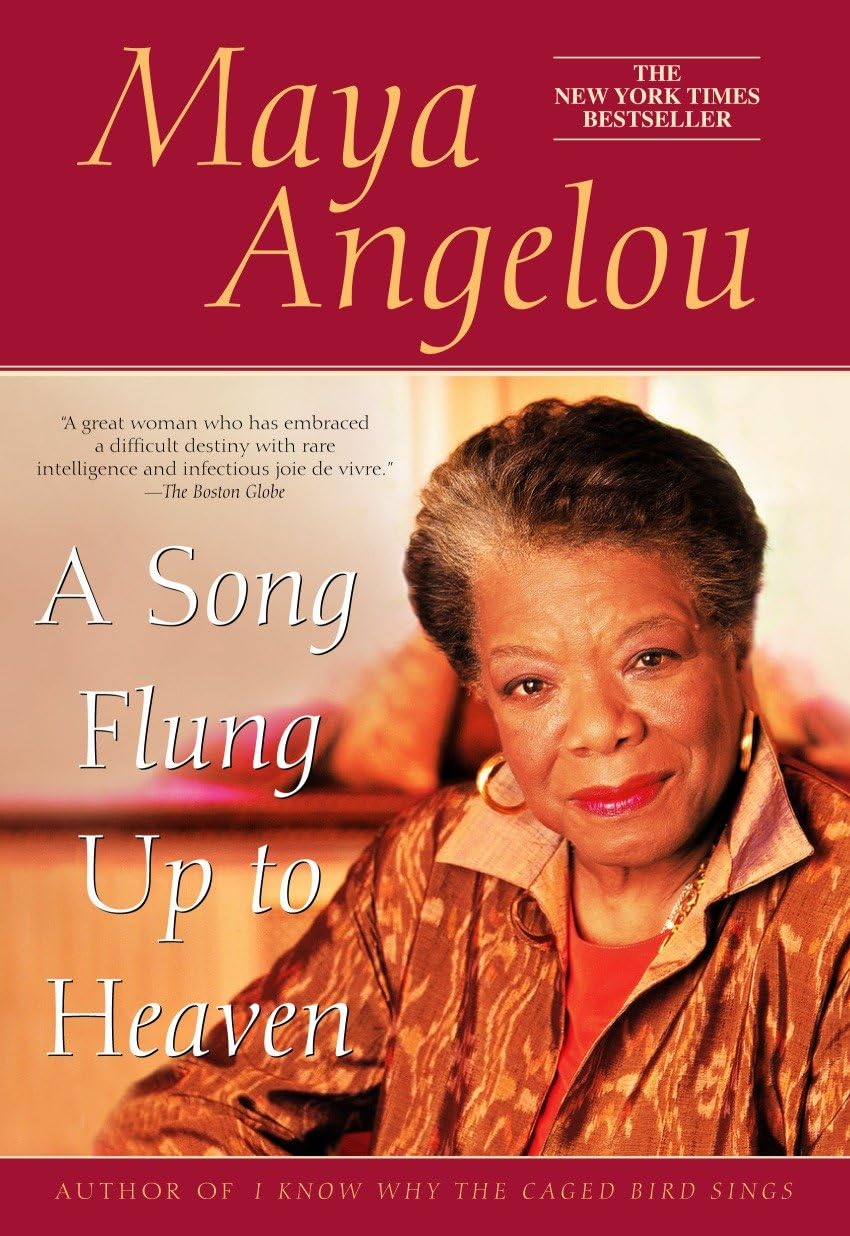



The culmination of a unique achievement in modern American literature: the six volumes of autobiography that began more than thirty years ago with the appearance of I Know Why the Caged Bird Sings . A Song Flung Up to Heaven opens as Maya Angelou returns from Africa to the United States to work with Malcolm X. But first she has to journey to California to be reunited with her mother and brother. No sooner does she arrive there than she learns that Malcolm X has been assassinated. Devastated, she tries to put her life back together, working on the stage in local theaters and even conducting a door-to-door survey in Watts. Then Watts explodes in violence, a riot she describes firsthand. Subsequently, on a trip to New York, she meets Martin Luther King, Jr., who asks her to become his coordinator in the North, and she visits black churches all over America to help support King’s Poor People’s March. But once again tragedy strikes. King is assassinated, and this time Angelou completely withdraws from the world, unable to deal with this horrible event. Finally, James Baldwin forces her out of isolation and insists that she accompany him to a dinner party—where the idea for writing I Know Why the Caged Bird Sings is born. In fact, A Song Flung Up to Heaven ends as Maya Angelou begins to write the first sentences of Caged Bird . Praise for I Know Why the Caged Bird Sings “I know that not since the days of my childhood, when people in books were more real than the people one saw every day, have I found myself so moved.” —James Baldwin Gather Together in My Name “Gather Together in My Name is part of a select body of literature that includes The Autobiography of Malcolm X, Claude Brown’s Manchild in the Promised Land and Ernest J. Gaines’ The Autobiography of Miss Jane Pittman. Maya Angelou regards the world and herself with intelligence and wit; she records the events of her life with style and grace.” —William McPherson, The Washington Post Book World All God’s Children Need Traveling Shoes “This is a superb account by a great woman who has embraced a difficult destiny with rare intelligence and infectious joie de vivre.” — The Boston Globe The culmination of a unique achievement in modern American literature: the six volumes of autobiography that began more than thirty years ago with the appearance of "I Know Why the Caged Bird Sings. "A Song Flung Up to Heaven opens as Maya Angelou returns from Africa to the United States to work with Malcolm X. But first she has to journey to California to be reunited with her mother and brother. No sooner does she arrive there than she learns that Malcolm X has been assassinated. Devastated, she tries to put her life back together, working on the stage in local theaters and even conducting a door-to-door survey in Watts. Then Watts explodes in violence, a riot she describes firsthand. Subsequently, on a trip to New York, she meets Martin Luther King, Jr., who asks her to become his coordinator in the North, and she visits black churches all over America to help support King's Poor People's March. But once again tragedy strikes. King is assassinated, and this time Angelou completely withdraws from the world, unable to deal with this horrible event. Finally, James Baldwin forces her out of isolation and insists that she accompany him to a dinner party--where the idea for writing "I Know Why the Caged Bird Sings is born. In fact, "A Song Flung Up to Heaven" ends as Maya Angelou begins to write the first sentences of "Caged Bird. Maya Angelou was raised in Stamps, Arkansas. In addition to her bestselling autobiographies, including I Know Why the Caged Bird Sings and The Heart of a Woman, she wrote numerous volumes of poetry, among them Phenomenal Woman, And Still I Rise, On the Pulse of Morning, and Mother . Maya Angelou died in 2014. One The old ark's a-movering a-movering a-movering the old ark's a-movering and I'm going home. Nineteenth-century American spiritual The old ark was a Pan Am jet and I was returning to the United States. The airplane had originated in Johannesburg and stopped in Accra, Ghana, to pick up passengers. I boarded, wearing traditional West African dress, and sensed myself immediately, and for the first time in years, out of place. A presentiment of unease enveloped me before I could find my seat at the rear of the plane. For the first few minutes I busied myself arranging bags, souvenirs, presents. When I finally settled into my narrow seat, I looked around and became at once aware of the source of my discomfort. I was among more white people than I had seen in four years. During that period I had not once thought of not seeing white people; there were European, Canadian and white American faculty at the university where I worked. Roger and Jean Genoud, who were Swiss United Nations personnel, had become my close friends and in fact helped me to raise--or better, corral--my teenage son. So my upset did not come from seein