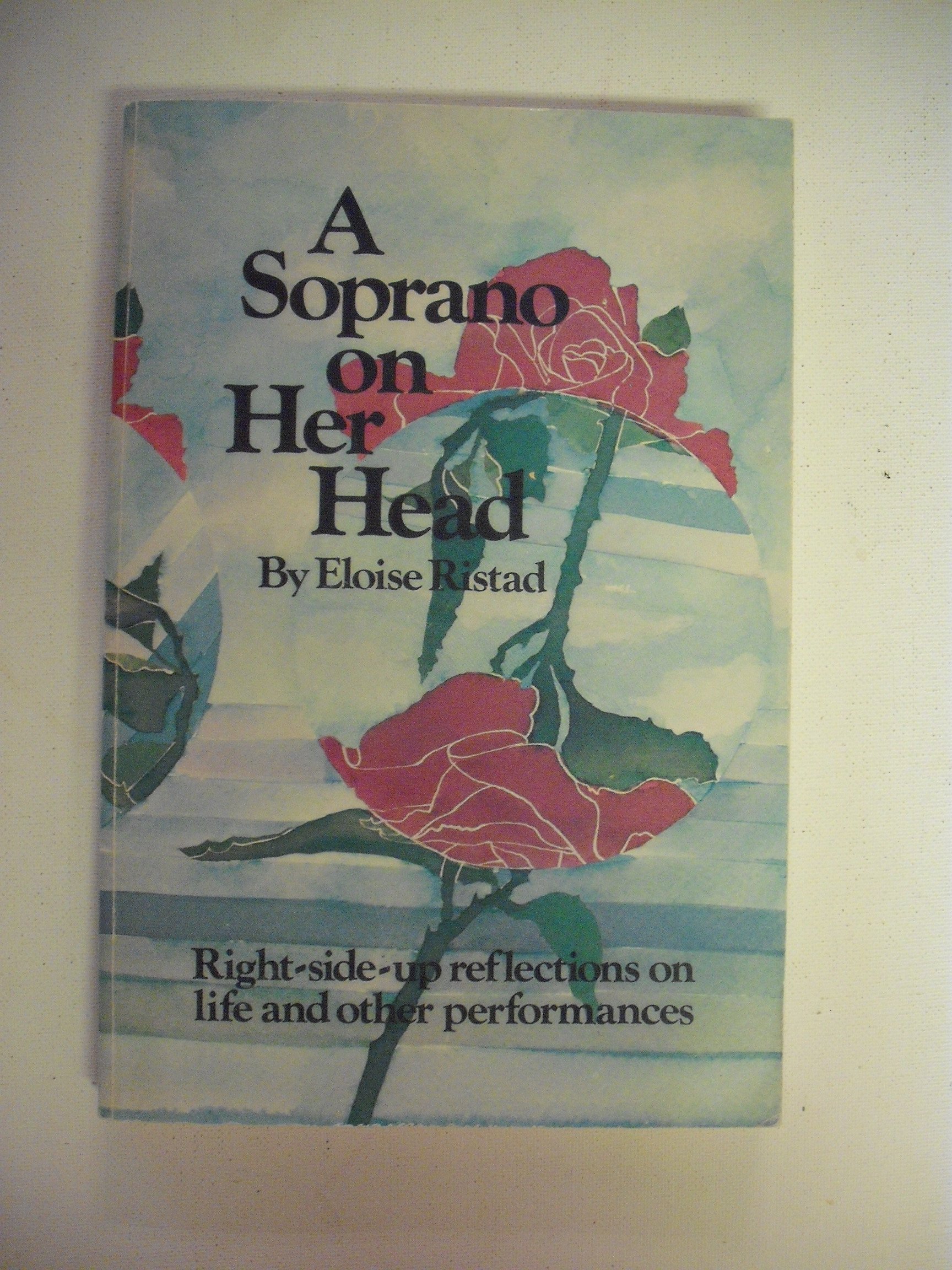
A Soprano on Her Head: Right-Side-Up Reflections on Life and Other Performances
$31.92
by Eloise Ristad



(Foreword, by Lorin Hollander, concert pianist) Eloise Ristad deals here with complex problems which torment and cripple so many of our most creative and talented people, and she does so with compassion, wisdom, and wit. The problem of stage fright, for instance, is a suffering of epidemic proportions in our society, and involves modalities of thought and projections that rob spontaneity and enthusiasm in artistic performance. Those interested in creative education have long felt that an entirely new, holistic and nurturing process of allowing individuals to discover and express themselves is needed if our educational system is to avoid the neuroses and creative blocks of the past generation. This book illuminates through its conversational style the destructive inhibitions, fears, and guilt experienced by all of us as we fail to break through to creativity. This story is told to me day after day in conservatories and college campuses around the world. Indeed I felt at times that she was telling of my own most petty and debilitating fears. But what is important, A Soprano on Her Head supplies answers and methods for overcoming these universal psychological blocks--methods that have not only been proven in her own studio, but which trace back through history to the oldest and wisest systems of understanding the integration of mind and body. The work bears scrutiny both scientifically and holistically. This is a wonderful book. Read it. You are not alone. "A wonderful book--absolutely infectious. When I wasn't laughing aloud or dancing, I found myself nodding enthusiastically in agreement with every page. -- Mary Jane Cope, Lecturer in Piano, U.C. Santa Cruz "As a professional dancer and singer, it is indeed encouraging to see these important concepts so clearly and passionately articulated. -- Paul Oertel, Nancy Spanier Dance Theatre "Aside from enjoying and savoring each chapter, I'm awed and excited by the many ideas in this book." -- Angeline Schmid, Piano and Pedagogy professor at Mansfield State College, Pennsylvania "Eloise Ristad's alternative teaching methods have given me deep insights into some of my long-standing playing 'problems' that traditional methods have failed to touch." -- Patricia Zurlo, Bassoonist "In A Soprano On Her Head, Eloise Ristad displays an extraordinary knowledge and insight into the myriad problems that beset all performers. -- Endre Balogh, Concert Violinist "Reading this book, rereading it, trying it out, living with it--these are musts for every musician." -- The American Music Teacher "Required reading for all my students at the New England Conservatory of Music." -- Charles Schlueter, First Trumpet, Boston Symphony "There are many ingenious and useful ideas here for teachers, learners, or makers of music." -- John Holt, author of How Children Fail, How Children Learn, and other books about learning and education "This is a fascinating work. -- Samuel Sanders, Concert Pianist, professor, Juilliard School of Music -- Samuel Sanders, Concert Pianist, professor, Juilliard School of Music The nontraditional workshops that I lead for musicians usually start with body movement warm-ups that are designed to encourage spontaneity. The effect is both exhilarating and exhausting. After one such warm-up all eight of us in that particular group stretched out on the floor, sensing our bodies, our breath, and then our voices, until we found the most comfortable tones we could produce. As we let the tones change and followed the changes with body movement, Liz, our soprano, ended up on her knees with her head upside down on the floor. Effortlessly, and without thinking how--for who could have told her how to sing on her head--she found all the resonance she had been struggling for, with the added bonus of incredible dynamic control. The rest of us had goose bumps and shivers as we listened to her voice fade in and out. Someone went to the piano and started the Mozart aria that Liz had been singing earlier, just to see if standing on her head would work as well for Mozart as it had with random tones. It did, and our goose bumps got bumpier. "I love it, I love it! It feels wonderful!" said Liz as she sat up and let the blood run back where it belonged. . . . I put my hands on her lower back and asked her simply to be aware of how my hands felt. I asked her to follow the vibrations of her voice around the room, to sense the space between the front of her chest and the back of her spine, to dance the music with her arms as she sang. Each experiment opened up the sound still more by taking her mind off the conscientiousness that ordinarily got in her way. "Liz, if you could sing the way you want, how would you sing? Can you act out what you want, even though the sound might not be right?" She hesitated for an instant, wondering if she would get the sound her new voice instructor in California wanted. But Liz knew what she was after, and something suddenly cl