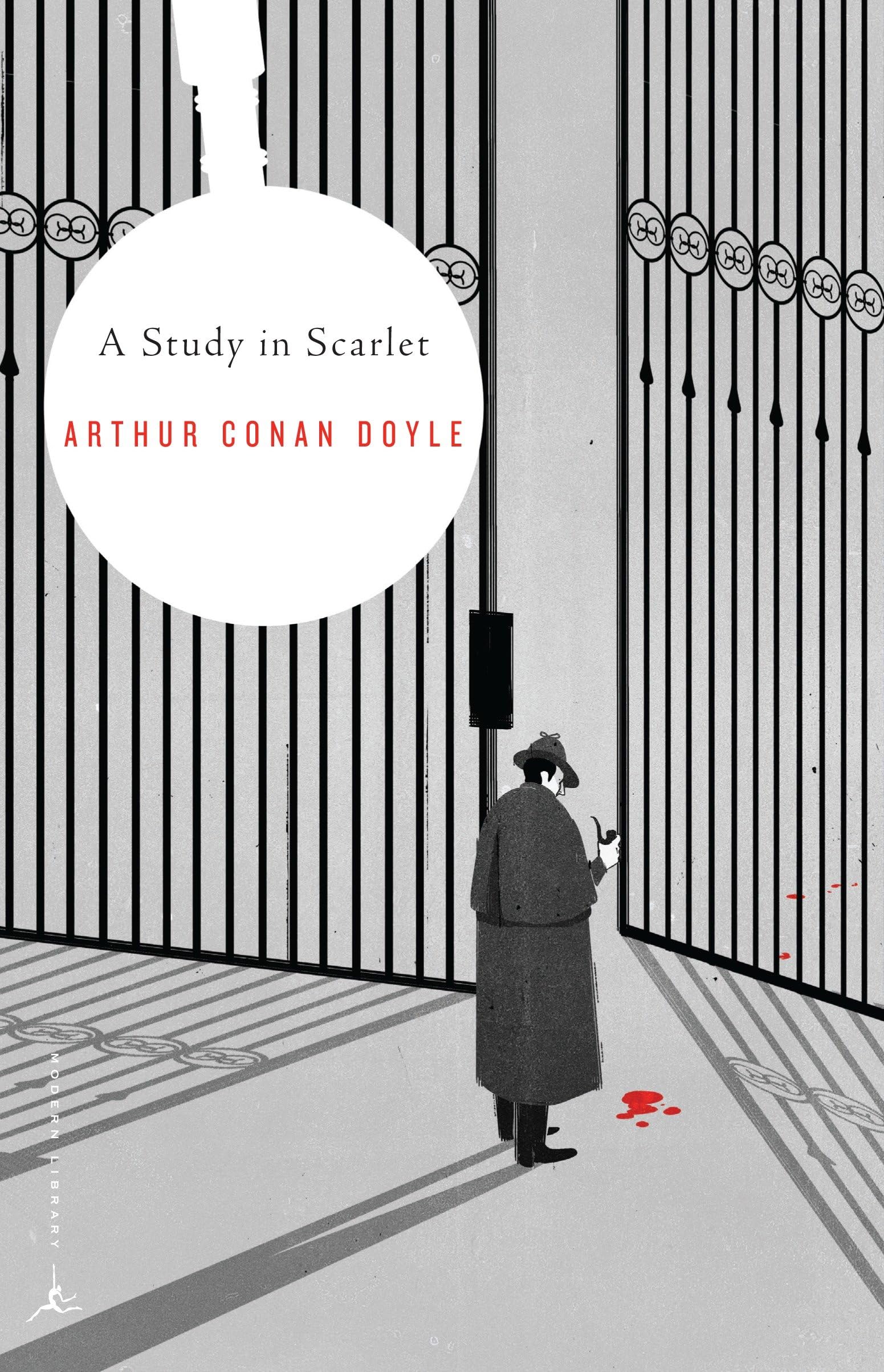



Introduction by Anne Perry Includes newly commissioned endnotes In 1887, a young Arthur Conan Doyle published A Study in Scarlet, creating an international icon in the quick-witted sleuth Sherlock Holmes. In this very first Holmes mystery, the detective introduces himself to Dr. John H. Watson with the puzzling line “You have been in Afghanistan, I perceive,” and so begins Watson’s, and the world’s, fascination with this enigmatic character. In A Study in Scarlet, Doyle presents two equally perplexing mysteries for Holmes to solve: one a murder that takes place in the shadowy outskirts of London, in a locked room where the haunting word Rache is written upon the wall, the other a kidnapping set in the American West. Picking up the “scarlet thread of murder running through the colourless skein of life,” Holmes demonstrates his uncanny knack for finding the truth, tapping into powers of deduction that still captivate readers today. “[Holmes] is probably the only literary creation since the creations of Dickens which has really passed into the life and language of the people.”—G. K. Chesterton In 1887, a young Arthur Conan Doyle published "A Study in Scarlet, thus creating an international icon in the quick-witted sleuth Sherlock Holmes. In this, the first Holmes mystery, the detective introduces himself to Dr. John H. Watson with the puzzling line "You have been in Afghanistan, I perceive." And so begins Watson's, and the world's, fascination with this enigmatic character. Doyle presents two equally perplexing mysteries for Holmes to solve: one a murder that takes place in the shadowy outskirts of London, in a locked room where the haunting word "Rache is written upon the wall, the other a kidnapping set in the American West. Quickly picking up the "scarlet thread of murder running through the colourless skein of life," Holmes does not fail at finding the truth--and making literary history. Anne Perry is the Edgar Award–winning author of more than thirty novels. Her most recent books include A Sunless Sea and A Christmas Garland . She lives in Scotland. CHAPTER I Mr. Sherlock Holmes In the year 1878 I took my degree of Doctor of Medicine of the University of London, and proceeded to Netley to go through the course prescribed for surgeons in the army. Having completed my studies there, I was duly attached to the Fifth Northumberland Fusiliers as Assistant Surgeon. The regiment was stationed in India at the time, and before I could join it, the second Afghan war had broken out. On landing at Bombay, I learned that my corps had advanced through the passes, and was already deep in the enemy’s country. I followed, however, with many other officers who were in the same situation as myself, and succeeded in reaching Candahar in safety, where I found my regiment, and at once entered upon my new duties. The campaign brought honours and promotion to many, but for me it had nothing but misfortune and disaster. I was removed from my brigade and attached to the Berkshires,with whom I served at the fatal battle of Maiwand. There I was struck on the shoulder by a Jezail bullet, which shattered the bone and grazed the subclavian artery. I should have fallen into the hands of the murderous Ghazis had it not been for the devotion and courage shown by Murray, my orderly, who threw me across a pack-horse, and succeeded in bringing me safely to the British lines. Worn with pain, and weak from the prolonged hardships which I had undergone, I was removed, with a great train of wounded sufferers, to the base hospital at Peshawur. Here I rallied, and had already improved so far as to be able to walk about the wards, and even to bask a little upon the verandah, when I was struck down by enteric fever, that curse of our Indian possessions. For months my life was despaired of, and when at last I came to myself and became convalescent, I was so weak and emaciated that a medical board determined that not a day should be lost in sending me back to England. I was despatched, accordingly, in the troopship Orontes, and landed a month later on Portsmouth jetty, with my health irretrievably ruined, but with permission from a paternal government to spend the next nine months in attempting to improve it. I had neither kith nor kin in England, and was therefore as free as air—or as free as an income of eleven shillings and sixpence a day will permit a man to be. Under such circumstances I naturally gravitated to London, that great cesspool into which all the loungers and idlers of the Empire are irresistibly drained. There I stayed for some time at a private hotel in the Strand, leading a comfortless, meaningless existence, and spending such money as I had, considerably more freely than I ought. So alarming did the state of my finances become, that I soon realized that I must either leave the metropolis and rusticate somewhere in the country, or that I must make a complete alteration in my style of living. Choosing the l