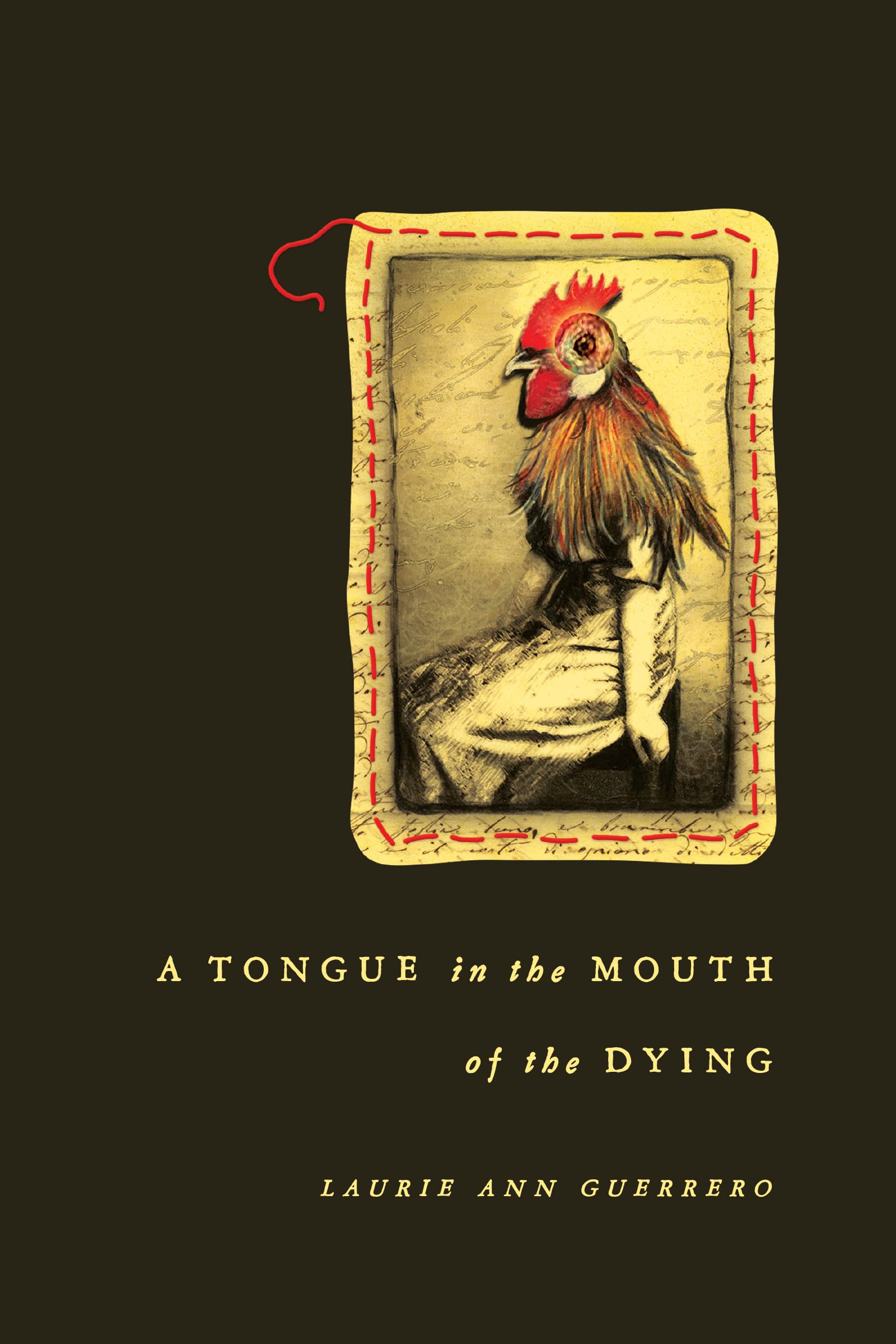
A Tongue in the Mouth of the Dying (Andrés Montoya Poetry Prize)
$13.62
by Laurie Ann Guerrero



Filled with the nuanced beauty and complexity of the everyday―a pot of beans, a goat carcass, embroidered linens, a grandfather’s cancer― A Tongue in the Mouth of the Dying journeys through the inherited fear of creation and destruction. The histories of South Texas and its people unfold in Laurie Ann Guerrero’s stirring language, including the dehumanization of men and its consequences on women and children. Guerrero’s tongue becomes a palpable border, occupying those liminal spaces that both unite and divide, inviting readers to consider that which is known and unknown: the body. Guerrero explores not just the right, but the ability to speak and fight for oneself, one's children, one's community―in poems that testify how, too often, we fail to see the power reflected in the mirror. The Spanish word for “tongue,” lengua, can be used literally to mean language. Between these complementary senses of the word, Guerrero’s poems locate the life-giving power of verbal expression in the mouths of disenfranchised speakers. Winner of the Andrés Montoya Prize, awarded to first books by Latino and Latina poets, Guerrero finds multifarious forms, images, and metaphors for tongue, be it the literal beef dish, or, figuratively, the cold sweat of a child’s fevered sleep. Elegant multiplicity of meanings unfold, as when a dead calf and the many fathers of a mother’s children complicate notions of husbandry. Centered as it is around hard-working women, Guerrero’s collection resists definition by class and color, even sex. For when she writes of womanhood, the variables of motherhood and marital status force us to see her speakers in their most vulnerable light. Yet these verses of germination and carrying, of labor and production, deliver us to a place of potent ferocity, expressed in multilingual cries, embodied by the wide, red lips of earthenware vessels, and through eyes that refuse to back down. --Diego Báez "Guerrero’s poems weave in and out of light and shadow, good and evil, the sublime and the sorrowful, creating a tapestry that is wholly Texas. . . . A Tongue in the Mouth of the Dying evokes the mysteries of a people―Mexicans and Texas Mexicans alike―who have the power to astonish with their fortitude, or disillusion with their inexperience; the beauty of Guerrero’s collection is its ability to do both so fluidly." ― Texas Books in Review " A Tongue in the Mouth of the Dying is populated by these daughters, women who defy and trouble long-held assumptions about, and expectations of, motherhood and maternal behavior: here, mothers take lovers, make war, cause damage―'make carnage of [their] own mouth[s].' And they also write daring poems that break with polite and romanticized representations of femininity, situating the woman as the source of her own volition, a daunting force to be reckoned with." ― Los Angeles Review of Books "Guerrero’s poems locate the life-giving power of verbal expression in the mouths of disenfranchised speakers. . . these verses of germination and carrying, of labor and production, deliver us to a place of potent ferocity . . ." ―Booklist Online "In poems crafted with tremendous skill, Laurie Ann Guerrero’s A Tongue in the Mouth of the Dying explores, so often, the ways in which the colonized or poor or brown have been brutalized, and their stories written by the conquerors. But the wonderful discovery one makes while reading what’s often painful and heartbreaking is that Guerrero’s the one telling us. In other words, the re-writing is begun . This is a powerful, necessary book." ―Ross Gay, author of Bringing the Shovel Down "Guerrero writes in a language of the body, visceral, almost unbearably vivid, the language of a poet who knows how to work with her hands. In an age when so many poems say nothing, these poems miss nothing . . . attention must be paid to such a poet now and for years to come." ―Martín Espada, author of The Trouble Ball "Guerrero has always written pointedly with a sharp pen and a sharp knife always at the ready. In her first full-length collection, these dazzling, edgy, irascible poems lean into their sweet natural bristling air, stitching and stretching image to image. This is the singing blue glory of language at its best." ―Nikky Finney, author of Head Off & Split , winner of The National Book Award "Guerrero’s poems weave in and out of light and shadow, good and evil, the sublime and the sorrowful, creating a tapestry that is wholly Texas. . . . A Tongue in the Mouth of the Dying evokes the mysteries of a people―Mexicans and Texas Mexicans alike―who have the power to astonish with their fortitude, or disillusion with their inexperience; the beauty of Guerrero’s collection is its ability to do both so fluidly. ―Texas Books in Review A native of South Texas, Laurie Ann Guerrero is the author of Babies under the Skin , which won the 2008 Panhandler Publishing Chapbook Award. Her poetry and criticism have appeared in a number of journals. Sh