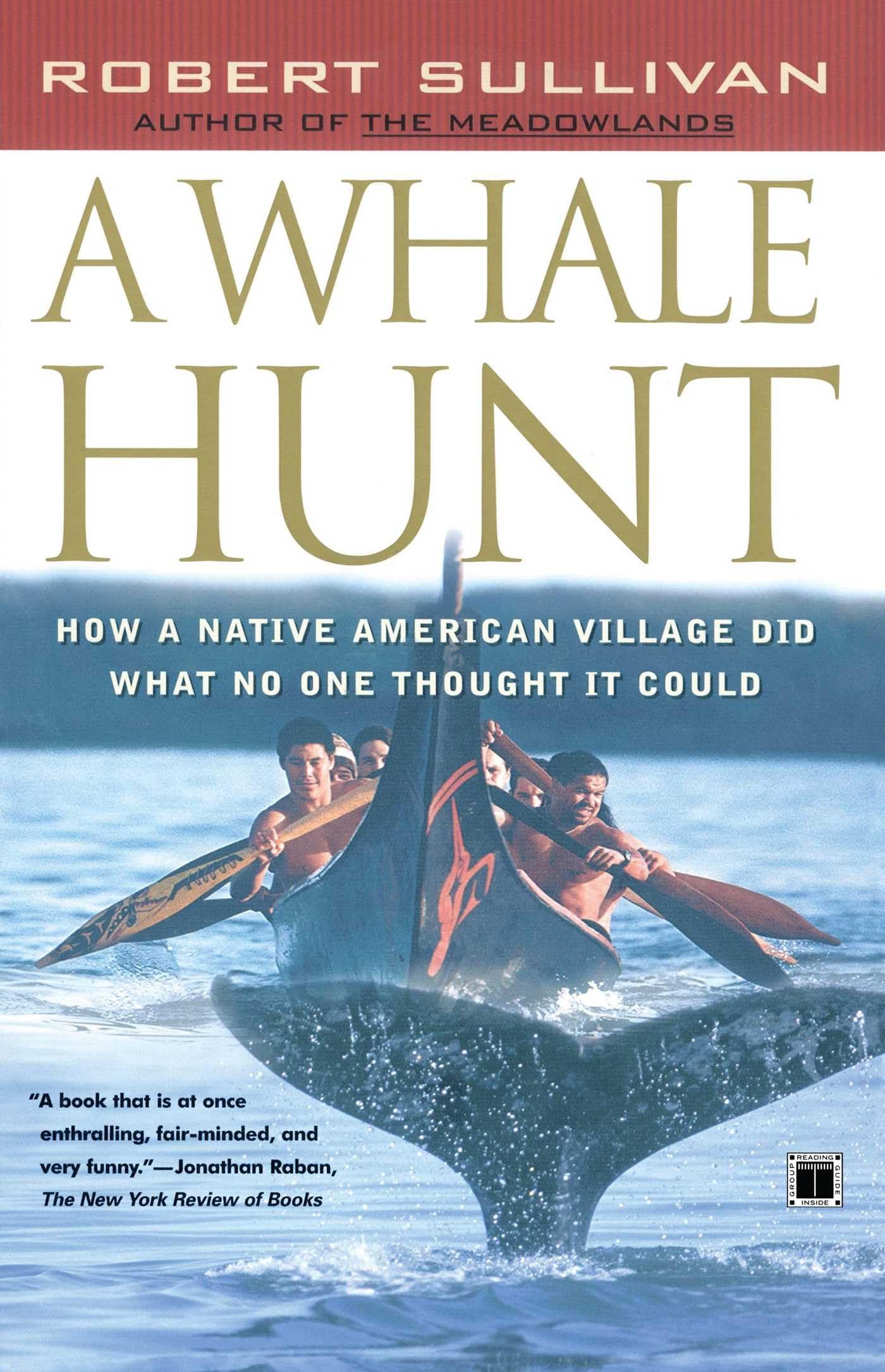
A Whale Hunt: How a Native-American Village Did What No One Thought It Could
$11.92
by Robert Sullivan



The critically acclaimed New York Times Notable Book about a Native American tribe's quest to regain the lost art of whale hunting, from the author of The Meadowlands . For centuries the hunting of the whale was what defined the Makah, a Native American tribe in Neah Bay, but when commercial whaling drove the gray whale to near extinction in the 1920s, the Makah voluntarily discontinued their tradition and hung up their harpoons. In 1994, after the gray whale was taken off the endangered species list, the Makah decided to hunt again. The problem was that all the old whalers were dead—no one knew how to go about hunting a whale. A Whale Hunt chronicles the two years Robert Sullivan spends with the Makah as they prepare for and stage the first hunt. Combating tribal infighting and inexperience, they must also face passionate, furious animal rights activists and swarming reporters. Before the ragtag group of hunters even pursues a whale, there are clashes, disappointments, and defeats, small triumphs and unexpected heroes. A book of many layers and revelations, A Whale Hunt is the story of the demise and attempted resurrection of a Native American nation and of the individuals on the reservation whose lives are forever changed. Jonathan Raban The New York Review of Books A book that is at once enthralling, fair-minded, and very funny. Nathaniel Philbrick The New York Times Book Review Marvelous...Sullivan has a very Ishmael-like talent for being both funny and generous, and at times A Whale Hunt reads like Cool Runnings meets Northern Exposure. Larry McMurtry A good book about the difficulties of keeping a cultural and tribal tradition alive in the present day. Mr. Sullivan's account is sensitive, moving, and sad. Robert Sullivan is the author of The Meadowlands, a New York Times Notable Book of the Year. He is also the author of Rats , A Whale Hunt , and The Thoreau You Don't Know. A contributing editor at Vogue, his work has appeared in The New Yorker, The New Republic, The New York Times Magazine, Rolling Stone, and The New York Times Book Review. He lives in Brooklyn, New York. Chapter 2: The Car Ride I remember exactly where I was when I read that the Makah were going whaling, when I felt suddenly compelled to go to my map and point to Cape Flattery, when I felt the place calling me. I was at home in the kitchen and it was one and a half years before the Makah actually threw a harpoon at a whale. I'd just heard on the radio that they wanted to try, and I was amazed, of course, that anybody would want to even attempt to hunt a whale, what with a whale's size and its connotations, and I was amazed that whale hunting was part of the tradition of this place I'd never even heard of before, even if that tradition had died or was disused. But in the beginning, it was the cape itself that most amazed me, just the idea of the place. I'd been living in the great Pacific Northwest for several years, and Cape Flattery was always one of those spots that cried out to me from my atlas as I studied it in the evenings, prowling America's far corner and all its farthest-away places for the nourishment of my about-to-go-to-bed soul: it is a place where the road north and west ends emphatically, a peninsula that reaches out to the sea, to the vast aquamarine-colored area that is -- in the color codes of my map, anyway -- not described, as if infinite and immeasurable. It's where the tip of America meets the North Pacific, where the water seems charged and about-to-be roiled, like the water off the bow of a ship. My work being what it is, I generally go to places as a reporter, as a filer of facts for hire, so after Cape Flattery called me, I made a few calls myself, and, in time, found a magazine editor who hired me to type up a quick and simple report on the tribe's plans, a few paragraphs that would pay for my way there. I set aside a few days to check things out. Then, just before dawn on a drizzly fall morning, I stuffed the trunk of my car with raincoats and boots, filled a thermos with coffee, grabbed my brand-new copy of Moby-Dick, which I had never read and which seemed like a good book to take along, and I set off to see how the Makah would go about hunting a whale.a If I had known then that as a result of that day's drive I would be compelled to repeat that six- and sometimes seven-hour drive so many times over the course of the next two years that I can now describe every chain-saw sculpture along the road in my sleep; if I had known that I would be living for weeks on the edge of the woods in a cold, damp shack or often in an old tent that was so leaky that I finally had to break down and buy a new one, which was better but still leaked sometimes; if I had known that I would eventually be compelled to temporarily abandon my family and drive for days along the length of the West Coast of North America in hopes of touching a whale in a tropical lagoon in Mexico; if I had