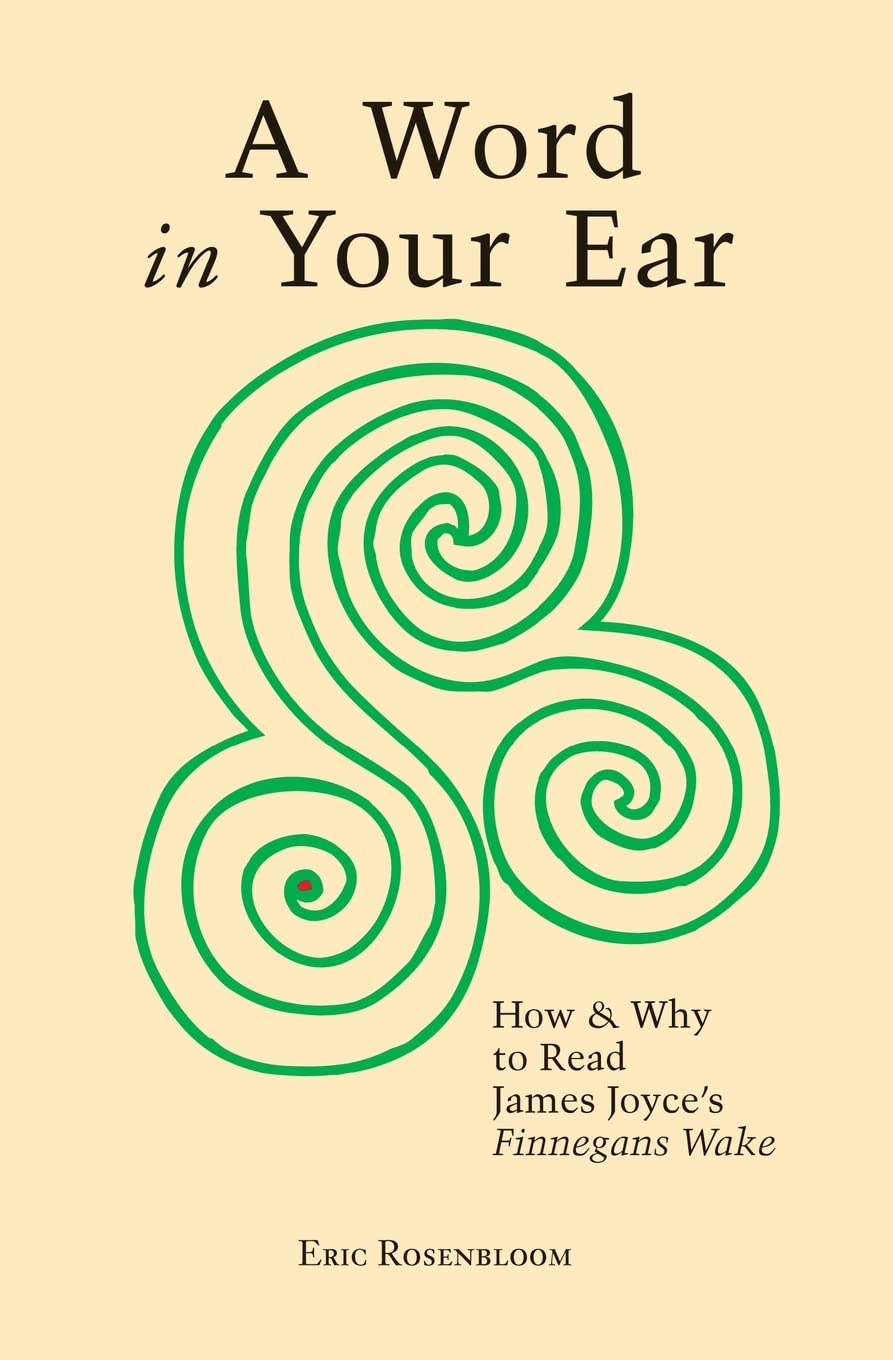
A Word In Your Ear: How & Why To Read James Joyce's Finnegans Wake
$12.94
by Eric Rosenbloom



'A sine qua non for Joyceans' (Clarence Sterling). 'Certainly the best intro to the Wake I've seen' (Andrew H. Blom). This lively and readable essay provides essential background information and helpful reading techniques. A smart and readable guide to the master s neglected nightmaze. -- Brendan de Caires A stunning performance and of exemplary clarity. -- The Compulsive Reader He writes quite carefully and lovingly and joyfully about the Finnegans Wake experience. It s a great read. -- Messes of Mottage "A sine qua non for Joyceans" (Clarence Sterling). "Certainly the best intro to the Wake Ive seen" (Andrew H. Blom). Whether youre new to Finnegans Wake or a long familiar friend, this lively and readable essay will guide, refresh, and delight. The author provides essential background information and helpful reading techniques while conveying the pleasures of delving into Joyces dense text. Whether you are new to Joyce s most difficult work or a long familiar friend, this humane essay will guide, refresh, and delight. It has been described as "smart and readable," "an excellent Wake Primer," "everything such an introduction should be," "the best intro to the Wake I ve seen," "a stunning performance and of exemplary clarity," "intelligent, courteous and serene." Part I introduces the unique language techniques that Joyce used to create Finnegans Wake and describes some of the major themes and characters. The influence and presence of Giordano Bruno, Giambattista Vico, and Egyptian mythology are described, and the importance of Dublin and Irish geography and history is emphasized with a concise overview of each. Part II examines several short excerpts in depth and provides general introductions to several others. The selections give the reader a broad sample of essential passages from throughout the book and different examples of how to read and interpret them. Included as appendices are a whimsically short version of Finnegans Wake, thoughts about the narrator, structural insights from the order in which Joyce wrote the book, and an essay on the presence of Irish saint and goddess Brighid as elucidated by the late Clarence Sterling. Finnegans Wake (1922 1939) by James Joyce (1882 1941), elaborates the fragmentation and reunification of identity during sleep. The masculine (as Joyce characterized it) mind of the day has been overtaken by the feminine night mind. The result is a book that reaches deep into the unconscious soul, beyond language and so before language, but forced to use language to tell it. The characters live in the transformation and flux of a dream, embodying the sleeper s mind. The human mind, and the history it creates in its image, is protean and complex but not a chaos or void. And so in Finnegans Wake certain things stand out again and again as one reads and rereads. What follows is an introduction to some of those patterns and recurring points of order albeit as seen in my own ever evolving understanding. Knowing some of this as you begin reading yourself will I hope make the book a little less forbidding. I will not be prescriptive, nor am I trying to prove a thesis. This introduction will avoid obsessive detail and arcana and analysis. The aim is to provide broadly applicable information along with some of the insights of my experience from which the reader will certainly venture according to his or her own insights, interests, and character. Used Book in Good Condition