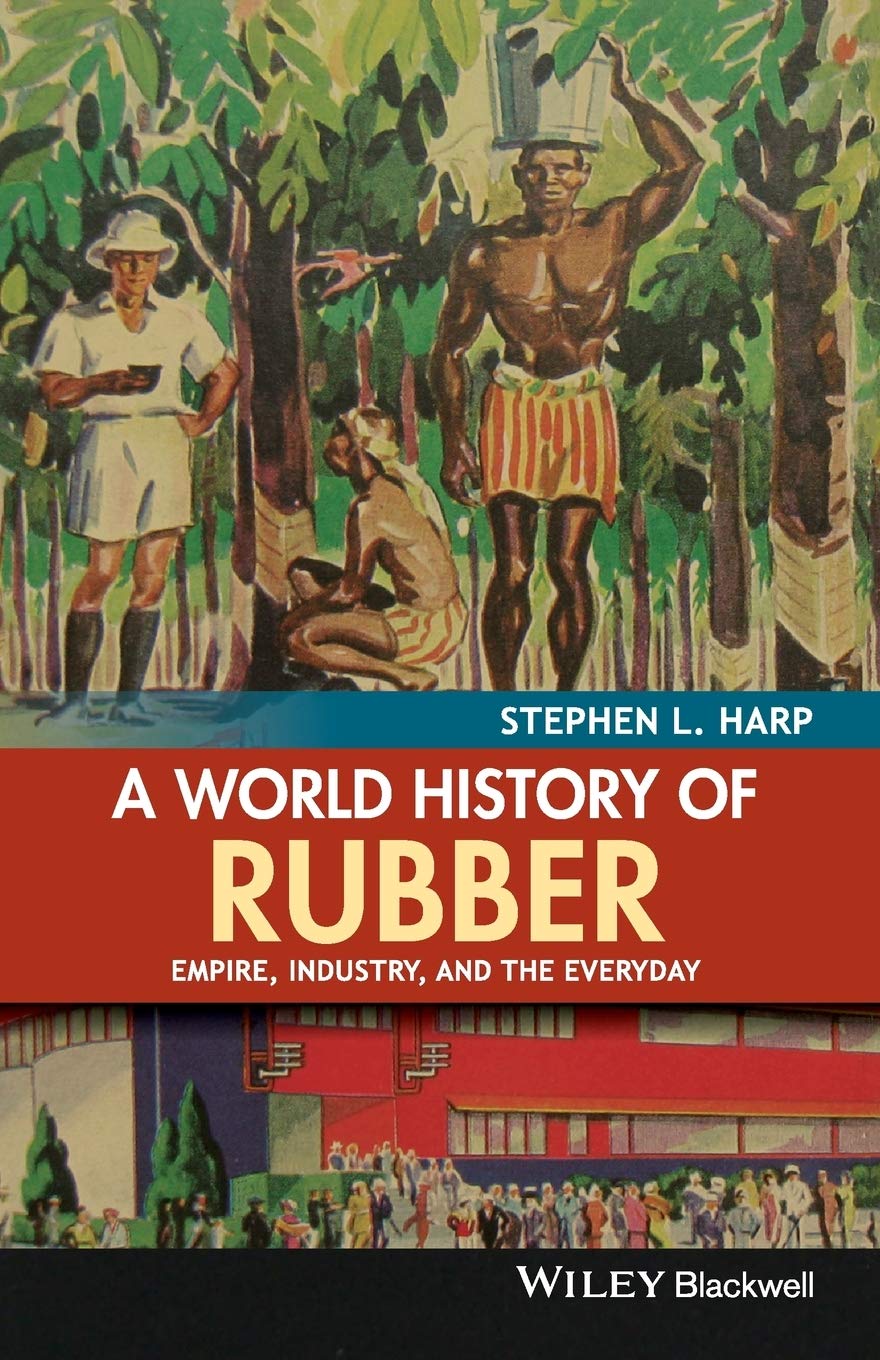



A World History of Rubber helps readers understand and gain new insights into the social and cultural contexts of global production and consumption, from the nineteenth century to today, through the fascinating story of one commodity. Divides the coverage into themes of race, migration, and labor; gender on plantations and in factories; demand and everyday consumption; World Wars and nationalism; and resistance and independence - Highlights the interrelatedness of our world long before the age of globalization and the global social inequalities that persist today - Discusses key concepts of the nineteenth and twentieth centuries, including imperialism, industrialization, racism, and inequality, through the lens of rubber - Provides an engaging and accessible narrative for all levels that is filled with archival research, illustrations, and maps A World History of Rubber helps readers understand and form new insights into the social and cultural contexts of global production and consumption from the nineteenth century to the present. Stephen Harp uses rubber as a lens through which readers can view many key themes and events of the nineteenth and twentieth centuries, including imperialism, industrialization, racism, and inequality. The book illuminates the complex journey of rubber from plantations in far-flung European colonies, to factories in Midwest America, to products in American homes and abroad. It is divided into five thematic sections: race, migration, and labor; gender on plantations and in factories; demand and everyday consumption; World Wars and nationalism; and resistance and independence. The story highlights the interrelatedness of our world long before the current era of globalization, as well as the global social inequalities that persist today. With an engaging and accessible narrative that will resonate with students of all levels as well as general readers, this account of a single commodity skillfully ties together the history of many people, places, and ideas the whole world over. A World History of Rubber helps readers understand and form new insights into the social and cultural contexts of global production and consumption from the nineteenth century to the present. Stephen Harp uses rubber as a lens through which readers can view many key themes and events of the nineteenth and twentieth centuries, including imperialism, industrialization, racism, and inequality. The book illuminates the complex journey of rubber from plantations in far-flung European colonies, to factories in Midwest America, to products in American homes and abroad. It is divided into five thematic sections: race, migration, and labor; gender on plantations and in factories; demand and everyday consumption; World Wars and nationalism; and resistance and independence. The story highlights the interrelatedness of our world long before the current era of globalization, as well as the global social inequalities that persist today. With an engaging and accessible narrative that will resonate with students of all levels as well as general readers, this account of a single commodity skillfully ties together the history of many people, places, and ideas the whole world over. Stephen L. Harp is Professor of History, Professor of French, and Director of Humanities at the University of Akron, USA. He is a social and cultural historian focused on transnational European and world history. He is the author of Au Naturel: Naturism, Nudism, and European Tourism in Twentieth-Century France (2014), Marketing Michelin: Advertising and Cultural Identity in Twentieth-Century France (2001), and Learning to Be Loyal: Primary Schooling as Nation Building in Alsace and Lorraine, 1850-1940 (1998). He resides in Akron, Ohio, the former global “rubber capital.”