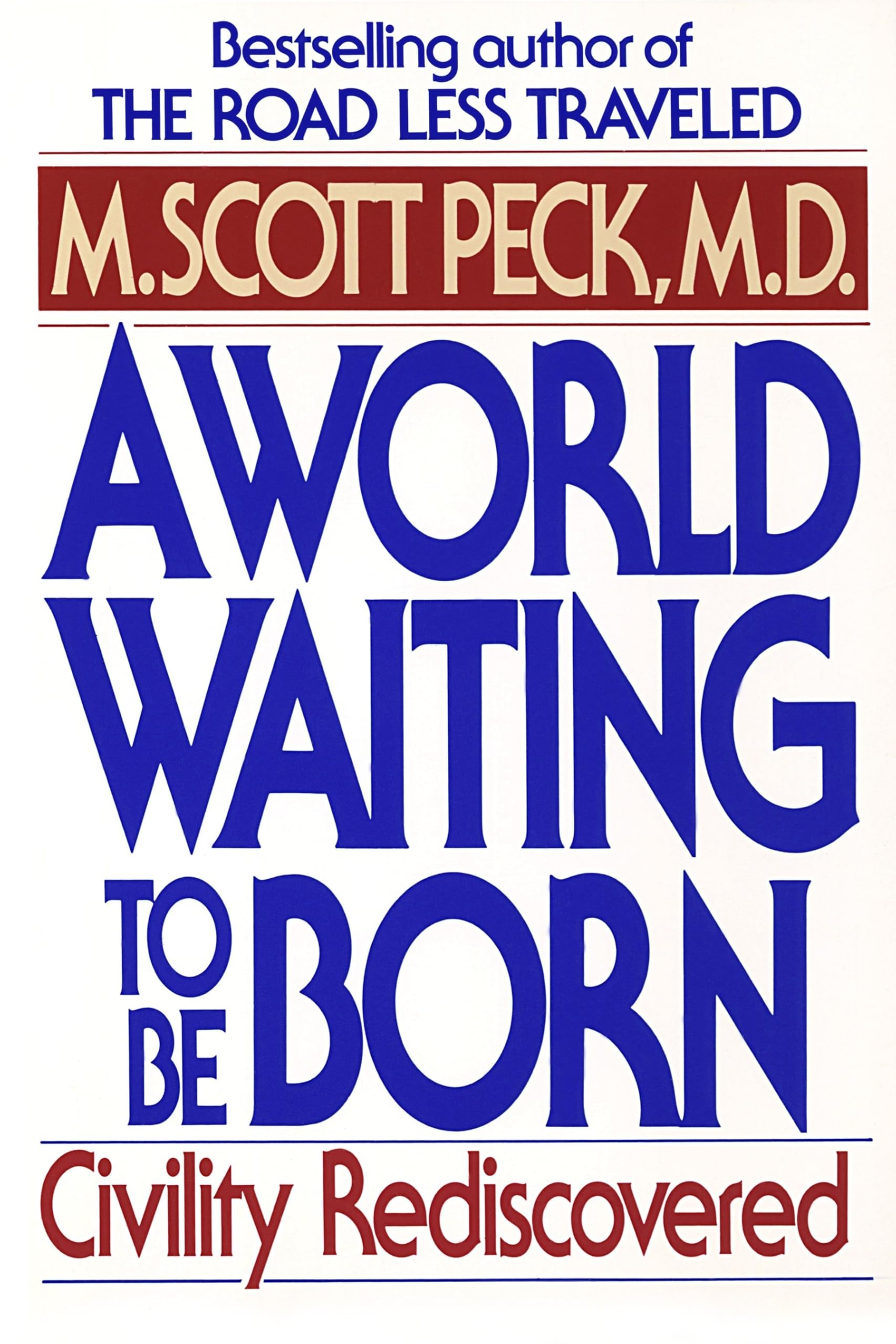



Just as The Road Less Traveled provided hope and guidance for individuals seeking growth, this major new work by M. Scott Peck, M.D., offers a needed prescription for our deeply ailing society. Our illness is Incivility --morally destructive patterns of self-absorption, callousness, manipulativeness, and materialism so ingrained in our routine behavior that we do not even recognize them. There is a deepening awareness that something is seriously wrong with our personal and organizational lives. Using examples from his own life, case histories, and dramatic scenarios of businesses that made a conscious decision to bring civility to their organizations , Dr. Peck demonstrates how change can be effected and how we and our organizations can be restored to health. This wise, practical, and radical book is a blueprint for achieving personal and societal well-being. "A peck of hardheaded, kindhearted advice; the author's best since [ The Road Less Traveled .]-- Kirkus Reviews "An extremely important book...Dr. Peck gives us powerful new reasons for hope and confidence in our personal ability to change ourselves and the world."--Vice President Al Gore, author of Earth In The Balance: Ecology And The Human Spirit Just as The Road Less Traveled provided hope and guidance for individuals seeking growth, this major new work by M. Scott Peck, M.D., offers a needed prescription for our deeply ailing society. Our illness is Incivility --morally destructive patterns of self-absorption, callousness, manipulativeness, and materialism so ingrained in our routine behavior that we do not even recognize them. There is a deepening awareness that something is seriously wrong with our personal and organizational lives. Using examples from his own life, case histories, and dramatic scenarios of businesses that made a conscious decision to bring civility to their organizations , Dr. Peck demonstrates how change can be effected and how we and our organizations can be restored to health. This wise, practical, and radical book is a blueprint for achieving personal and societal well-being. Just as "The Road Less Traveled provided hope and guidance for individuals seeking growth, this major new work by M. Scott Peck, M.D., offers a needed prescription for our deeply ailing society. Our illness is "Incivility--morally destructive patterns of self-absorption, callousness, manipulativeness, and materialism so ingrained in our routine behavior that we do not even recognize them. There is a deepening awareness that something is seriously wrong with our personal and organizational lives. Using examples from his own life, case histories, and dramatic scenarios of businesses that made a conscious decision to bring civility to their organizations, Dr. Peck demonstrates how change can be effected and how we and our organizations can be restored to health. This wise, practical, and radical book is a blueprint for achieving personal and societal well-being. M. Scott Peck, M.D. , is the author of several New York Times bestsellers, including The Road Less Traveled , which has spent more than ten years on the Times list. He and his wife, Lily, live in northern Connecticut and have been the recipients of several awards for peacemaking. CHAPTER 1 Something Is Seriously Wrong Toward a Redefinition of Civility There is an illness abroad in the land. On Monday, January 29, 1990, the USA Today newspaper carried a full-page advertisement. Tiny print in the left lower corner identified the advertiser as Dun & Bradstreet (D&B), a large financial analysis firm specializing in “The Fine Art of Managing Risk.” Otherwise, the entire page was devoted to four brief sentences in bold type: I’M 30,000 FEET OVER NEBRASKA AND THE GUY NEXT TO ME SOUNDS LIKE A PROSPECT. I FIGURE I’LL BUY HIM A DRINK, BUT FIRST I EXCUSE MYSELF AND GO TO THE PHONE. I CALL D&B FOR HIS COMPANY’S CREDIT RATING. THREE MINUTES LATER I’M BACK IN MY SEAT BUYING A BEER FOR MY NEW BEST FRIEND. Something is seriously wrong. A year earlier, I received a hint as to what is wrong—the nature of the illness involved—when I had the opportunity to meet for four days with the Commissioners of Education of the United States. These “Chief State School Officers” had gathered together to consider a profound and controversial issue: the teaching of values in public schools. During the first day, we listened to scholars present papers on the history of public education in the United States. I was surprised to learn that in the early days of the nation there had been great and heated debate over whether there even should be public education supported by taxation. The debate was resolved on the grounds that in order to sustain a democratic society, public education was required for the widespread teaching of “civics.” By civics, our leaders two hundred years ago meant something far broader than a simple i