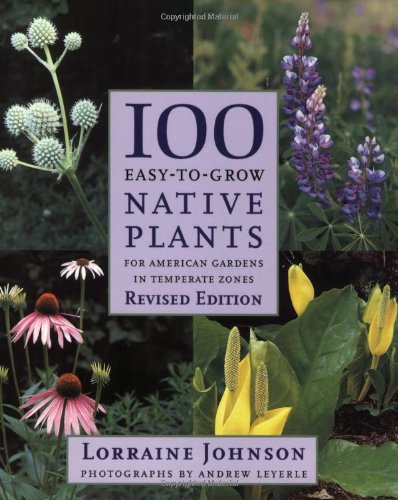
100 Easy-To-Grow Native Plants: For American Gardens in Temperate Zones
$11.11
by Lorraine Johnson



As we see exotic plants becoming "invasive exotics," gardeners are seeking native plants for their gardens. Plants that withstand regional conditions and weather patterns deliver a hardier garden and require less maintenance. A pioneering book when first published in 1999, this revised edition is a classic reference that meets the requirements of a changing, tougher landscape. Lorraine Johnson provides a fail-safe guide to beautiful low-maintenance plants native to many regions of the United States. The features include: Handy profiles of each native plant - Maintenance requirements - Creative suggestions for plant pairings - Propagation and cultivation tips - Index of plants by botanical name - Ethical guidelines for gardeners - Updated list of sources. Especially useful are the quick-reference charts that show plants grouped by region, habitat and conditions, for example plants that tolerate dry soil in shade and plants that attract butterflies. A color photograph of each plant makes it easy to compare options and choose the right plant. In this revised edition, Johnson has updated the directory of nurseries that carry the popular plants, making it easier for gardeners to find their selections. ( Native Garden Clubs ) I've slogged through enough horticultural dogs to know that good gardeners are not always entertaining writers. So it's a delight to find great information as well as breezy prose and humor in Lorraine Johnson's 100 Easy-to-Grow Native Plants. Pithy, single-page plant descriptions are accompanied by beautiful pictures that don't fool a gardener into thinking a plant will be 10 times bigger or more glamourous-looking that it is. (Mary Jane Smetanka Minneapolis-St. Paul Star Tribune 2009-07-28) This is a pleasure to read. It's a simple-format reference text intended to be a quick guide, either in the field as a planning tool or for a quick flip-through at the garden store. Johnson has a breezy style that is a pleasant contrast to the usual stuffy garden guide. As we read through the entries, we can tell that she loves plants, not just for their beauty and interest, but for how they incite our curiosity, get us out of our own heads for a while and bring the complexities of nature under our nose.... Large, glossy pages show off the full-color photos of the plants to their best advantage. ( Milwaukee Journal-Sentinel 2009-07-12) [This] is a very nice quick-reference for choosing and cultivating native plants. I highly recommend it as a guide for gardeners looking for tried-and-true perennials that will reduce the amount of maintenance your garden needs. (Tom Torrance Washington Gardener, Vol. 5 No. 3 ) [Review for previous edition:] Replete with useful ideas and information. ( Booklist 1999-05-01) [Review for previous edition:] Easy. Easy. Easy. If that's your gardening mantra, this books for you ... Gardeners who have problem sites will love the excellent charts at the back of the book. ( Garden Ideas and Outdoor Living 2000-03-01) [Review for previous edition:] With her characteristic wit and down-to-earth perspective, Lorraine Johnson has written a failsafe guide to 100 beautiful and low maintenance native plants in the northern regions of the United States. ( Green Bay Press-Gazette 2000-09-02) [Review for previous edition:] Johnson is one of Canada's foremost writers on the sometimes complicated subject [of native plants]. (Robert Howard Hamilton Spectator 2003-10-31) [Review of previous edition:] Beautiful color photos, shows height, blooming period, exposure and moisture requirements, and habitats and ranges. ( Library Journal 1999-06-15) [Review of previous edition:] This book is an excellent resource ... but what really makes the book useful is the charts in the back that show groups of plants suited for various grown conditions. The plant photos are reprinted on these pages, so you can compare all of the options to each other on the same page. (Nancy Wingate Wilmington News Journal 1999-10-28) Lorraine Johnson is the author of several gardening books, including Grow Wild and Tending the Earth . She also lectures widely and teaches at York University, Canada. Andrew Leyerle's photographs have appeared in many books and magazines. Foreword to the New Edition In the years since the first edition of this book was published, interest in native plants has grown exponentially. When I give talks and slide shows, it seems that almost everyone in the audience has at least some native plants in their gardens. Cruising the aisles at nurseries, I notice that many now have sections devoted to native plants. And every year, the number of non-profit organizations that include native plant education as part of their mandate increases. I think that the roots of this interest can be found in the yearning many of us feel for a better, more environmentally sane world. We might feel relatively powerless in the face of global environmental problems, but in the purview of our ga