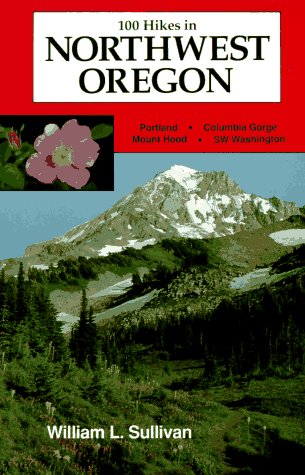



Where else but in Northwest Oregon could hikers have so many great options within a two-hour drive? This guide covers more than just the well-known trails of the Portland area, Columbia Gorge, and Mt. Hood. You'll discover a path to a free Willamette River ferry, a historic cabin overlooking Mt. Jefferson, and a natural rock arch near Hood River. Forty-one of the trips are open even in winter. And because some of the area's best trails are just north of the Columbia, there's comprehensive coverage of Mt. St. Helens National Volcanic Monument and the Indian Heaven Wilderness, too. The book features a variety of difficulty levels. Hikers with children will find 46 hikes carefully chosen for them. On the other hand, a quarter of the hikes included are unabashedly strenuous. Nearly half of the trails are rated as suitable for backpackers as well as day hikers. At the back of the book you'll find a list of 21 all-accessible trails suitable for strollers and wheelchairs. And if you really want to get away from it all, there's an appendix describing 100 MORE hikes in Northwest Oregon -- little-known but interesting trails for adventurous spirits. William L. Sullivan is the author of six books and numerous articles about Oregon, including a regular outdoor column for Eugene Weekly. A fifth-generation Oregonian, Sullivan began hiking at the age of five and has been exploring new trails ever since. After receiving an English degree from Cornell University and studying at Germany's Heidelberg University, he earned an M.A. from the University of Oregon. In 1985 Sullivan set out to investigate Oregon's wilderness on a 1,361-mile solo backpacking trek from the state's westernmost shore at Cape Blanco to Oregon's easternmost point in Hells Canyon. His journal of that two-month adventure, published as "Listening for Coyote," was a finalist for the Oregon Book Award in creative nonfiction . Since then he has authored a popular series of "100 Hikes" guidebooks to the regions of Oregon. Other titles in the series are "100 Hikes in the Central Oregon Cascades," covering the Three Sisters, Mt. Jefferson, Bend, and Eugene areas; "100 Hikes in Southern Oregon," including Crater Lake National Park, the Rogue River, the Siskiyous, the Trinity Alps, and Mt. Shasta; and "100 Hikes/Travel Guide: Oregon Coast & Coast Range," describing not only the hiking trails of the scenic Pacific shore, but also the area's campgrounds, beaches, lighthouses, aquariums, canoeing/kayaking options, bicycle paths, and birdwatching sites. He and his wife Janell live in Eugene, but spend summers in a log cabin they built by hand on a roadless stretch of Oregon's Siletz River. Hike #23, Mt. St. Helens Crater Moderate (to Loowit Falls) 8.8 miles round-trip 800 feet elevation gain Open late June through October Map: Mt. St. Helens NW (Green Trails) Difficult (to Plains of Abraham) 11.7-mile loop 1400 feet elevation gain Now that Mt. St. Helens has quieted, the National Monument has opened a trail to the ragged mouth of the new crater, where steaming, 200-foot Loowit Falls tumbles through a badlands chasm. Pioneer wildflowers struggle from the ash at oasis-like springs. Log-jammed Spirit Lake stretches to the north. Because this route crosses a restricted zone under scientific study, hikers must stay within 10 feet of the trail and camping is banned. If you'd like to return on a slightly longer loop, however, you can hike beyond the restricted zone to the breathtakingly desolate Plains of Abraham and a view-packed ridge ablaze with wildflowers. No trails access the lava dome inside the volcano's crater because of rockfall and eruption danger. You'll need a Monument Pass to park at the trailhead. These permits cost $8 per adult for 3 days or $24 for a year, and can be bought at the Pine Creek Information Center or at businesses in Cougar. Drive Interstate 5 to Woodland exit 21 (north of Portland 25 miles), turn right, and follow signs for Mt. St. Helens for a total of 88 paved miles. Along the way, you'll follow Highway 503 through the town of Cougar, continue straight on what becomes Road 90 to the Pine Creek Information Station, go straight on Road 25 for 25 miles, and turn left on Road 99 for 16 miles to its end. Park at the Windy Ridge Viewpoint and walk up the gated gravel road ahead. Since the 1980 blast, only scattered trees have taken root on this ridge, but wildflowers have flourished. Look for tall red fireweed, pearly everlasting, purple daisy-shaped asters, and clumps of big purple penstemons. National Monument rules forbid disturbing plants or rocks, so don't take samples of the pumice littering the road. After 1.8 miles the Abraham Trail joins on the left -- return route of the optional loop. Continue to road's end and take the Windy Trail, which follows big cairns across a barren pumice plain and climbs a mile to the round-the-mountain Loowit Trail. Turn right across a creek gully, contour 1.3 miles to the crater's mouth, and take a 0.2