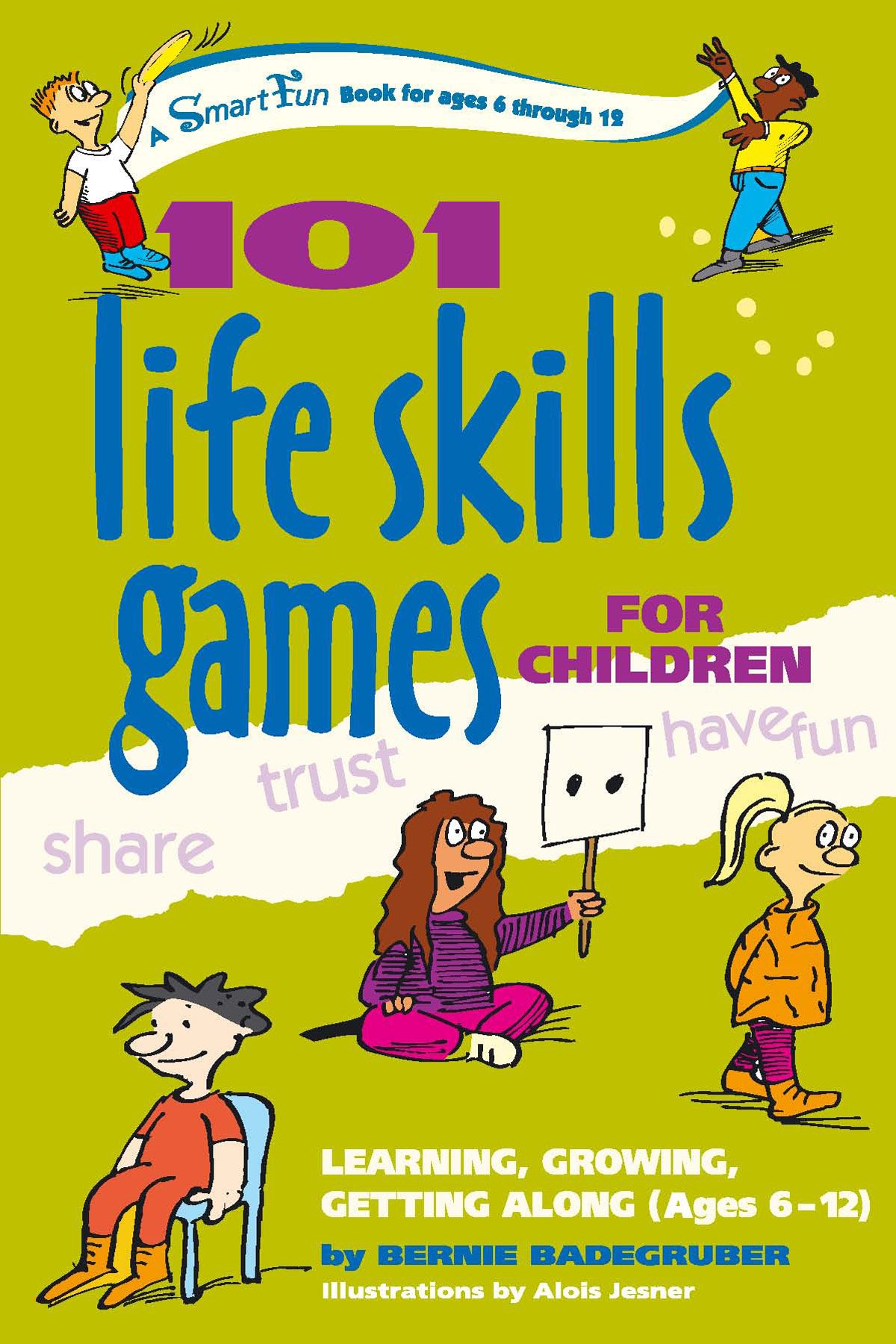
101 Life Skills Games for Children: Learning, Growing, Getting Along (Ages 6-12)
$10.70
by Bernie Badegruber



How do you teach tolerance, self-awareness, and responsibility? How can you help children deal with fear, mistrust, or aggression? Play a game with them! Games are an ideal way to help children develop social and emotional skills; they are exciting, relaxing, and fun. 101 LIFE SKILLS GAMES FOR CHILDREN: LEARNING, GROWING, GETTING ALONG (Ages 6-12) is a resource that can help children understand and deal with problems that arise in daily interactions with other children and adults. These games help children develop social and emotional skills and enhance self-awareness. The games address the following issues: dependence, aggression, fear, resentment, disability, accusations, boasting, honesty, flexibility, patience, secrets, conscience, inhibitions, stereotypes, noise, lying, performance, closeness, weaknesses, self confidence, fun, reassurance, love, respect, integrating a new classmate, group conflict. Organized in three main chapters: (I-Games, You-Games and We-Games), the book is well structured and easily accessible. It specifies an objective for every game, gives step-by-step instructions, and offers questions for reflection. It provides possible variations for each game, examples, tips, and ideas for role plays. Each game contains references to appropriate follow-up games and is illustrated with charming drawings. 101 Life Skills Games FOR Children Learning, Growing, Getting Along (Ages 6 to 12) By Bernie Badegruber Hunter House Inc., Publishers Copyright © 2005 VERITAS-VERLAG Linz All right reserved. ISBN: 978-0-89793-441-1 Contents Preface................................................xiIntroductionThoughts on Playing with Children......................1Play Therapy and Game Pedagogy.........................3How to Use This Book...................................4A Brief Word on Brevity................................5Key to the Icons Used in the Games.....................5I GamesWhat I Like............................................10What I Can Do..........................................18What I Observe.........................................21You GamesGetting to Know You....................................40Understanding You......................................49Working with You.......................................55We GamesWarming-up Games for the Group.........................66Cooperation Games......................................72Integrating New Classmates.............................83Helping Games..........................................93Aggression Games.......................................120Adding More ImaginationStatue and Sculpting Games.............................146Fairytale Games........................................159Pantomime Play.........................................167Keyword Index..........................................173 Chapter One I Games What I Like Games 1-5 What I Can Do Games 6-7 What I Observe Games 8-19 1 I Like This Picture Props: Assorted pictures from magazines (enough for all players); a small table; chairs for all players (optional); soft background music (optional) Goals Developing a self-image Improving the ability to introduce oneself How to Play: Chairs are arranged in a circle, with a small table in the center. On the table are many postcard-sized pictures of things like houses, a butterfly, a princess, a table with place settings, the sun, and so forth. Everyone takes a turn choosing a picture and, after introducing herself, explains why she likes it. A player may choose a picture that has already been chosen by another player. Examples "My name is Lisa. I chose the picture of the sun because I like to lie in the sun." "My name is Thomas, and I also chose the picture of the sun because it reminds me of our vacation in Italy." Variation: At the beginning, everybody walks around the pictures, which have been scattered on the floor, while soft music is playing in the background. Note: It is not very difficult or embarrassing for children to say what they like when they're simply describing a picture-it's much easier than talking about oneself. With groups in which children know each other's names, the name introduction can be omitted. If there is a new child in the group, however, this game can be played as an introduction game. Reflections Does anyone in the group like similar things? Was it difficult for anyone to choose a picture? Follow-up Games 1-19: I Games * 20-26: Getting to Know You * 41-44: Warming-up Games for the Group * 52-56: Integrating New Classmates 2 The Run-to Game Goals Remembering names Making contacts Warming up to a group How to Play: After the players take turns introducing themselves, the leader asks one player to make a statement that describes another person (the statement should be neutral or positive, not hurtful). The others try to guess who the statement is about, and when they think they've figured it out they run to that