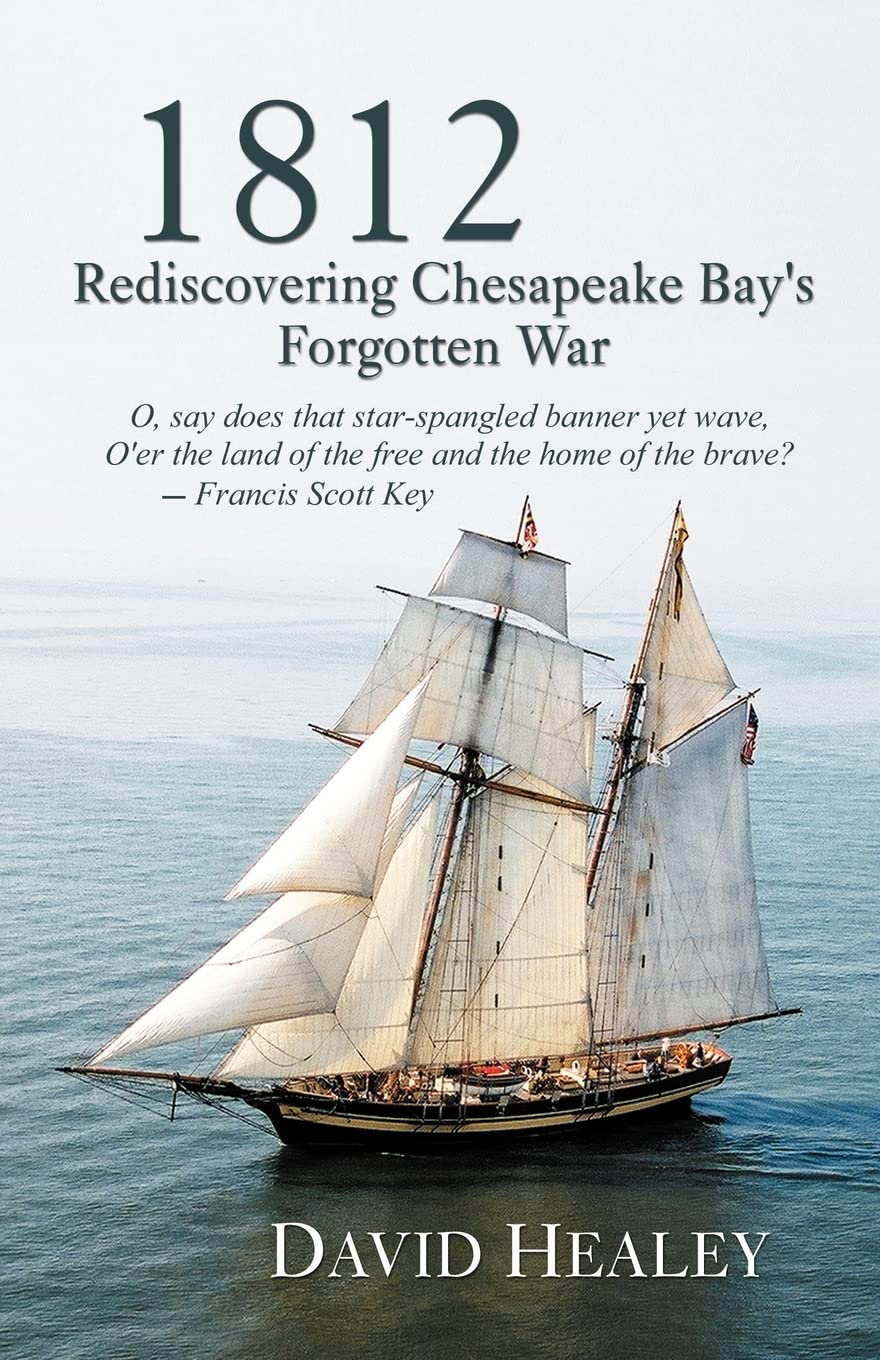



REDISCOVER THE FORGOTTEN WAR From the creation of "The Star Spangled Banner" to Uncle Sam, the War of 1812 left a lasting legacy. The true story of that war is largely forgotten today. This book sets out to explore America's Second War of Independence in the Chesapeake Bay region from today's perspective. Along the way you will meet War of 1812 re-enactors, salty sailors aboard the Pride of Baltimore II, archaeologists and backyard historians, and even a man who makes his living portraying President James Madison. Visit Fort McHenry, tour Baltimore's Star Spangled Banner Flag House and dig for artifacts on remote battlefields. In a journey that's part history, part travelogue-with a little current events mixed in-rediscover the lively past of the War of 1812 as it comes to life once again. NOR'EASTER MAGAZINESeptember 16, 2005 Upper Bay author pens book about 'Forgotten War' By Ed Okonowicz It's been called America's forgotten war, a conflict sandwiched between the Revolution and the Civil War, which both seem to get much more attention. But if a Cecil County, MD author has his way, many more people will learn a lot more information about the War of 1812, and, in particular, its significance and role throughout the Chesapeake Bay. David Healey is the features editor the The Cecil Whig newspaper. David spends a lot of time writing. It's his full time job and one he's very good at. In his spare time, David devotes attention to his family and his other love - writing. He squeezes his book writing in on weekends, early mornings, days off and whenever he can find the time. In 1999, Jove Books released David's Civil War novel, "Sharpshooter." In 2003, his novel "Rebel Fever" hit the bookshelves. His third book, "1812: Rediscovering Chesapeake Bay's Forgotten War," was published earlier this year and, in December, Harbor House will publish his novel "Rebel Train." David's third book is the focus of our attention in this column, and it stands apart from his three novels. He said he got the idea while working in his home garden, not far from the Chesapeake & Delaware Canal. Passing a heavy round ball across his desk for me to examine, he said, "I was digging a tomato patch in our garden and found this musket ball." Surprised at its presence along the canal, David began asking neighbors how it might have gotten there. A common answer received was, "Maybe it was from the War of 1812." Although he later discovered that the relic was from the Civil War era, David became fascinated with the War of 1812, and he started to research the period. That's when he learned how little had been written on the subject. "It's amazing," he said, "how much has been written about the Civil War. There are entire bookstores that sell only Civil War books. But if you were to place a collection of all the War of 1812 books together, it would fill half a bookshelf. The number of books written on the topic is very small." Commenting on why this might be the case, David suggested that the length of the war, misunderstandings about why it occurred and the overpowering influence of the two major American wars that surround the 1812 conflict are only a few of the reasons. "People see it as a small part of our history," the author said. "Even the places where the battles took place don't get as much attention. At Civil War sites, there are parks and monuments. You don't see a lot of commemoration of the War of 1812. It seems to go unnoticed." Taking a newspaperman's approach, David set out to see what he could find, particularly in the Chesapeake Bay region, about the forgotten conflict. As he explains in his introduction, "Except for a five-hour drive to Montpelier in Virginia and a weekend trip to southern Maryland, my forays into history were usually limited to how far I could get on a Saturday or Sunday, often with two young children in the back of the car and a patient wife navigating with a map of Maryland spread across the dashboard. When it comes to the War of 1812 on the Chesapeake Bay, that's about as far as I have to go." The result is an 18-chapter work that introduces the reader to historians, battlefield experts, archaeologists, re-enactors and everyday folks who were fascinated and fanatical about this war. Writing his three novels, David said, could be done whenever time for creative expression was found. Using his imagination and knowledge of the Civil War period he developed the characters and plots for his novels in solitude. For 1812, he had to arrange his schedule for personal interviews and on-site research. "The hardest part," he stressed, "was getting all this done. I wanted to actually go to the locations, and I had to make the time to do that. It (writing a book) took me a long time." A number of Americans know about Francis Scott Key and the writing of the Star Spangled Banner poem during the War of 1812. But many people don't realize that British soldiers burned towns along the Chesapeake Bay during hit-and-run raid