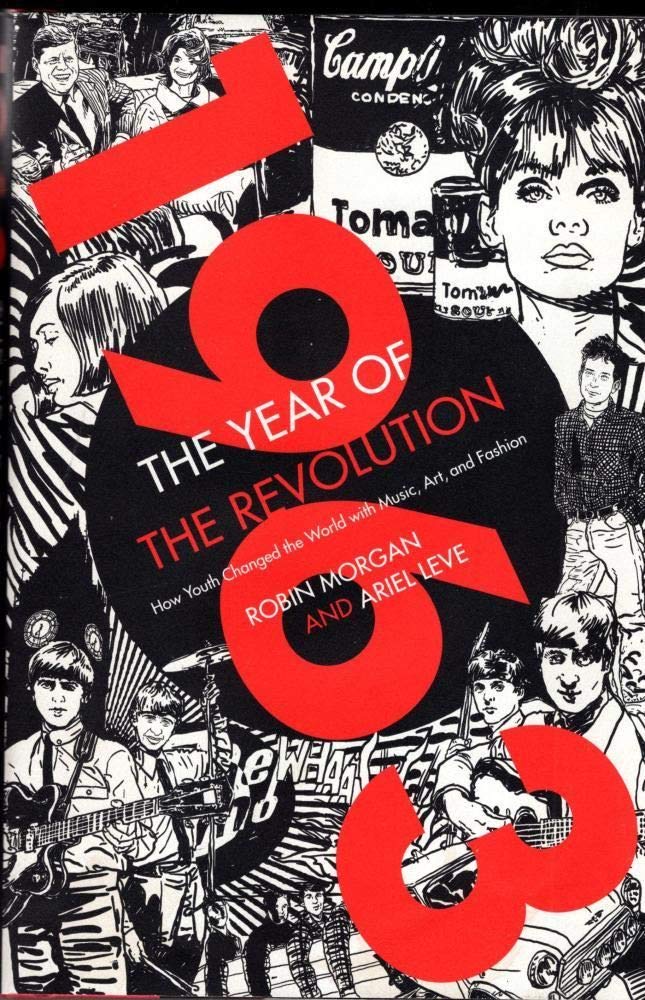
1963: The Year of the Revolution: How Youth Changed the World with Music, Art, and Fashion
$8.67
by Ariel Leve



Beginning in London and ricocheting across the Atlantic, 1963: The Year of the Revolution is an oral history of twelve months that changed our world—the Youth Quake movement—and laid the foundations for the generation of today. Ariel Leve and Robin Morgan's oral history is the first book to recount the kinetic story of the twelve months that witnessed a demographic power shift—the rise of the Youth Quake movement, a cultural transformation through music, fashion, politics, theater, and film. Leve and Morgan detail how, for the first time in history, youth became a commercial and cultural force with the power to command the attention of government and religion and shape society. While the Cold War began to thaw, the race into space heated up, feminism and civil rights percolated in politics, and JFK’s assassination shocked the world, the Beatles and Bob Dylan would emerge as poster boys and the prophet of a revolution that changed the world. 1963: The Year of the Revolution records, documentary-style, the incredible roller-coaster ride of those twelve months, told through the recollections of some of the period’s most influential figures—from Keith Richards to Mary Quant, Vidal Sassoon to Graham Nash, Alan Parker to Peter Frampton, Eric Clapton to Gay Talese, Stevie Nicks to Norma Kamali, and many more. The compilers of this oral history date the youthquake (Diana Vreeland’s coinage) that defined the era from the nearly simultaneous debut appearances on British television on January 13, 1963, of the Beatles and Bob Dylan. With the emphasis distinctly on events in the UK, the authors have culled quotes from musicians (Keith Richards and Eric Clapton, among others), music agents and promoters, and fashion pioneers Vidal Sassoon and Mary Quant to delineate how the postwar generation broke from tradition and set a new style. On the American side, coming out of a very different war experience, folksingers like Carolyn Hester and R&B and blues/soul singers such as Mary Wilson of the Supremes (who are both quoted) and Dylan (who is not) charted a parallel course. There is very little narrative connecting the quotes, which are selective (no Beatles, no African American bluesmen despite their acknowledged influence). This is a familiar story and the concentration on the authors’ English homeland may limit its audience in the States, but to the baby boomers whose story this is, interest in the period (i.e., in themselves) is ongoing. --Mark Levine A lively, insightful read about a transformative year. - Dan Rather A vivid and exhilarating guide to the year that revolutionized pop culture and shook the world, told by the movers and the shakers, themselves. - Mick Brown, author of Tearing Down the Wall of Sound: The Rise and Fall of Phil Spector An extraordinary year, a great cast of characters, a terrific book. - Sir Alan Parker “A rollercoaster ride through the year that fashioned the world as we know it today, 1963 reveals the seeds of our greatest cultural revolution in the words of the artists who created it. This is a must read for anyone interested in how pop culture, and particularly pop music, was both representative of the age and a catalyst for change.” - Victoria Broackes, Head of Performance Exhibitions, V&A Museum London ...a must read for anyone interested in how pop culture, and particularly pop music, was both representative of the age and a catalyst for change. - Victoria Broackes, Head of Performance Exhibitions, V&A Museum London 1963 It was the year that Cold War protagonists sought a truce, the race to space stepped up a gear, feminism and civil rights flexed their political muscles, and President John F. Kennedy's assassination numbed the world. But as the front pages of history were being printed, the scoop of the century slipped by unnoticed. On January 13, 1963, two then-largely unknown musical acts made their first appearances on nationwide television in Britain. Neither the Beatles nor Bob Dylan could have known it at the time, but through some strange alchemy the anthems of social upheaval were being heard by a mass audience—and these artists were the catalyst. Within the year, their voices were captivating millions of ears around the world. The Beatles had become the poster boys of a revolution that still influences us to this day, and Dylan its prophet. In short, 1963 saw the birth of a global demographic power shift. Within that one year, youth, for the first time in history, had become a commercial and cultural force that commanded the attention of government and religion and exercised the power to shape society. 1963: The Year of the Revolution is the first book to recount the kinetic story of the liberation of youth through music, fashion, and the arts—and in the voices of those who changed the world so radically, from Keith Richards to Eric Clapton, Mary Quant to Vidal Sassoon, Graham Nash to Peter Frampton, Alan Parker to Gay Talese, Stevie Nicks to Norma Kamali, and many mo