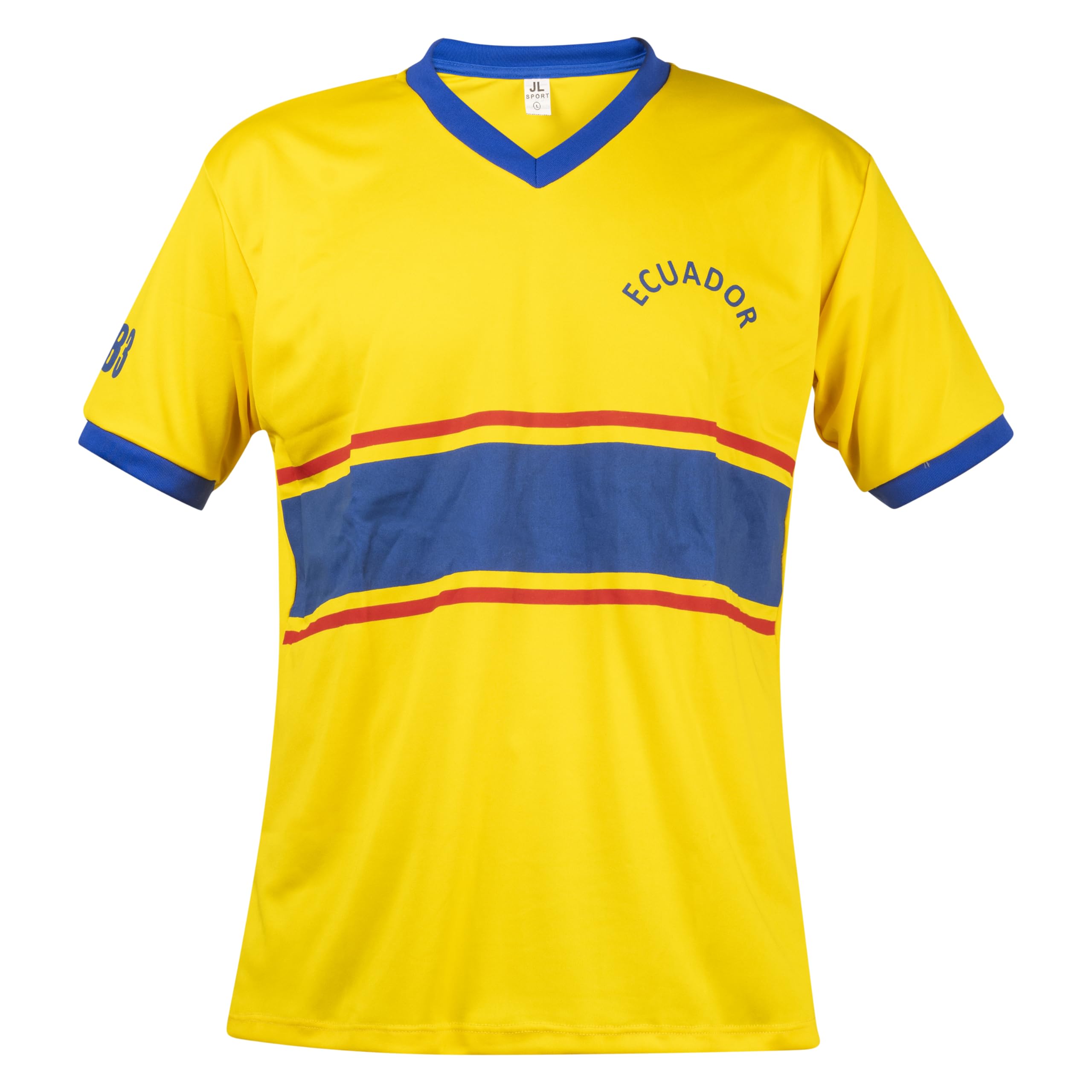



High Quality Limited Edition Lightweight breathable fabric In Ecuador, the redemocratization process in the late ‘70s and early ‘80s played a pivotal role in shaping the nation's political landscape and fostering a sense of unity among its diverse population. Emerging from a period of political instability and authoritarian rule, Ecuador underwent a transition towards democracy marked by the establishment of constitutional reforms and free elections. This redemocratization coincided with a resurgence of interest and passion for football, a sport deeply ingrained in the cultural fabric of the country. Football became more than just a game; it became a symbol of national pride and a source of collective joy for Ecuadorians. As democracy took root, the newfound political freedoms were mirrored in the football stadiums, where fans from various walks of life came together to support their favorite teams. The 2006 World Cup was a defining moment for Ecuador, as the national football team qualified for the tournament for the second time in its history. The team's success on the international stage served as a source of inspiration and unity, transcending political and social divisions. The redemocratization process had not only revitalized the political landscape but had also contributed to a shared sense of identity through the nation's love for football. Ecuador's redemocratization and the resurgence of football intertwined to create a narrative of national renewal and pride. Both phenomena played a crucial role in fostering a sense of belonging and shared purpose among Ecuadorians, marking a transformative period in the country's history.