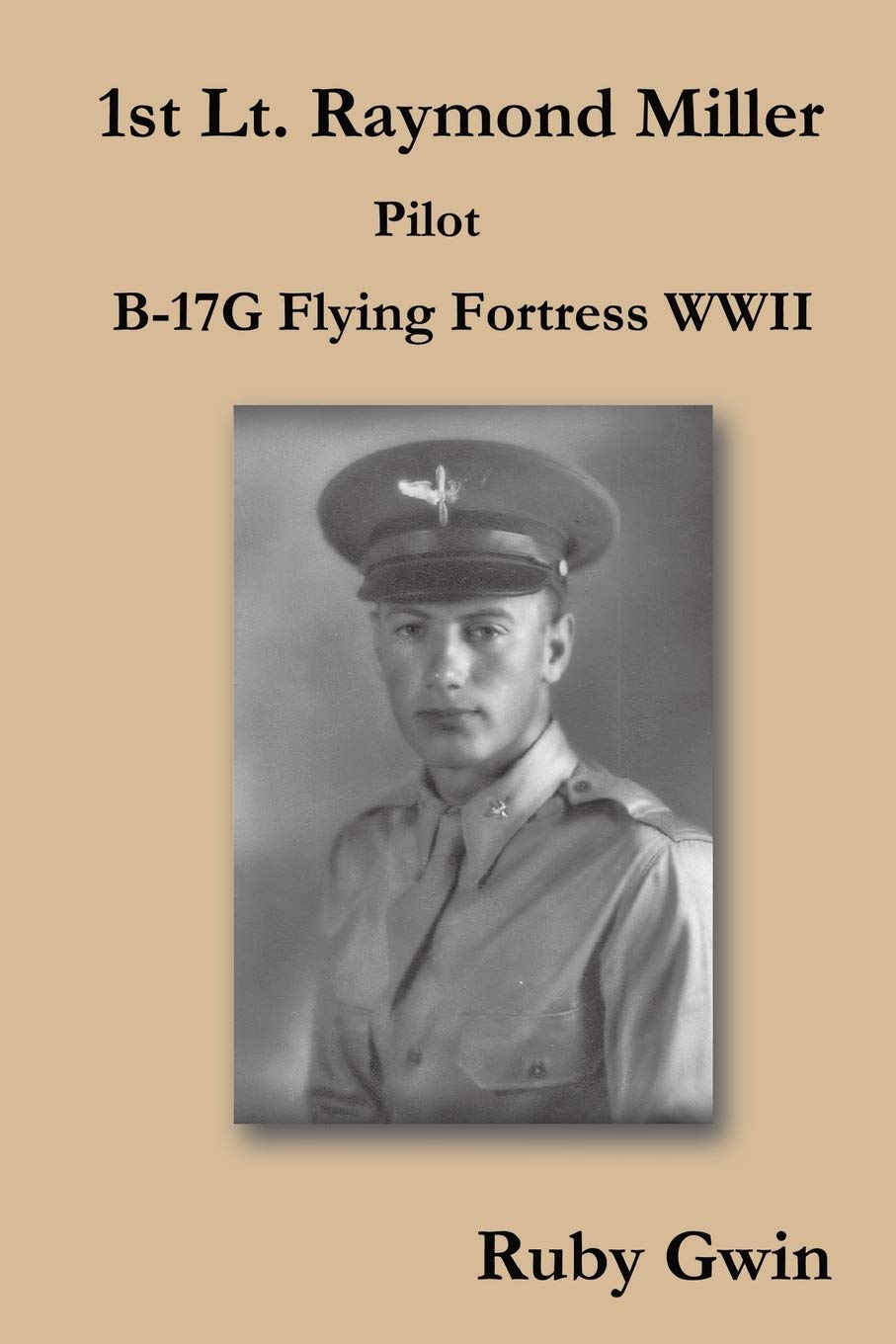



Many World War II exploits took place away from the spotlight. Raymond Miller brings his gift to the story of Service and Duty. How he chose to leave Purdue University, ROTC, a basketball team and parents behind to help bring a dictator to heel as co-pilot of a B-17G Flying Fortress Bomber. On Raymond's second combat mission he nearly lost his life from a piece of shrapnel to the throat and shattered breast bone. After surgery and rehab he resumed to co-pilot twenty more combat missions encountering the best the Germans could throw against them. They'd leave out to fly a mission over hostile territory not knowing when they might be hit or knowing if they would return. There were flights where the crews gulp to alleviate fear, for they felt there were no havens of security in an Allied victory that at times seemed importable. Raymond Miller feels honored to have been able to serve his country. Raymond's story gives a compelling glimpse of three brothers' value that characterized their early years and their United States Army Air Corps years of dedication. Raymond says, "I feel blessed for God has been good to me. 1st Lt. Raymond Miller Pilot B-17G Flying Fortress WWII By Ruby Gwin Trafford Publishing Copyright © 2013 Ruby Gwin All rights reserved. ISBN: 978-1-4907-1816-3 CHAPTER 1 A Symbolic Choice Young Raymond Miller served as copilot, flying in 8th Air Force combat missions over Northern and Central Europe in World War II. Their aircraft was a four-engine heavy bomber known as the B-17 or Flying Fortress. The aircraft was touted as a strategic weapon; it was a potent, high-flying, long-range bomber that was able to defend itself. After the Pearl Harbor surprise attack in 1941, with the country living under the cloud of war on two war fronts, Raymond, with his brother Russell, symbolically chose to enlist into the reserves on a fall day October 13, 1942. Later, his younger brother Richard would enlist after graduating from Indianapolis, Indiana's John Herron School of Art. Raymond "Ray" Miller was born in Mount Vernon, Ohio, on October 3, 1922. Raymond was the oldest of three boys. Russell was born on April 20, 1924, and Richard on December 9, 1925. The boys grew up deeply connected, being close in age. They had fun playing, working, and planning things together, with interests in flying. As children of working-class parents Leroy and Josephine Miller, they were poor. Their father, Leroy, was restless and would move the family from place to place. In 1927, the family would move from Ohio to Marion, Indiana, where his mother's parents, Calvin and Jennie Griffin, were living. His mother was born in a small town southeast of Marion called Jonesboro. Most of the time, to go to school or church it meant walking. Raymond was enrolled in School Number 9 on Salem Pike, about 1 1/2 miles east of his grandpa Griffin's house where the family was staying. With there not being any school bus, Raymond walked or ran to and from school. In the winter, sometimes after running, his lungs would burn from the frigid cold. Raymond was a good student. He was a natural at whatever he did and not afraid to work hard. With Russell and Richard, he worked on different projects. They each had chores to do. They helped with the garden and cared for the chickens. The three drank three gallons of milk a day. On the Spratt's farm where their mother bought the milk, they helped Mr. Spratt with his chores. They worked helping them to make hay and putting it up in the barn's hayloft. They were not paid, but for the three, it was fun and kept them busy and entertained. They also shucked corn and loaded it on the wagon. To their north was the municipal golf course where they became involved at being caddies. They would go to the caddie house at five o'clock in the morning and wait for jobs. They were fortunate to get some of the regular golf players to pick them to caddy. If they were good and didn't lose any golf balls, they got paid twenty-five cents for every nine holes. If lucky, they went eighteen holes and made fifty cents, and if they didn't lose golf balls, they were tipped another quarter. Sometimes they made as much as one dollar and fifty cents a day. They felt rich for they were making money. The family moved to Five Points on the northwest side of Marion, and it actually was a place where the roads merged and made five points. Not living in the city limits, Raymond went to the ninth grade at the Marion Sweetzer High School. Raymond tried out for the basketball team, which called for evening practice. Since the school bus had already left, Raymond had to walk home about six miles. He says, needless to say, "I didn't do that very many times, but to play basketball, I had to make that long walk." While in high school, Raymond got a job at the Marion, Indiana Shoe Factory and was paid 35¢ an hour, $13 a week. Feeling rich with his earned savings, he went downtown to the car agency and bought a 1932 Plymouth for $10