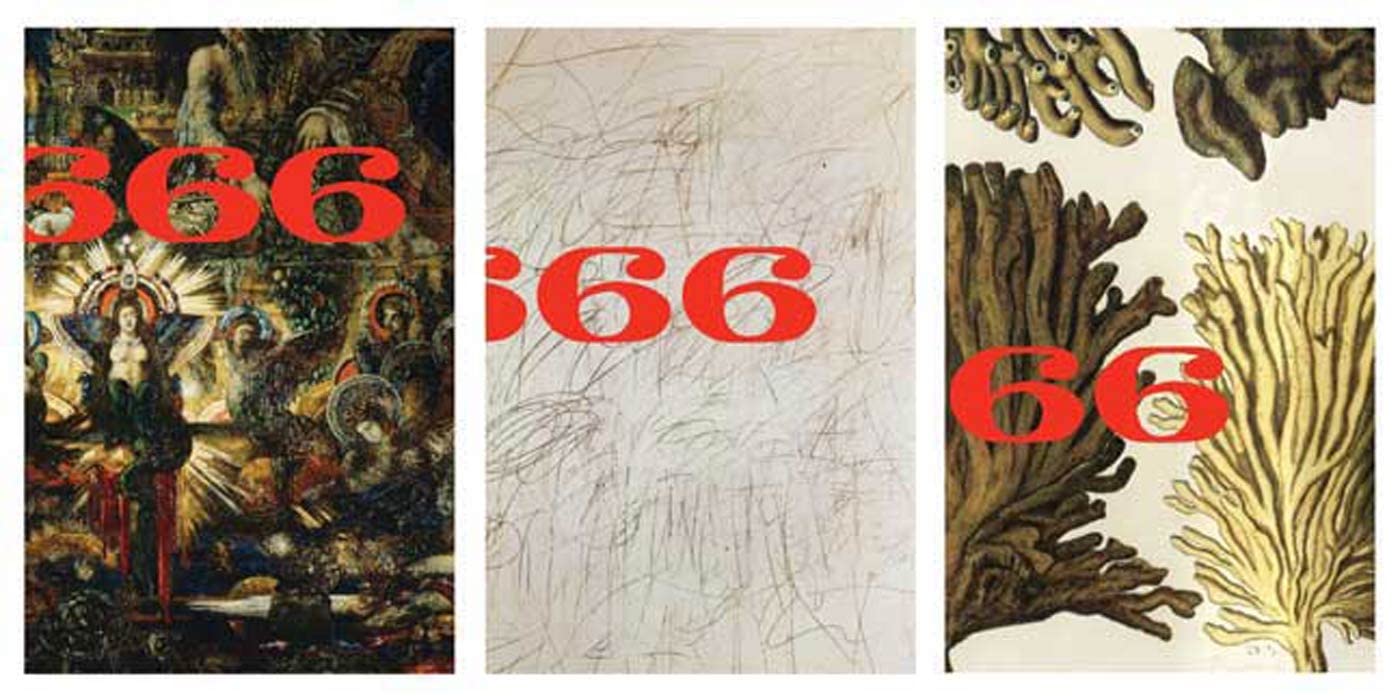



THE POSTHUMOUS MASTERWORK FROM "ONE OF THE GREATEST AND MOST INFLUENTIAL MODERN WRITERS" (JAMES WOOD, THE NEW YORK TIMES BOOK REVIEW ) Composed in the last years of Roberto Bolaño's life, 2666 was greeted across Europe and Latin America as his highest achievement, surpassing even his previous work in its strangeness, beauty, and scope. Its throng of unforgettable characters includes academics and convicts, an American sportswriter, an elusive German novelist, and a teenage student and her widowed, mentally unstable father. Their lives intersect in the urban sprawl of SantaTeresa―a fictional Juárez―on the U.S.-Mexico border, where hundreds of young factory workers, in the novel as in life, have disappeared. “Bolaño's masterwork . . . An often shockingly raunchy and violent tour de force (though the phrase seems hardly adequate to describe the novel's narrative velocity, polyphonic range, inventiveness, and bravery) based in part on the still unsolved murders of hundreds of women in Ciudad Juárez, in the Sonora desert near the Texas border.” ― FRANCISCO GOLDMAN, The New York Review of Books “Not just the great Spanish-language novel of [this] decade, but one of the cornerstones that define an entire literature.” ― J. A. MASOLIVER RÓDENAS, La Vanguardia “One of those strange, exquisite, and astonishing experiences that literature offers us only once in a very long time . . . to see . . . a writer in full pursuit of the Total Novel, one that not only completes his life's work but redefines it and raises it to new dizzying heights.” ― RODRIGO FRESÁN, El País ROBERTO BOLAÑO was born in Santiago, Chile, in 1953. He grew up in Chile and Mexico City, where he was a founder of the infrarealist poetry movement. His first full-length novel, The Savage Detectives , received the Herralde Prize and the Romulo Gallegos Prize when it appeared in 1998. Bolaño died in Blanes, Spain, at the age of fifty. NATASHA WIMMER 's translation of The Savage Detectives was chosen as one of the ten best books of 2007 by The Washington Post and The New York Times . 2666 By Roberto Bolaño, Natasha Wimmer Farrar, Straus and Giroux Copyright © 2004 the heirs of Roberto Bolaño All rights reserved. ISBN: 978-0-374-53155-3 Contents A Note from the Author's Heirs, 1. THE PART ABOUT THE CRITICS, 2. THE PART ABOUT AMALFITANO, 3. THE PART ABOUT FATE, 4. THE PART ABOUT THE CRIMES, 5. THE PART ABOUT ARCHIMBOLDI, Note to the First Edition, CHAPTER 1 THE PART ABOUT THE CRITICS The first time that Jean-Claude Pelletier read Benno von Archimboldi was Christmas 1980, in Paris, when he was nineteen years old and studying German literature. The book in question was D'Arsonval. The young Pelletier didn't realize at the time that the novel was part of a trilogy (made up of the English-themed The Garden and the Polish-themed The Leather Mask, together with the clearly French-themed D'Arsonval ), but this ignorance or lapse or bibliographical lacuna, attributable only to his extreme youth, did nothing to diminish the wonder and admiration that the novel stirred in him. From that day on (or from the early morning hours when he concluded his maiden reading) he became an enthusiastic Archimboldian and set out on a quest to find more works by the author. This was no easy task. Getting hold of books by Benno von Archimboldi in the 1980s, even in Paris, was an effort not lacking in all kinds of difficulties. Almost no reference to Archimboldi could be found in the university's German department. Pelletier's professors had never heard of him. One said he thought he recognized the name. Ten minutes later, to Pelletier's outrage (and horror), he realized that the person his professor had in mind was the Italian painter, regarding whom he soon revealed himself to be equally ignorant. Pelletier wrote to the Hamburg publishing house that had published D'Arsonval and received no response. He also scoured the few German bookstores he could find in Paris. The name Archimboldi appeared in a dictionary of German literature and in a Belgian magazine devoted—whether as a joke or seriously, he never knew—to the literature of Prussia. In 1981, he made a trip to Bavaria with three friends from the German department, and there, in a little bookstore in Munich, on Voralmstrasse, he found two other books: the slim volume titled Mitzi's Treasure, less than one hundred pages long, and the aforementioned English novel, The Garden. Reading these two novels only reinforced the opinion he'd already formed of Archimboldi. In 1983, at the age of twenty-two, he undertook the task of translating D'Arsonval. No one asked him to do it. At the time, there was no French publishing house interested in publishing the German author with the funny name. Essentially Pelletier set out to translate the book because he liked it, and because he enjoyed the work, although it also occurred to him that he could submit the translation, prefaced wit