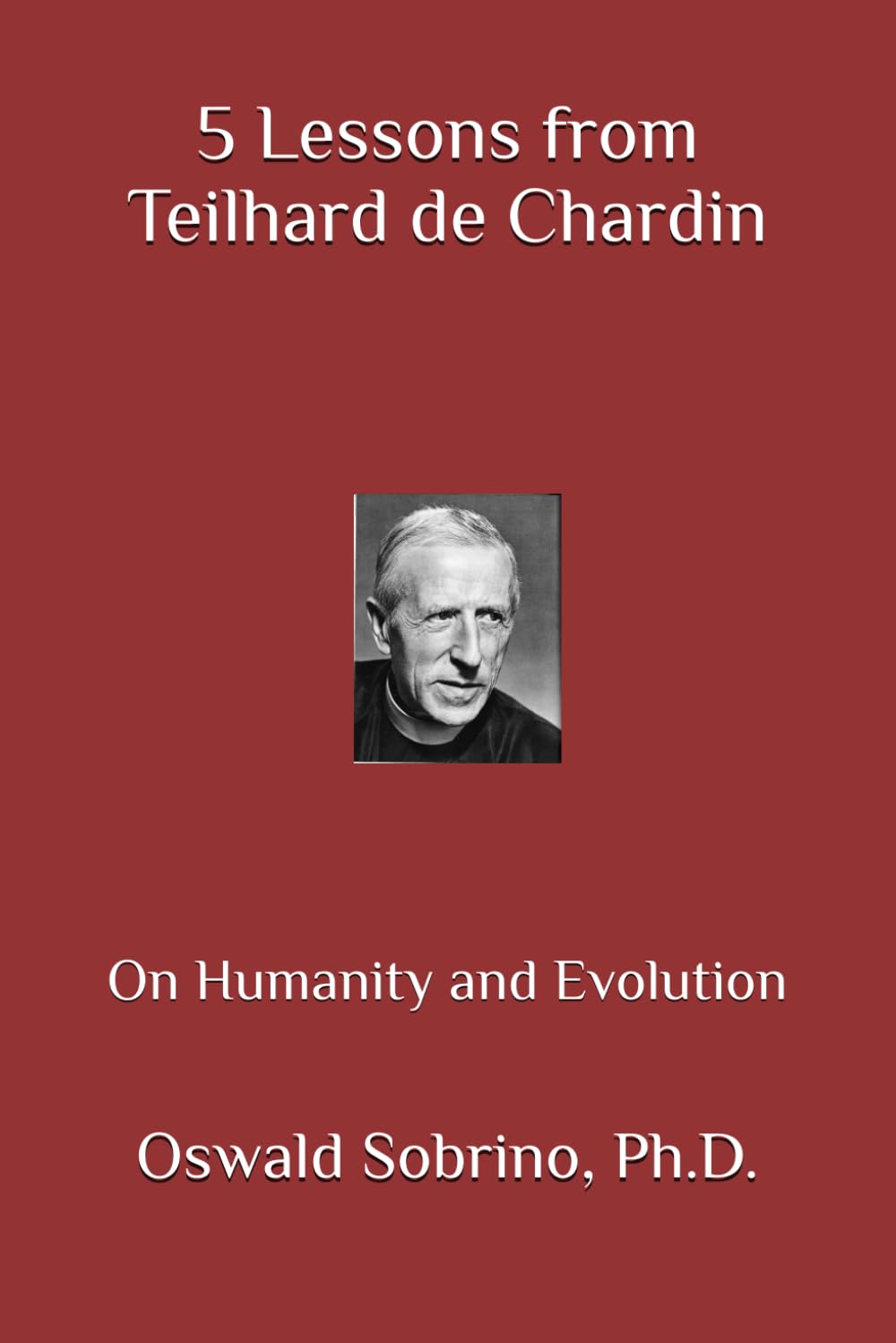
5 Lessons from Teilhard de Chardin: On Humanity and Evolution (5 Lessons from Great Thinkers)
$10.00
by Oswald Sobrino



Father Pierre Teilhard de Chardin (commonly referred to as Teilhard) was a French paleontologist famous for working on scientific projects such as the discovery of the so-called Peking Man in the nineteen twenties and also a Jesuit priest. He lived from 1881 to 1955. This book comments on 5 lessons from his work, published after his death, entitled The Phenomenon of Man in its first English translation. The original French title is more literally translated as The Human Phenomenon . Teilhard had problems with Church authorities because of the fear of certain conservative sectors of the Church. Yet, today, Teilhard's views fully embracing evolution and his insights are no longer matters of significant controversy in the Catholic Church. He proposed a vision of evolution that not only included the physical but also the spiritual. His grand vision included the evolution of spirit, mind, and consciousness as reflective thought eventually emerged among evolving humans. His vision also included the fulfillment of consciousness at the Omega Point when the world ends. As a Christian, he saw the incarnation of Christ as part of the ascent of consciousness; and his description of Omega matches that of the transcendent, providential Deity embraced by many believers. His vision is optimistic, but not naive (after all, he was personally present on the frontline during World War I). He recognized the inevitability of evil in the world but had reason to expect the fulfillment of humanity in the long run. The contemporary reader will be fascinated by Teilhard's grand view of evolution and his embrace of both science and faith in a world where fundamentalism, on the one hand, and hostility to religion, on the other hand, are too common and disruptive.