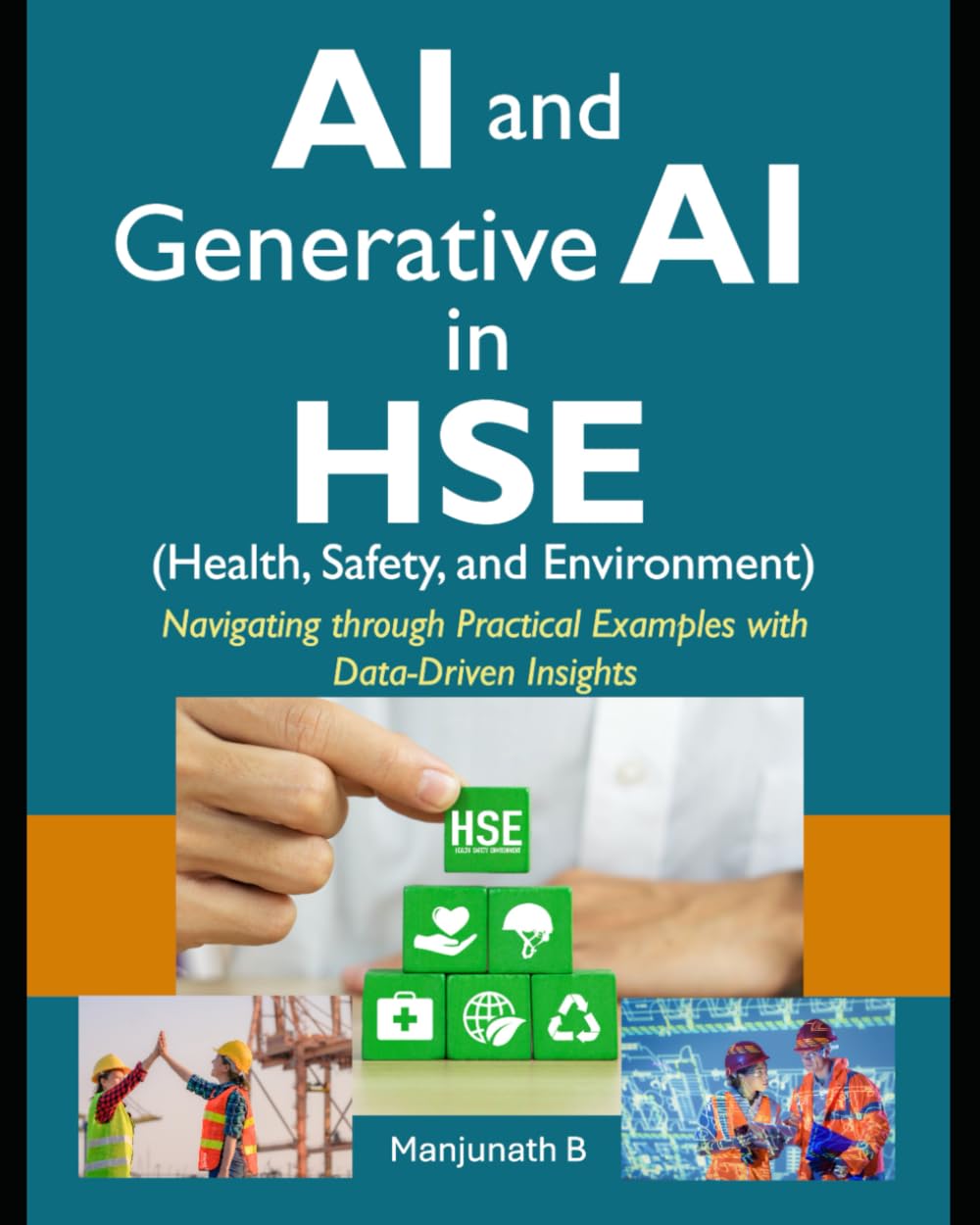
AI and Generative AI in HSE (Health, Safety, and Environment): Navigating Through Practical Examples with Data-Driven Insights
$45.00
by Manjunath B



The convergence of artificial intelligence (AI) and the Health, Safety, and Environment (HSE) sector marks a transformative moment in the way organizations approach risk management, safety protocols, and environmental sustainability. As the world grows more connected, industrial operations become more complex, and sustainability concerns intensify, AI technologies are offering new ways to ensure safer and healthier workplaces while minimizing environmental impact. The goal of this book, AI and Generative AI in HSE: Navigating Through Practical Examples with Data-Driven Insights , is to shed light on the practical applications of AI in HSE, showcasing how companies are already leveraging these technologies to enhance safety standards, optimize operations, and make more informed decisions in real-time. We live in an era where risks to human health, workplace safety, and the environment can no longer be effectively managed by traditional methods alone. In industries ranging from energy and manufacturing to healthcare and construction, AI systems are now playing a critical role in predicting hazards, preventing accidents, monitoring compliance, and responding to crises. With the advent of Generative AI , the potential for even greater innovations in training, simulation, and disaster response scenarios continues to grow. This book explores the rapidly evolving landscape of AI in HSE through a combination of research insights, case studies, and real-world examples from leading organizations across diverse industries. Each chapter delves into specific aspects of AI’s role in HSE, from the use of machine learning algorithms to predict and prevent safety incidents to the power of generative models in training simulations for high-risk environments. We also examine AI’s ability to optimize workflows, improve ergonomics and health assessments, enhance regulatory compliance, and improve decision-making during emergency responses. The importance of data in this context cannot be overstated. Data-driven insights are the backbone of AI systems, and they enable real-time monitoring and proactive decision-making that saves lives, protects the environment, and ensures operational continuity. Throughout this book, we will highlight how organizations are gathering, processing, and using massive amounts of data to create smarter, more responsive safety systems, and we will explore the potential of future advancements that could reshape how industries tackle HSE challenges. However, this book is not just about technology—it’s about a mindset shift . The integration of AI into HSE strategies requires a rethinking of organizational culture, stakeholder engagement, and workforce readiness. It requires forward-thinking leadership, where AI is not seen as a replacement for human judgment, but as an enabler —an intelligent assistant that augments human expertise and decision-making capabilities. As you read this book, you will be introduced to compelling case studies from some of the world’s most innovative organizations that are already embracing AI and generative AI to drive safer, more sustainable practices in their industries. You will gain practical insights into how AI can be applied in real-world settings, providing you with the knowledge and inspiration to adopt or refine AI strategies within your own HSE practices. I hope this book serves as a valuable resource for HSE professionals, data scientists, engineers, and anyone interested in the intersection of AI and safety management. By the end of this journey, you will understand how AI not only improves the effectiveness of HSE protocols but also plays a crucial role in shaping the future of safety culture and environmental stewardship . The future of HSE is here, and it is powered by AI.