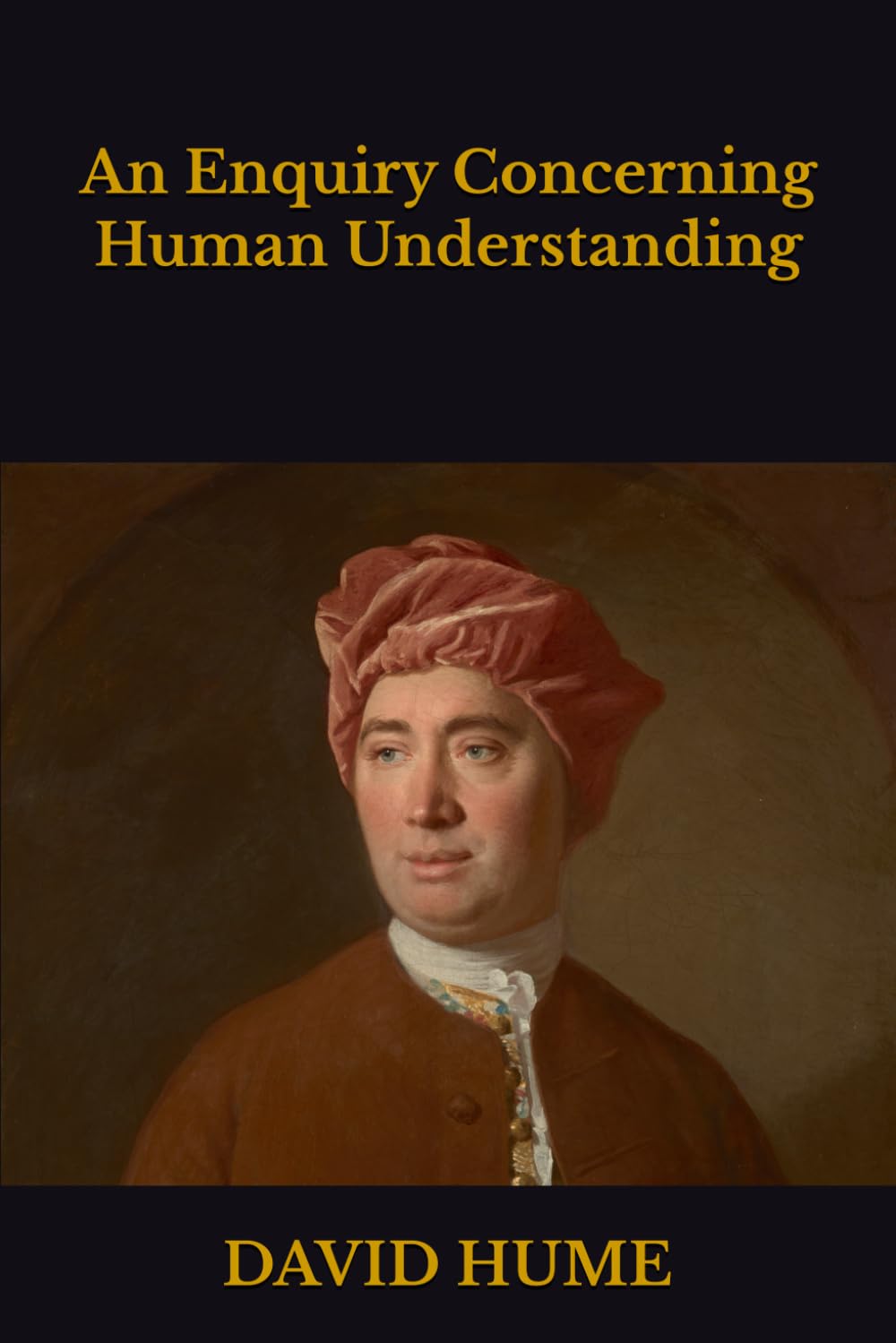



"An Enquiry Concerning Human Understanding" is a seminal work by the Scottish philosopher David Hume, first published in 1748. In this influential text, Hume explores the nature and limits of human knowledge, skepticism, and the foundations of belief. He challenges traditional philosophical notions, particularly those of rationalism, by arguing that our beliefs are ultimately grounded in sensory experience and impressions rather than reason alone. Hume's empiricist approach posits that all ideas originate from sense perceptions, and he famously asserts that we cannot deduce matters of fact solely through reason. Instead, he argues for a form of radical skepticism, suggesting that our understanding is limited to what we can directly observe and experience. In addition to skepticism, Hume's Enquiry also delves into causation, arguing that our belief in cause-and-effect relationships is based not on logical necessity but on habitual association derived from repeated experiences. This challenges the notion of necessary connections between events and has significant implications for fields ranging from philosophy to science.