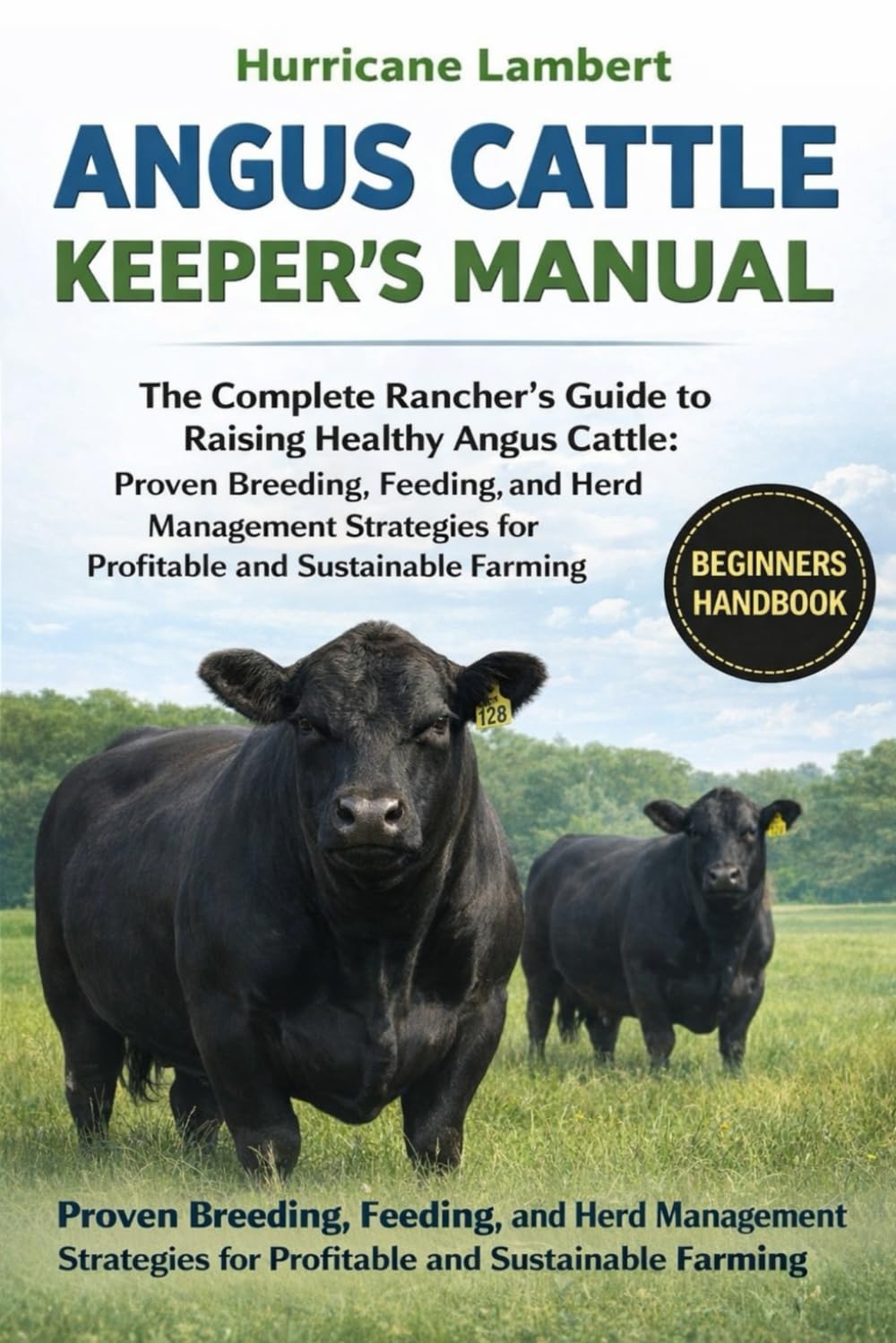
ANGUS CATTLE KEEPER'S MANUAL: The Complete Rancher’s Guide to Raising Healthy Angus Cattle: Proven Breeding, Feeding, and Herd Management Strategies
$16.99
by HURRICANE LAMBERT



Introduction to the Angus Cattle Legacy The Origins of a Global Breed The story of the Angus cattle begins in the rolling hills of northeastern Scotland, a land known for its rugged climate, rich pastures, and enduring livestock traditions. It was here, in the counties of Aberdeen and Angus, that farmers began selectively breeding hardy, hornless cattle known for their ability to thrive in challenging conditions. The original stock, called “doddies” or “hummlies,” were small but muscular animals that stood out for their resilience and high-quality beef. Over generations, these Scottish farmers meticulously refined their herds—selecting for animals that matured quickly, converted grass efficiently, and produced exceptionally tender, marbled meat. The result of this centuries-long breeding effort was what we now know as the Aberdeen Angus , a breed that would go on to transform the global beef industry. By the early 19th century, forward-thinking breeders such as Hugh Watson of Keillor and William McCombie of Tillyfour were instrumental in establishing the Angus cattle’s distinctive identity. Their dedication to selective breeding and record keeping laid the genetic foundation that remains at the heart of modern Angus herds worldwide. The Journey from Scotland to the World As the Industrial Revolution reshaped Britain, so too did it influence agricultural practices. The growing demand for high-quality beef made the Angus breed an attractive export. In the late 1800s, the first Angus cattle were shipped to North America—specifically to Kansas and Illinois—where they immediately impressed American ranchers with their adaptability and meat quality. The Angus breed quickly spread across the United States, Canada, Australia, New Zealand, and South America. Unlike some European breeds that struggled in hot or arid climates, Angus cattle proved remarkably versatile. Their black hides provided protection against the sun, while their natural hardiness allowed them to withstand cold winters and limited forage conditions. As the breed acclimated to new continents, it maintained its most important traits: fertility, longevity, and efficiency in converting feed into premium-quality beef. Today, the Angus breed is recognized as one of the most successful cattle types in the world, with millions registered across every major beef-producing nation. Whether in the vast plains of Texas, the highlands of New Zealand, or the pampas of Argentina, Angus cattle have become synonymous with excellence and reliability. The Gold Standard of Beef Production One of the most defining reasons for the Angus breed’s enduring success is the exceptional quality of its meat. Angus beef is prized for its fine marbling , which refers to the delicate flecks of intramuscular fat that melt during cooking, producing superior tenderness, flavor, and juiciness. This characteristic quickly earned Angus beef a reputation as a premium product, setting the benchmark for gourmet and commercial markets alike. Superior Meat Quality: Angus beef offers consistent tenderness and rich flavor that satisfies both chefs and consumers. - Efficient Feed Conversion: The breed converts grass and feed efficiently, resulting in higher weight gains and lean muscle growth. - High Fertility and Maternal Instinct: Angus cows are excellent mothers with strong calving ease and milk production, reducing losses in the herd. - Docile Temperament: Calm and manageable behavior makes them suitable for both small family farms and large commercial ranches.