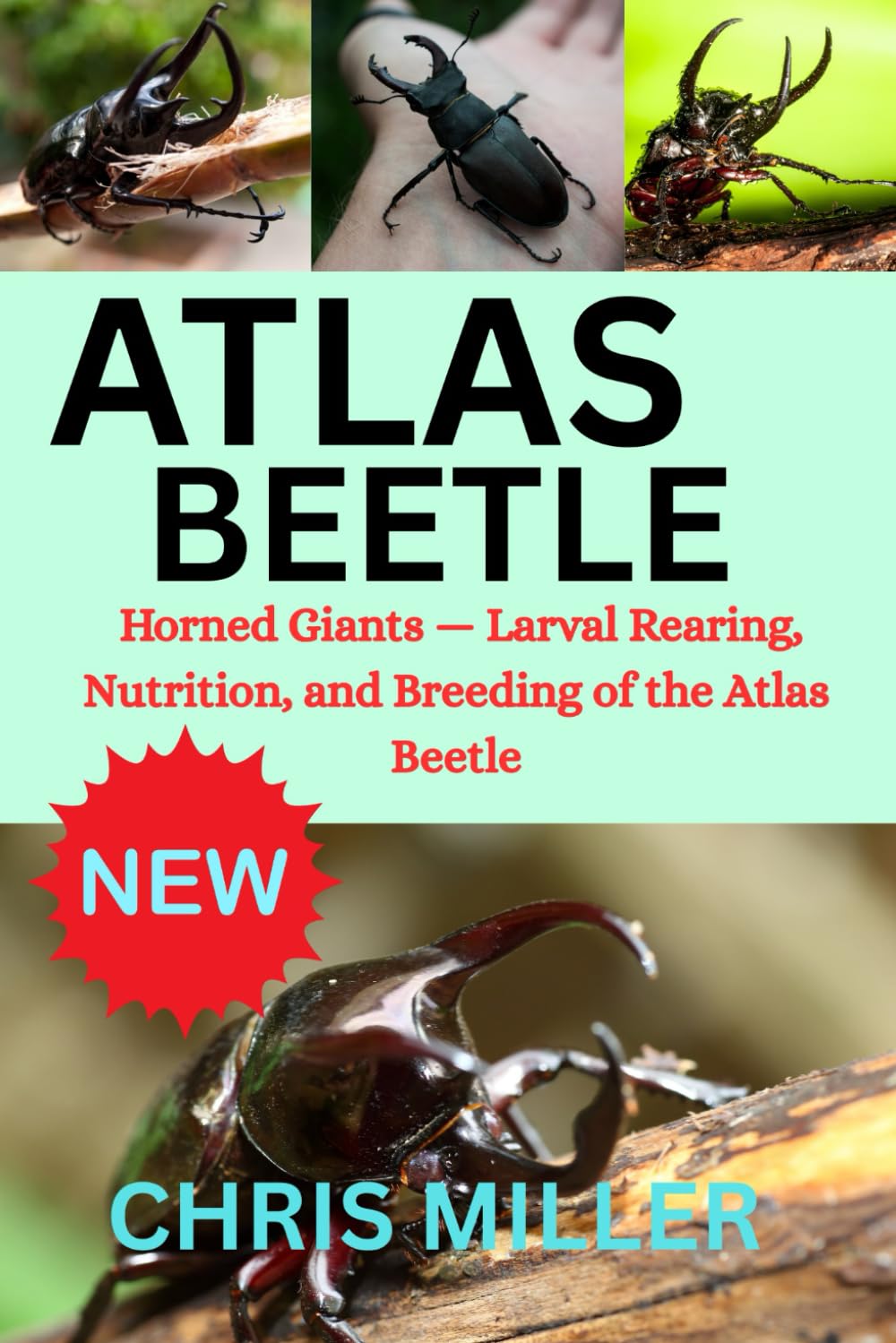
ATLAS BEETLE: Horned Giants — Larval Rearing, Nutrition, and Breeding of the Atlas Beetle
$13.99
by CHRIS MILLER



Unlock the secrets of keeping and breeding one of the most stunning beetles in the world. This guide offers practical advice on Atlas beetle care, terrarium setup, nutrition, and lifecycle management. Ideal for insect collectors, hobbyists, and entomologists, it provides species identification tips, breeding strategies, and expert insights into tropical beetles. Learn how to create optimal environments for these exotic insects and enjoy their fascinating behaviors while supporting ethical, sustainable insect keeping. The Atlas beetle (Chalcosoma atlas) is one of the most extraordinary members of the insect world, renowned for its immense size, striking morphology, and sheer strength. Adult males can attain lengths between 8 and 13 centimeters, placing them among the largest beetles known to science. Their bodies are heavily armored with a hard chitinous exoskeleton, which not only offers protection from predators but also supports their muscular framework. The coloration typically ranges from deep brown to almost jet black, sometimes with a bronze or olive tint under light, giving them a metallic, almost sculpted appearance. The most distinguishing feature of the male Atlas beetle is the presence of three prominent horns—one central horn projecting from the head and two lateral horns extending from the thorax—forming an intricate, trident-like structure. These horns serve as weapons in territorial disputes and mating competitions, where males grapple and attempt to dislodge one another from logs or branches. Despite their intimidating appearance, Atlas beetles are non-aggressive toward humans and rely on brute strength and leverage in male-to-male contests rather than predation. In addition to their size and power, Atlas beetles are remarkable for their ecological role as recyclers of forest detritus. By breaking down decaying wood and plant matter, their larvae contribute significantly to soil enrichment and nutrient cycling. This combination of impressive physical characteristics, intriguing life history, and ecological value has made the Atlas beetle a focal point of interest in entomology, exotic pet keeping, and conservation outreach.