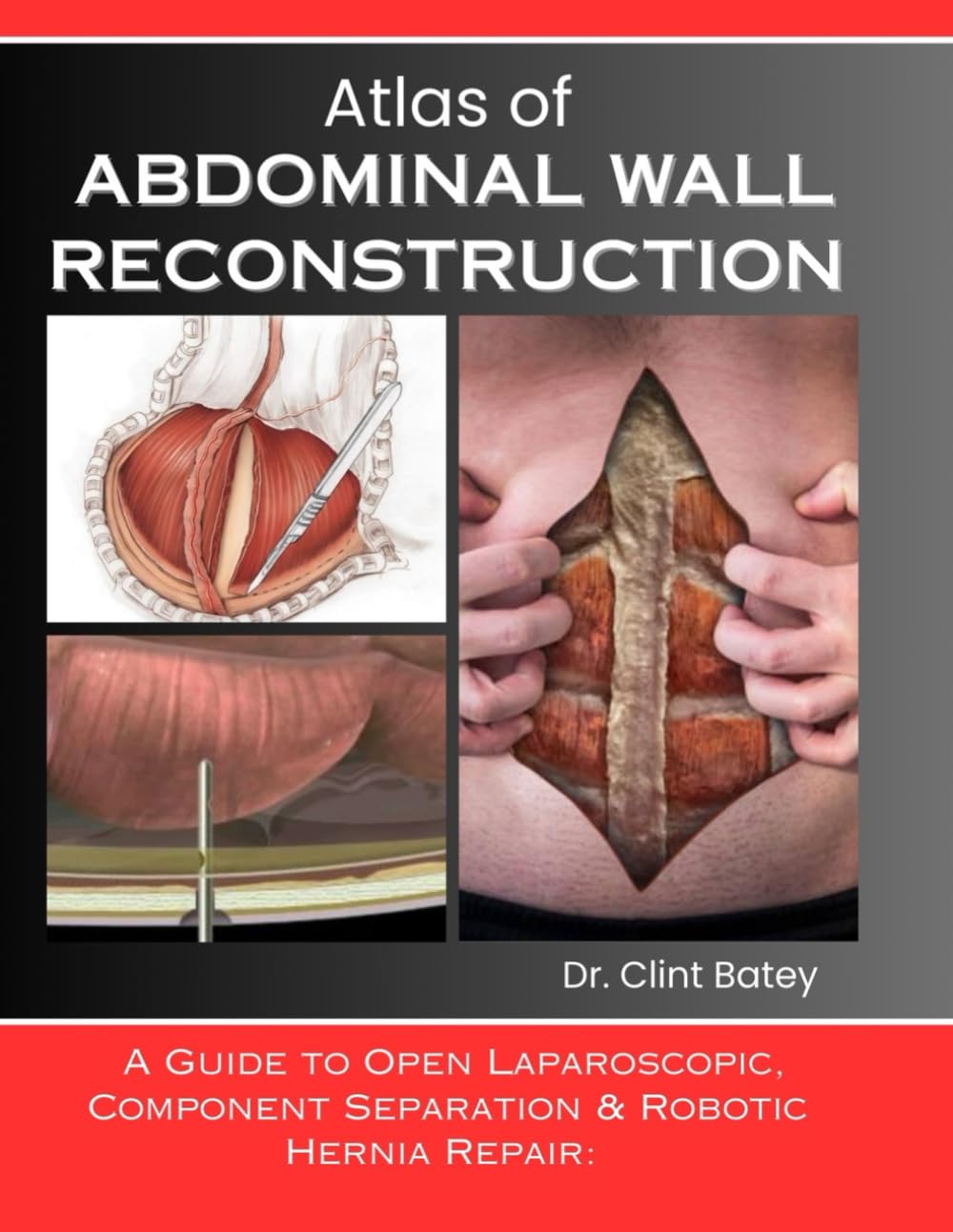
ATLAS OF ABDOMINAL WALL RECONSTRUCTION: A Guide to Open Laparoscopic, Component Separation & Robotic Hernia Repair:
$199.99
by Dr. Clint Batey Batey



Atlas of Abdominal Wall Reconstruction is a comprehensive, technique-driven surgical reference grounded in a modern understanding of the abdominal wall as a dynamic, load-bearing system rather than a simple defect to be closed. The book integrates anatomy, biomechanics, imaging, mesh science, and operative strategy into a cohesive framework for managing both standard repairs and the most complex reconstructions. The opening sections establish the scientific foundation that informs operative decision-making, including: Myofascial anatomy and rectus sheath architecture - Neurovascular pathways and abdominal wall perfusion - Core pressure dynamics and functional biomechanics - Hernia classification systems and documentation standards Preoperative planning is addressed as a critical phase of reconstruction. Dedicated chapters on imaging and mapping explain how to: Interpret CT scans for defect characterization and prior mesh identification - Calculate loss of domain and volumetric ratios - Use imaging to plan incision placement, mesh positioning, and component release Optimization strategies are treated as part of the operation itself, with practical guidance on: Nutritional and metabolic preparation - Pulmonary and functional conditioning - Smoking cessation, weight management, and risk stratification - Progressive preoperative pneumoperitoneum protocols - Botulinum toxin–assisted chemical component separation Mesh selection and fixation are examined in depth, providing clear frameworks for: Choosing between synthetic, biologic, and biosynthetic materials - Understanding pore structure, tissue integration, and foreign body response - Managing contaminated and high-risk fields - Selecting fixation methods that balance durability and pain prevention Operative chapters cover the full range of contemporary abdominal wall techniques across open, laparoscopic, and robotic platforms, including: Primary and complex inguinal repairs - Ventral hernia repair and retromuscular Rives-Stoppa reconstruction - Anterior and posterior component separation, including TAR - IPOM, eTEP access, and robotic abdominal wall reconstruction High-risk and atypical scenarios are addressed with focused, practical guidance, including: Parastomal, flank, suprapubic, and subxiphoid hernias - Hernia repair in obesity and pregnancy - Emergency presentations and infected mesh - Enterocutaneous fistulas and open abdomen reconstruction Soft tissue management and coverage are integrated throughout, with chapters on: Diastasis recti repair and abdominoplasty principles - Flap reconstruction and wound salvage - Seroma prevention and postoperative complication management - Chronic pain evaluation, recurrence analysis, and redo strategies A final masterclass section presents complex real-world cases, supported by: Structured case walkthroughs - Standardized grading systems - Preoperative checklists and operative note templates Atlas of Abdominal Wall Reconstruction is designed for surgeons who require more than procedural descriptions. It serves as a practical reference for disciplined planning, sound judgment, and durable outcomes across the full spectrum of abdominal wall surgery. Add this atlas to your surgical library and use it as a practical reference for confident decision-making in both routine and complex abdominal wall reconstruction. Scroll up to get your copy and select Buy Now.