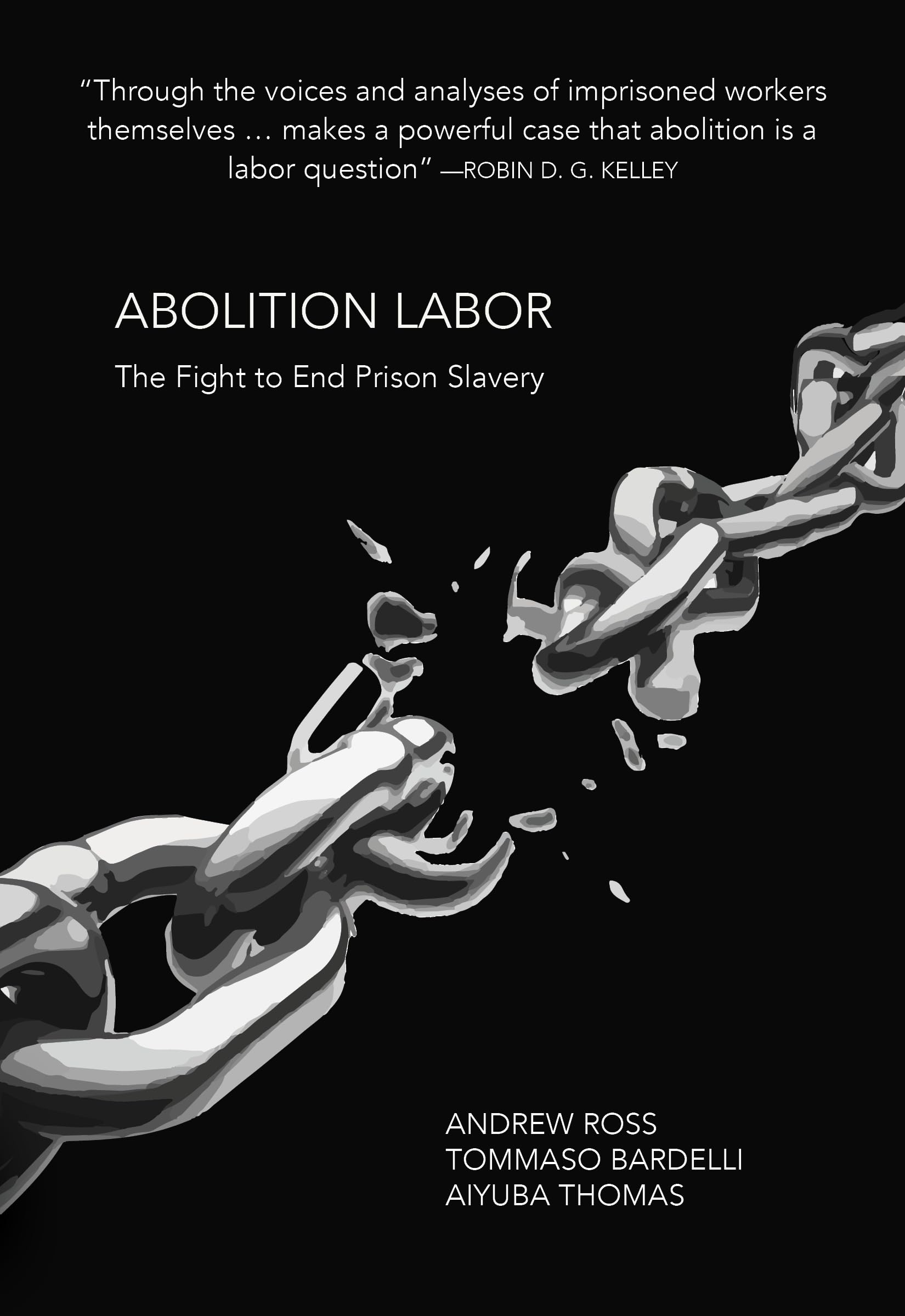



Abolition Labor chronicles the national movement to end forced labor, much of it unpaid, in American prisons. It draws on interviews with formerly incarcerated persons in Alabama, Texas, Georgia and New York to give a more holistic picture of these work conditions, and it covers the new prisoner rights movement that began with system-wide work strikes involving more than 50,000 people in the 2010s. Incarcerated people work for penny wages (15 cents an hour is not unusual), and, in several states, for nothing at all, as cooks, dishwashers, janitors, groundskeepers, barbers, painters, or plumbers; in laundries, kitchens, factories, and hospitals. They provide vital public services such as repairing roads, fighting wildfires, or clearing debris after hurricanes. They manufacture products like office furniture, mattresses, license plates, dentures, glasses, traffic signs, garbage cans, athletic equipment, and uniforms. And they harvest crops, work as welders and carpenters, and labor in meat and poultry processing plants. Abolition Labor provides a wealth of insights into what has become a vast underground economy. It draws connections between the risky trade forced on prisoners who hustle to survive on the inside and the precarious economy on the outside. And it argues that, far from being quarantined off from society, prisons and their forced work regime have a sizable impact on the economic and social lives of millions of American households. "This is an essential guide for those who want to abolish the last vestiges of legal slavery in the US and build a world without prisons." —Alex Vitale “Through the voices and analyses of imprisoned workers themselves . . . makes a powerful case that abolition is a labor question.” —Robin D.G. Kelley “This is a startling—and often inspiring—account of the pernicious persistence of prison slavery. It is that rare book which will galvanize a reform movement and, therefore, make for a better world.” —Gerald Horne "It’s a story that needs to be shared widely." —Labour Hub Andrew Ross is a social activist and Professor of Social and Cultural Analysis at NYU, where he also directs the Prison Research Lab. A contributor to the Guardian , the New York Times , The Nation , and Al Jazeera , he is the author or editor of more than twenty-five books, including, most recently, Cars and Jails: Freedom Dreams, Debt, and Carcerality. Tommaso Bardelli is a Research Fellow at the NYU Prison Education Program Research Lab, where he conducts research on mass incarceration, financial debt, and their intersections. He holds a PhD in Political Science from Yale University. Aiyuba Thomas is a recent MA graduate from NYU’s Gallatin School of Individualized Study, and a justice impacted affiliate of the NYU Prison Research Lab. He is currently the project manager for “Movements Against Mass Incarceration,” an archival oral history project at Columbia University. In February 2016, President Obama signed a bill that banned goods made by certain prisoners and other workers who toil under conditions of forced labor. Oregon senator Ron Wyden, who helped push the bill through Congress, triumphantly declared that “this law slams shut an unconscionable and archaic loophole that forced America to accept products made by children or slave labor.” What immoral loophole was he referring to? Not the most well-known one—the notorious Punishment Clause in the 13th Amendment that abolished slavery and involuntary servitude in the U.S. “ except as a punishment for crime.” That constitutional loophole is the legal basis for imposing forced labor in America’s prisons, which hold more than 20 percent of the world’s incarcerated population. These facilities annually produce goods and services worth tens of billions of dollars from the labor of largely unpaid prisoners. The bill signed by Obama turned a blind eye to this domestic injustice and the trade it upholds. Instead, it was aimed solely at shutting down the import of prison-made products from other countries. And the loophole in question was a legacy from an earlier embargo, the 1930 protectionist Smoot-Hawley Tariff Act, which banned most but permitted some goods if there was high domestic demand for them. In closing this loophole by banning all imports, the U.S. government was able to dust off its standing as a humanitarian champion of the fight against global slavery. Yet this step forward only exposed a widening moral gap between the zero tolerance shown toward prison labor overseas and the longstanding acceptance of the same conditions at home, where the majority of the 1.2 million Americans incarcerated in state and federal prisons work under duress, for nothing or for penny wages. It is repugnant that goods made by foreign prisoners are forbidden while those produced by our own are freely purchased by government agencies. In many states, these goods are available on the open market, not to mention overseas, since there is no