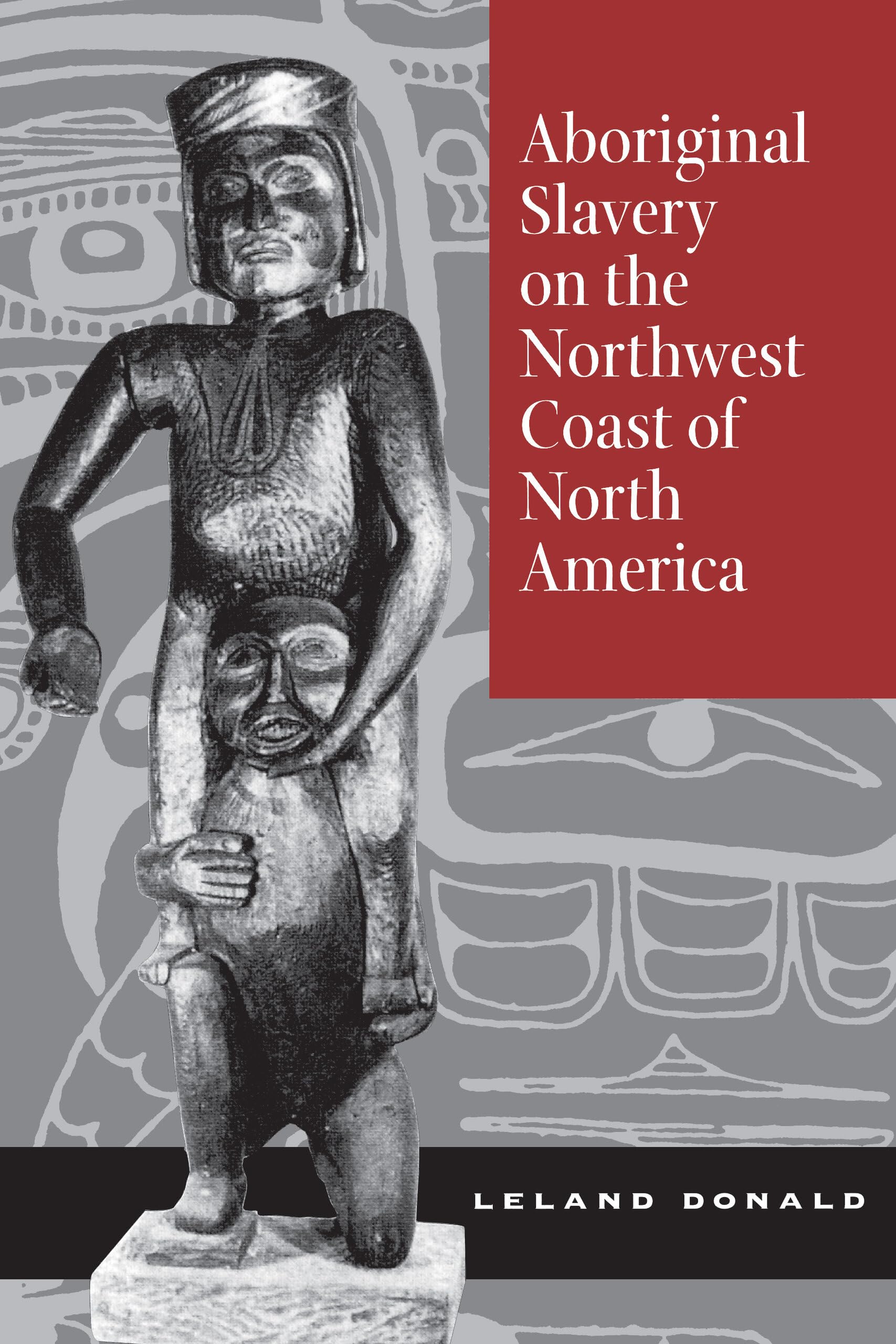



With his investigation of slavery on the Northwest Coast of North America, Leland Donald makes a significant contribution to our understanding of the aboriginal cultures of this area. He shows that Northwest Coast servitude, relatively neglected by researchers in the past, fits an appropriate cross-cultural definition of slavery. Arguing that slaves and slavery were central to these hunting-fishing-gathering societies, he points out how important slaves were to the Northwest Coast economies for their labor and for their value as major items of exchange. Slavery also played a major role in more famous and frequently analyzed Northwest Coast cultural forms such as the potlatch and the spectacular art style and ritual systems of elite groups. The book includes detailed chapters on who owned slaves and the relations between masters and slaves; how slaves were procured; transactions in slaves; the nature, use, and value of slave labor; and the role of slaves in rituals. In addition to analyzing all the available data, ethnographic and historic, on slavery in traditional Northwest Coast cultures, Donald compares the status of Northwest Coast slaves with that of war captives in other parts of traditional Native North America. "Presenting a new understanding of slavery on the Northwest Coast and a new perspective on the nature of Northwest Coast society, this will be a classic on one of the most important North American culture areas." R. G. Matson, University of British Columbia "Presenting a new understanding of slavery on the Northwest Coast and a new perspective on the nature of Northwest Coast society, this will be a classic on one of the most important North American culture areas."―R. G. Matson, University of British Columbia Leland Donald is Professor of Anthropology at the University of Victoria and editor of Themes in Ethnology and Culture History: Essays in Honour of David F. Aberle (1987). Aboriginal Slavery on the Northwest Coast of North America By Leland Donald University of California Press Copyright © 1997 Leland Donald All right reserved. ISBN: 0520206169 1 An Overview of Northwest Coast Cultures The distinctiveness of the indigenous cultures of the North Pacific Coast of North America has been recognized by anthropologists since Otis Mason (1896) published the first cultural geographic classification of North American indigenous groups. Since Mason the Northwest Coast culture area has been variously defined. As used here the Northwest Coast stretched down the Pacific Coast of North America from Yakutat Bay in Alaska south to the mouth of the Columbia River; to the east it was bounded by the complex Coast and Cascade ranges.1 (See fig. 1.) Boas sometimes used the same boundaries for his North Pacific Coast region, and the definition used here is not uncommon. The other major approach to defining the area includes the peoples of the coast of Oregon, often down into northernmost California. The most recent classification, that of the Handbook of North American Indians , begins in the north with the Eyak (who are just north of the Yakutat Tlingit) and continues south to the Takelma at the northern border of California. For the past hundred years differences in delimiting the culture area have largely involved its southern boundary. The eastern boundary (distinguishing the Northwest Coast from the Subarctic, Plateau, and Great Basin culture areas) has caused little controversy. I have chosen the Columbia River as the southern boundary of the culture area because the ethnographic and ethnohistorical record for the Oregon groups is very poor, especially for topics like slavery. A more southerly boundary would add little to the discussion of Northwest Coast slavery. Figure 1. The North Pacific Coast of North America. The Northwest Coast Culture Area The most distinctive characteristics of the Northwest Coast culture area are: a marine and riverine orientation that permeated not only subsistence practices but ideology and outlook; a subsistence pattern that places a heavy emphasis on fishing and marine mammal hunting and also involves considerable gathering of shellfish, other marine invertebrates, and plant foods; a highly developed woodworking technology whose most spectacular products are large plank houses, very large dugout canoes, and various carved and painted wooden art objects including, in the northern part of the region, "totem" poles; a tripartite system of social stratification that includes a bottom stratum of hereditary slaves; an emphasis on property, both tangible and noncorporeal, with the control of all types of wealth the principal criterion of social importance and success and with both individual and kin group ranking important; the lack of inter- or even intracommunity political organization and the absence of significant political office.2 The culture area was probably one of the most densely populated in native North America. The best r