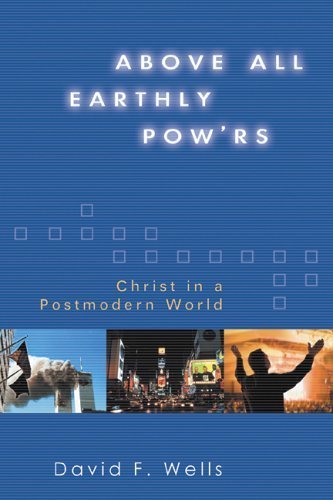



In our postmodern world, every view has a place at the table but none has the final say. How, as Christian faith adjusts to a new culture, should the church confess Christ? "Above All Earthly Pow'rs," the fourth and final volume of the set that began in 1993 with "No Place for Truth," paints a picture of the West in all its complexity, brilliance, and emptiness. As David Wells masterfully depicts it, the postmodern ethos of the West is relativistic, individualistic, therapeutic, and yet remarkably spiritual. Wells unabashedly locates American postmodernism's roots in the last century's waves of immigration waves that, for all their diversity, have brought with them numerous new religions and a cultural relativism born out of confusion and a fear of offense. Wells also carefully differentiates between intellectual and popular postmodernism; while few Americans read Foucault or Derrida, nearly everyone is subject to the permeating flood of TV ads. Wells's book culminates in a critique of contemporary evangelicalism aimed at both unsettling and reinvigorating readers. Churches that market themselves as relevant to consumption-oriented postmoderns are indeed swelling in size. But they are doing so, Wells contends, at the expense of the truth of the gospel, as the trappings they adopt come laden with theological consequences. By placing a premium on marketing, the evangelical church is in danger of selling authentic engagement with culture for worldly success. Welding extensive cultural analysis with a formidable theological contribution, "Above All Earthly Pow'rs" will grip pastors, educators, and all serious readers concerned about the fate of evangelical Christianity. In our postmodern world, every view has a place at the table but none has the final say. How should the church confess Christ in todayâ s cultural context? Above All Earthly Powâ rs , the fourth and final volume of the series that began in 1993 with No Place for Truth , portrays the West in all its complexity, brilliance, and emptiness. As David F. Wells masterfully depicts it, the postmodern ethos of the West is relativistic, individualistic, therapeutic, and yet remarkably spiritual. Wells shows how this postmodern ethos has incorporated into itself the new religious and cultural relativism, the fear and confusion, that began with the last centuryâ s waves of immigration and have continued apace in recent decades. Wellsâ s book culminates in a critique of contemporary evangelicalism aimed at both unsettling and reinvigorating readers. Churches that market themselves as relevant and palatable to consumption-oriented postmoderns are indeed swelling in size. But they are doing so, Wells contends, at the expense of the truth of the gospel. By placing a premium on marketing rather than truth, the evangelical church is in danger of trading authentic engagement with culture for worldly success. Welding extensive cultural analysis with serious theology, Above All Earthly Powâ rs issues a prophetic call that the evangelical church cannot afford to ignore. David F. Wells is the Andrew Mutch Distinguished Professor of Historical and Systematic Theology at Gordon-Conwell Theological Seminary. An ordained Congregationalist minister, he is also the author of more than a dozen previous books. Used Book in Good Condition