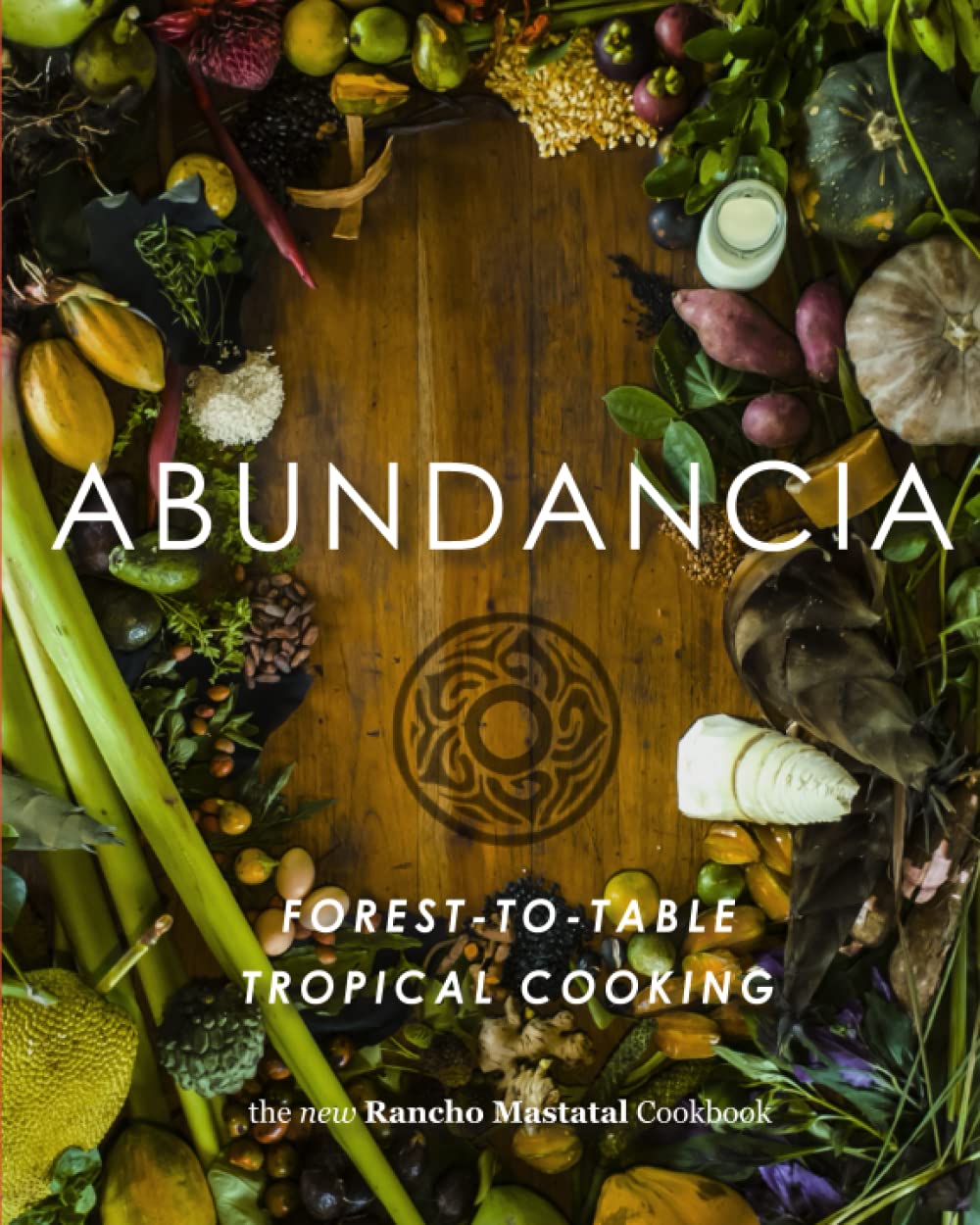



This cookbook might not be quite like the others you have sitting on your shelf. We’ve made it look like a cookbook— and it might smell like a cookbook if it’s spent enough time in your kitchen— but it’s also a memoir, a history of a place, of 20 years of experimentation and learning and growing on the piece of paradise known as Rancho Mastatal. Maybe it’s a manifesto, too. As such, you’re going to find more than recipes in the following pages. There are stories, lessons, and advice for more than just cooking. Life at Rancho Mastatal revolves around its food systems; propagating, growing, mulching, harvesting, processing, cooking, and (finally) eating. So to explain how to take a piece of the Rancho’s ‘good life’ home with you, a cookbook seemed like the best fit. The takeaways of this cookbook are larger than just the delicious recipes you’ll find within— we hope that it inspires and encourages you on your journey to live well on our precious planet. Life at the Ranch is proof that a life that feels good, and is good, can be one and the same. EAT LOCALLY The ingredients we have available to us in Mastatal, Costa Rica, may be very different to what you’ve got growing in the backyard or can source at the farmer’s market. Rather than going out of your way to find obscure, imported tropical ingredients, use what you can find locally and get creative. EXPERIMENT We bet that some of these recipes will be new, and possibly daunting, to you. Things like fermentation have a scary reputation in some parts of the world where steriliza- tion is the norm. We hope we’ve made these recipes accessible, to instill the confidence in you to experiment with new techniques and new flavours in the kitchen. SHARE We cook for crowds at the Ranch, and our recipes reflect that. For the year 2020 when this book was in development, our community mainly consisted of 12 people (with hearty, farm-fit, appetites). If your crowd is less than 12, we hope that everything is easily divisible to make in smaller quantities, or better yet, invite some friends to dinner! TAKE YOUR TIME We mainly cook on open flames with our variety of rocket stoves (read more about those on pg. 98), so cooking temperatures can range from ‘it’s too damp to even light a fire,’ to ‘we’re literally burning a hole in the ceiling.’ Mostly we aim for somewhere in the middle. If you’re cooking on more standardized equipment, learn to listen to your food to gauge how hot and how long to cook it, rather than the dial on your stovetop. Your senses can tell you what you need to know. WORK WITH ABUNDANCE This book isn’t organized by soups, salads, and main dishes— but by yields. When we harvest something from the ranch, whether it’s a fruit in the prime of its season, a wheelbarrow full of yuca, or a malanga the size of a small child— we usually have to get creative to use all of our produce before it goes to the great compost heap in the sky (or, in the front garden). Maybe you’re not stuck with 75 kilos of green jackfruit, but if your CSA box comes full to the brim with only radishes, we want to prepare you for how to get the most out of your abundance.