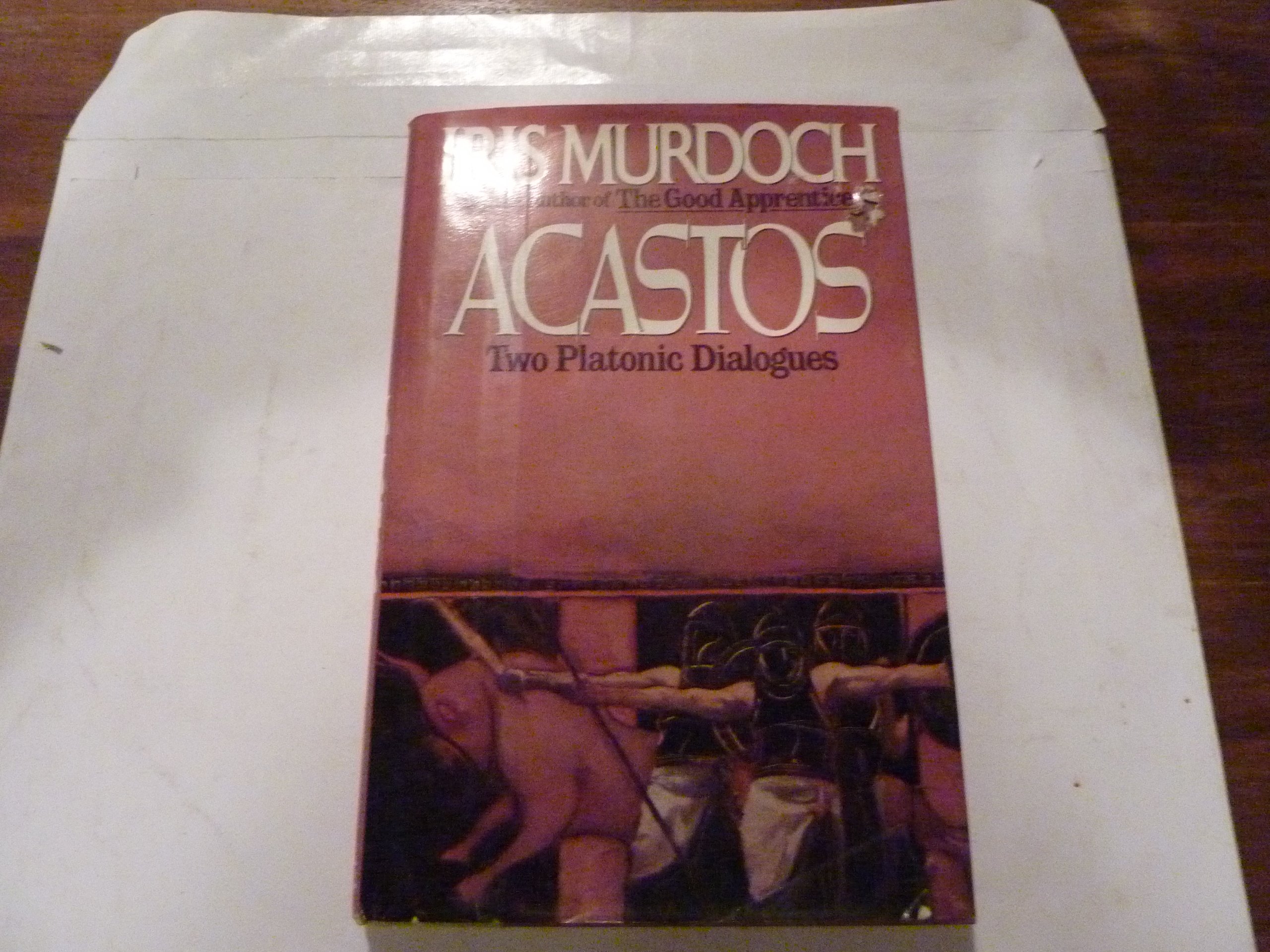



In two Platonic dialogues, "Art and Eros" and "Above the Gods," Acastos, Plato's friend and a sturdy able thinker, explains the meaning of goodness and the role of faith as they pertain to the modern world It should not surprise that Murdoch has chosen the Platonic dialogue for her latest foray into morality, art, and religion. It is, after all, a form she has successfully adapted at strategic points in several novels. The first dialogue, "Art and Eros," depicts a conversation between Socrates and several friends (including Plato) about the definition of art. The second, "Above the Gods," asks many searching questions about mythology, morality, and faith in religion. The dialogues are witty and profound, as one would expect from Murdoch, yet the ideas presented in Acastos have been better worked out, in a truly Platonic sense, in her best novels, such as The Black Prince and A Fairly Honourable Defeat, and in her philosophical work, The Sovereignty of Good. For academic and larger public libraries. Laurence Hull, Cannon Memorial Lib., Concord, Copyright 1986 Reed Business Information, Inc. Iris Murdoch philosophy