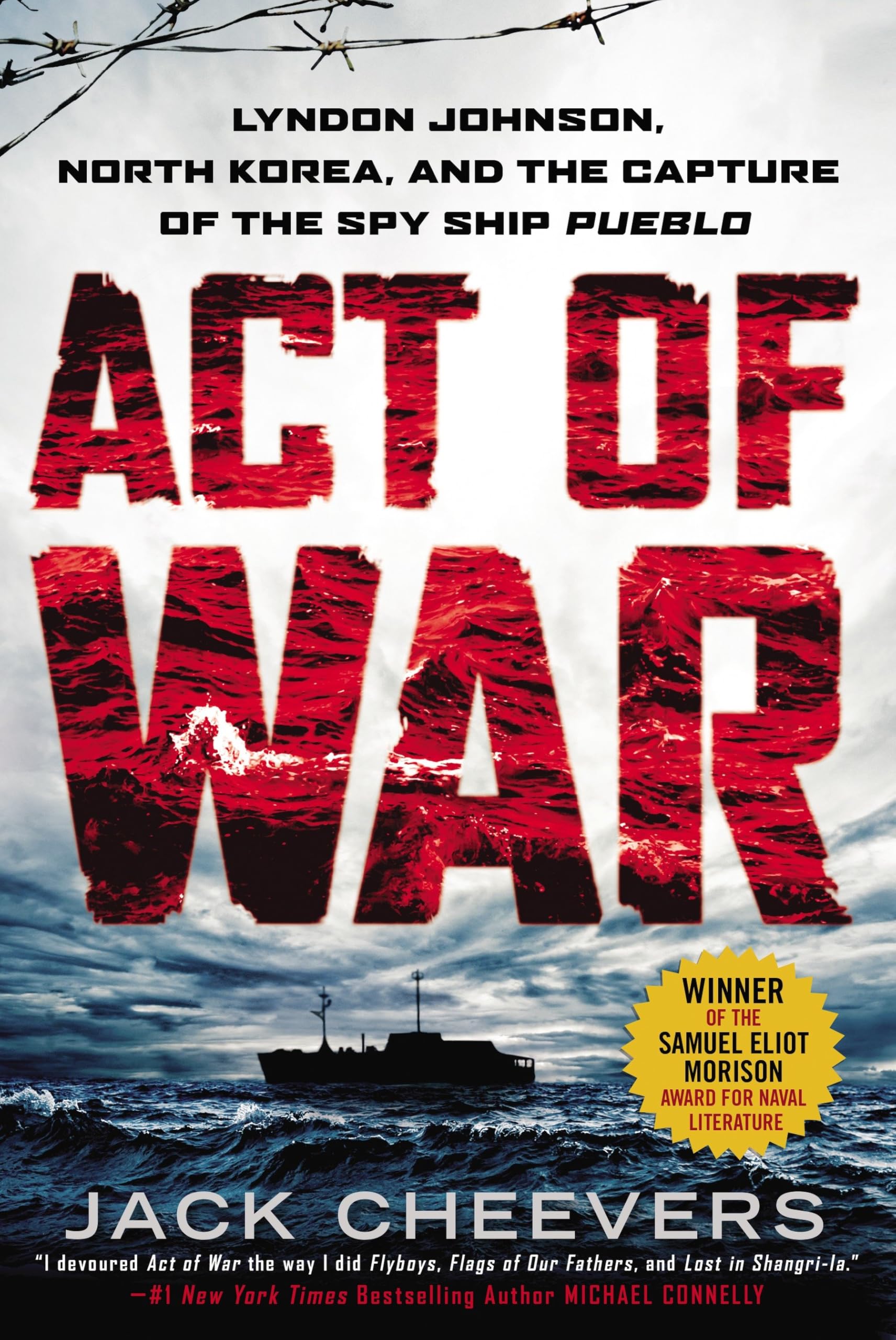
Act of War: Lyndon Johnson, North Korea, and the Capture of the Spy Ship Pueblo
$24.00
by Jack Cheevers



WINNER OF THE SAMUEL ELIOT MORISON AWARD FOR NAVAL LITERATURE “I devoured Act of War the way I did Flyboys , Flags of Our Fathers and Lost in Shangri-la .”—Michael Connelly, #1 New York Times Bestselling Author In 1968, the small, dilapidated American spy ship USS Pueblo set out to pinpoint military radar stations along the coast of North Korea. Though packed with advanced electronic-surveillance equipment and classified intelligence documents, its crew, led by ex–submarine officer Pete Bucher, was made up mostly of untested young sailors. On a frigid January morning, the Pueblo was challenged by a North Korean gunboat. When Bucher tried to escape, his ship was quickly surrounded by more boats, shelled and machine-gunned, forced to surrender, and taken prisoner. Less than forty-eight hours before the Pueblo ’s capture, North Korean commandos had nearly succeeded in assassinating South Korea’s president. The two explosive incidents pushed Cold War tensions toward a flashpoint. Based on extensive interviews and numerous government documents released through the Freedom of Information Act, Act of War tells the riveting saga of Bucher and his men as they struggled to survive merciless torture and horrendous living conditions set against the backdrop of an international powder keg. WINNER OF THE SAMUEL ELIOT MORISON AWARD FOR NAVAL LITERATURE “Sweeping in its power and importance as a historical document and absolutely riveting in its personal stories of sacrifice and heroism, Act of War is the best kind of narrative non-fiction. It grips us as it teaches us. And it reminds us that the past serves as perspective on the issues and fears we face today. From the halls of power in Washington to the heaving seas of the Pacific and to the cold, stark torture rooms of Pyongyang, this book leaves no stone unturned. This is a masterwork by Jack Cheevers. I devoured Act of War the way I did Flyboys , Flags of our Fathers and Lost in Shangri-la .” —Michael Connelly, #1 New York Times Bestselling Author of The Black Box “Jack Cheevers is not only a terrific researcher but a master storyteller. Act of War reads like a Cold War thriller—I couldn't put it down.” —James Scott, Pulitzer Prize Finalist and Author of Target Tokyo “A riveting, superbly researched, and revealing account of a Cold War clash at sea between the United States and North Korea—and of the courageous captain of the Pueblo , who stood up both to his brutal captors and to the Navy brass who tried to make him a scapegoat to cover up their own failures.” —David Wise, Author of Tiger Trap: America's Secret Spy War with China “ Act of War is international in scope, well written, and an enjoyable read....highly recommended....[a] gripping account of personal service, tragedy, sacrifice, and perseverance of the crew that played out within the heightened international tensions of the Cold War.” —Proceedings “Outstanding and necessary.” — Booklist , starred review “A valuable lesson at a time of increasing tensions with North Korea.” —James Bamford, New York Times Bestselling Author of Body of Secrets “Readers who appreciate intense accounts of survival against difficult circumstances will find this book enthralling… It deserves a wide audience.” — Library Journal, starred review “A fascinating, well-rendered account of a little known episode in the on-going conflict on the Korean peninsula.” —Sheila Miyoshi Jager, Author of Brothers at War: The Unending Conflict in Korea Jack Cheevers is a former political reporter for the Los Angeles Times . He and his wife, Kathleen Matz, live in Oakland, California. ACKNOWLEDGMENTS PROLOGUE On an October day in 1952, a Soviet coast guard cutter eased its way toward a headless corpse floating off Yuri island, a small link in the Kuril archipelago that stretches from northern Japan to Siberia. Clad in a black flight suit, the body was the earthly remains of a U.S. Air Force lieutenant named John R. Dunham. The 24-year-old officer had been navigating an RB-29 reconnaissance plane northeast of Japan’s Hokkaido island when two Soviet fighters opened fire. The lumbering, propeller-driven American aircraft caught fire and crashed into the sea; Dunham and seven other airmen perished. The Russians buried Dunham a few days later on Yuri without bothering to hold a ceremony or notify his next of kin. The incident was just one of many Cold War run-ins—some of them fatal—between U.S. intelligence collectors and communist defenders. Starting in 1945, American planes, surface ships, and submarines skirted the borders of the USSR, China, North Korea, and various Eastern European nations, probing and analyzing their defenses. The Sea of Japan was a hot spot in this little-known drama. U.S. planes monitored hundreds of miles of coastline running from Wonsan, a major North Korean port protected by scores of MiG fighters, to Vladivostok, headqu