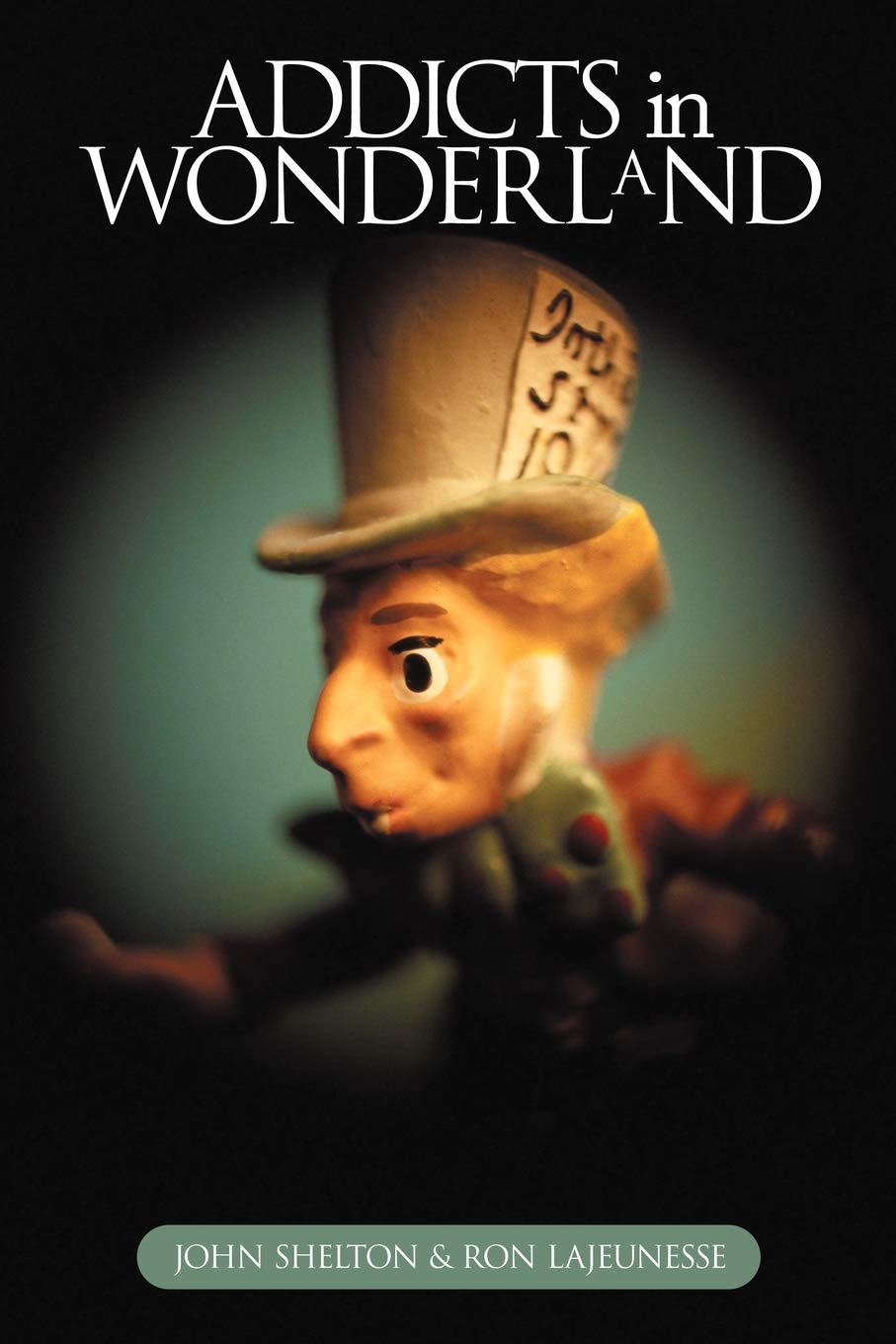



Addicts in Wonderland is a true story about cocaine addiction. It is framed around the classic tale Alice in Wonderland, with one significant difference. The people and events are real; there is no fiction. The story also fits no stereotype about addiction or "addicts." The reader will be shaken by the addictive supremacy of cocaine and helped to understand the destructiveness of fear, the addictive personality, the draw of life on the street, modern treatment strategies, why traditional God concepts fail so many and the power behind words and intention. The account details how one man's struggle has led to strategies that can modernize and enhance the way in which the Alcoholics Anonymous (A.A.) "12 Step" philosophy is used in the addiction recovery world. While the 12 Steps are based on some solid principles, for many they are not enough. Recovery gets stale or progress is hindered and the participants remain crippled by financial, relationship, emotional and spiritual issues - in spite of lengthy sobriety. This reality has guided the development of a "new" set of "quantum thought" concepts, built on centuries old eastern philosophy and decades old western theory. In other words, new thinking from old wisdom. With very specific detail, the book explains these quantum concepts, describes how they can be applied to the 12 Steps and then demonstrates how "Twelve Steppers" have enriched their recovery experience by becoming "Next Steppers," allowing them to move well beyond recovery to a new world of discovery. Quantum thought: A term derived from quantum physics where the universe is defined as a field where all parts have a relationship with other parts. This means that we can change a part by redefining our relationship with it. In other words, if something can be imagined in a quantum universe it can be real. Thoughts become things. Addicts in Wonderland By John Shelton Ron LaJeunesse AuthorHouse Copyright © 2011 John Shelton & Ron LaJeunesse All right reserved. ISBN: 978-1-4685-0181-0 Contents Acknowledgement..........................................xiIntroduction.............................................xiiiChapter 1 Mad Hatter Insanity............................1Chapter 2 Jabberwocky Mind...............................10Chapter 3 A Bottle Marked Poison.........................21Chapter 4 The Race and the Tale..........................26Chapter 5 The Caterpillar Adapts.........................36Chapter 6 The Rabbit.....................................48Chapter 7 Dawns Evidence.................................58Chapter 8 The Rabbits Evidence...........................63Chapter 9 The King & Queen...............................85Chapter 10 Down the Rocket Hole..........................94Chapter 11 The Pool Of Tears.............................103Chapter 12 Challenging Bill..............................113Chapter 13 Insight with Bill.............................118Chapter 15 Cheshire Change...............................139Postscript Waking to Reality.............................147Epilogue.................................................149About The Authors........................................151Appendix A The Contemporary Concepts.....................152Appendix B Recommended Readings,.........................155 Chapter One Madhatter Insanity "How do you know I'm mad? You must be or you wouldn't have come here." Alice in Wonderland In spite of my active addiction I believed I could help other people get well. I don't know if I thought that by helping others I could learn to help myself, or if it was that I wanted to be superior to other addicts by helping, or if I could be a "good guy" while really being a "bad guy." Or maybe I was simply attracted to some of the people who lived in the chaos that went with addiction. I believed of course that I was as yet immune to the disasters that I knew followed long term use of drugs. The most likely scenario was that it helped me identify with the person I believed myself to be and not the person that my wife Mary described when she was angry. "The infamous Roy Laing, a sixty something drug user hiding out on the fringes of society pretending to be better than everyone else." Whatever the reason, I did think I could mend these people and I went about trying. I told myself that I could still be a fixer because I was more resilient than others; less damaged. I was sure that I could continue to have the cocaine high without the ravages of addiction and that I could experience the excitement and chaos of addictive life without having to live in it. If I had really sat back and looked at what I was doing, I would have realized if anyone was wearing the Mad Hatters lethal lead filled hat, it was I. Mad Roy thought he could influence anyone. One of those people was Alan, a thirty something former farm-boy from Idaho who moved to the city, became attracted to the excitement of the drug scene and after a few short months, le