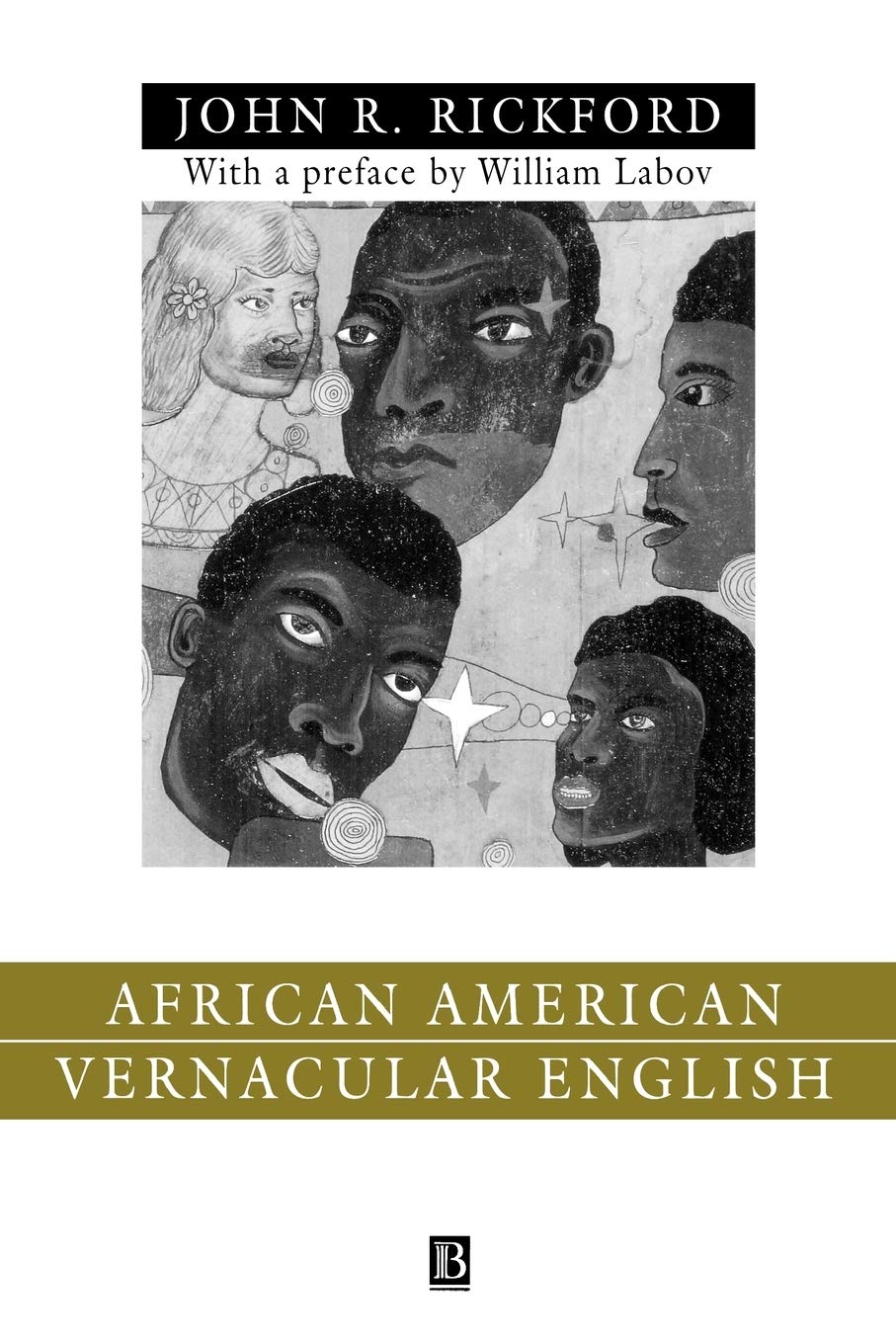
African American Vernacular English: Features, Evolution, Educational Implications (Language in Society)
$38.87
by John Russell Rickford



In response to the flood of interest in African American Vernacular English (AAVE) following the recent controversy over "Ebonics," this book brings together sixteen essays on the subject by a leading expert in the field, one who has been researching and writing on it for a quarter of a century. "John Rickford has been studying AAVE for nearly 30 years and is recognized as one of the experts leading the discussion about AAVE and implementing solutions to a number of associated problems." ― James H. Yang, Language in Society In response to the flood of interest in African American Vernacular English (AAVE) following the recent controversy over Ebonics, this book brings together sixteen essays on the subject by a leading expert in the field, one who has been researching and writing on it for a quarter of a century. Rickford's essays cover the three central areas in which questions continue to come in from teachers, students, linguists, the news media, and interested members of the public: What are the features of AAVE/Ebonics and how is it used? - What is its evolution and where is it headed? - What are its educational implications? The answers to these questions are sometimes matters of controversy even within linguistics, the scientific study of language, but Rickford's essays - written between 1975 and 1998 - provide an informed commentary on them based on systematic research rather than the opinionated misinformation that dominated media commentary on Ebonics. In response to the flood of interest in African American Vernacular English (AAVE) following the recent controversy over "Ebonics," this book brings together sixteen essays on the subject by a leading expert in the field, one who has been researching and writing on it for a quarter of a century. Rickford's essays cover the three central areas in which questions continue to come in from teachers, students, linguists, the news media, and interested members of the public: What are the features of AAVE/Ebonics and how is it used? - What is its evolution and where is it headed? - What are its educational implications? The answers to these questions are sometimes matters of controversy even within linguistics, the scientific study of language, but Rickford's essays - written between 1975 and 1998 - provide an informed commentary on them based on systematic research rather than the opinionated misinformation that dominated media commentary on Ebonics. John R. Rickford is the Martin Luther King Centennial Professor of Linguistics and African and Afro-American Studies at Stanford University. He is also the Director of the thirty-year-old degree-granting Program in African and Afro-American Studies, and President of the International Society for Pidgin and Creole Linguistics. He is the author of numerous scholarly articles, and several books, including Dimensions of a Creole Continuum (1987), editor of A Festival of Guyanese Words (1978), Sociolinguistics and Pidgin-Creole Studies (1988), and co-editor of Analyzing Variation in Language (1987). Used Book in Good Condition