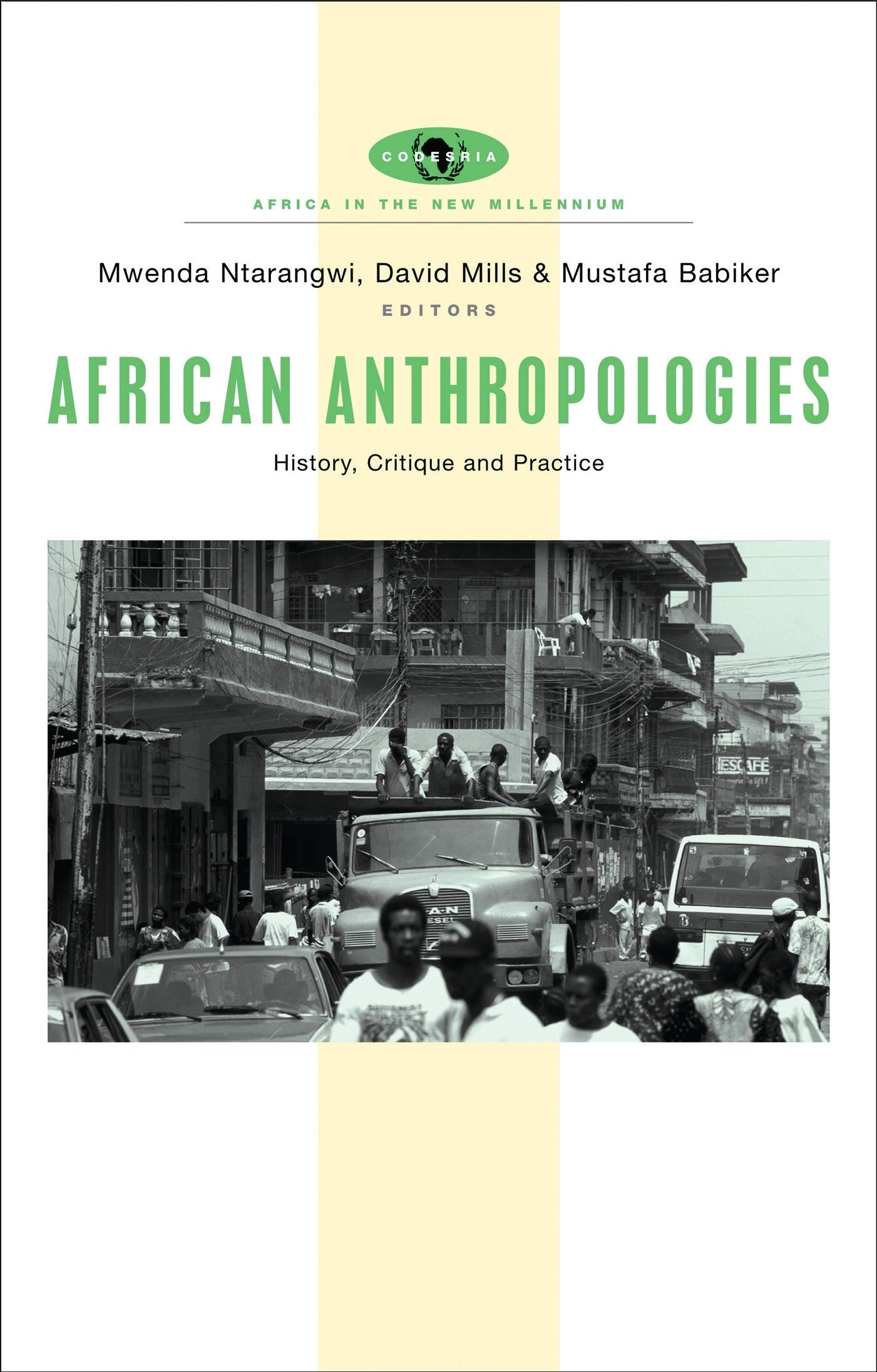
African Anthropologies: History, Critique and Practice (Africa in the New Millennium)
$35.84
by Mwenda Ntarangwi



This overview of the history, application and teaching of anthropology in post-colonial Africa shows how the continent's anthropologists are redefining the historical legacy of European and American disciplinary hegemony, and developing distinctively African contributions to anthropological theory and practice. The contributors illustrate the diverse national traditions of anthropological practice that have developed in sub-Saharan Africa since decolonization and exemplify the diversity of professional work carried out by the discipline's practitioners. Their commitment to a common disciplinary identity demonstrates the place that exists for a critical anthropology that is reflective about both its potentials and limitations. “Here is a book teachers of African anthropology have been hoping for - an intervention that lays to rest the notion of anthropology as colonial science. Released from the "Africanist" confines, anthropology assumes its rightful place in the reflexive and engaged production of knowledge on and for Africa.” ― Harri Englund, University of Cambridge “This book uses the "expansive moment" of African anthropology under late colonialism to re-explore the relationship between government and the discipline, pulling together three strands to the arguments: the historical identification of what specific anthropological endeavours actually did under colonial conditions; the complex relationships between anthropology and nationalism in Africa; and the exploration of what "practice" within national contexts in the present.” ― Jane Guyer, John Hopkins University “This is a timely and extremely valuable contribution to the ongoing debate about the crisis of identity in anthropology, offering fresh and unique insights into the fundamental challenges facing African anthropology. The book focuses on the theoretical, epistemological and practical problems resulting from Africa's encounter with Euro-colonialism and addresses the difficulties, limitations, achievements and potential African anthropology - the "mother" of Africa studies - from the perspective of "insiders".” ― Maxwell Owusu, University of Michigan “This is a fresh and important new overview of the place of anthropological research and practice in Africa, past and present.” ― Wendy James, University of Oxford Mwenda Ntarangwi teaches anthropology at Augustana College, Rock Island, Illinois, and is the author of Gender Identity and Performance (2003, Africa World Press). Mustafa Babiker teaches anthropology at the University of Khartoum. His research and development consultancies address issues of social change within pastoral communities. David Mills lectures at the University of Birmingham. He has just finished a book on the political history of British social anthropology. Used Book in Good Condition