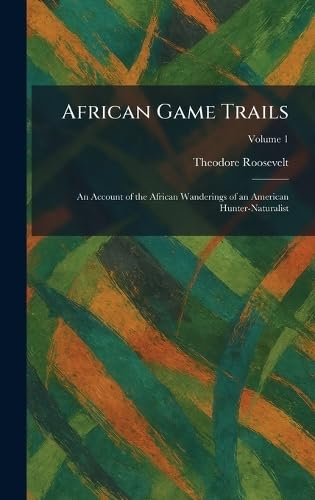
African Game Trails: An Account of the African Wanderings of an American Hunter-Naturalist
$36.95
by Theodore Roosevelt



"African Game Trails" is a classic work of travel and adventure, detailing Theodore Roosevelt's famous 1909 expedition across East Africa. As both a seasoned hunter and a dedicated naturalist, Roosevelt provides a vivid account of his travels through the landscapes of modern-day Kenya and Uganda. The narrative captures the intensity of tracking big game-including lions, elephants, and rhinos-while simultaneously offering meticulous observations on the region's diverse flora and fauna. This volume serves as more than just a hunting log; it is an important historical document of early 20th-century exploration and conservation efforts. Roosevelt's prose brings to life the challenges of the safari, the beauty of the African wilderness, and the scientific endeavors undertaken to collect specimens for the Smithsonian Institution. Readers are treated to a firsthand look at the cultures and environments encountered during this monumental journey. "African Game Trails" remains a seminal text for those interested in natural history, the history of exploration, and the complex legacy of one of America's most influential presidents. This work has been selected by scholars as being culturally important, and is part of the knowledge base of civilization as we know it. This work was reproduced from the original artifact, and remains as true to the original work as possible. Therefore, you may see the original copyright references, library stamps (as most of these works have been housed in our most important libraries around the world), and other notations in the work. This work is in the public domain in the United States of America, and possibly other nations. Within the United States, you may freely copy and distribute this work, as no entity (individual or corporate) has a copyright on the body of the work. As a reproduction of a historical artifact, this work may contain missing or blurred pages, poor pictures, errant marks, etc. Scholars believe, and we concur, that this work is important enough to be preserved, reproduced, and made generally available to the public. We appreciate your support of the preservation process, and thank you for being an important part of keeping this knowledge alive and relevant.