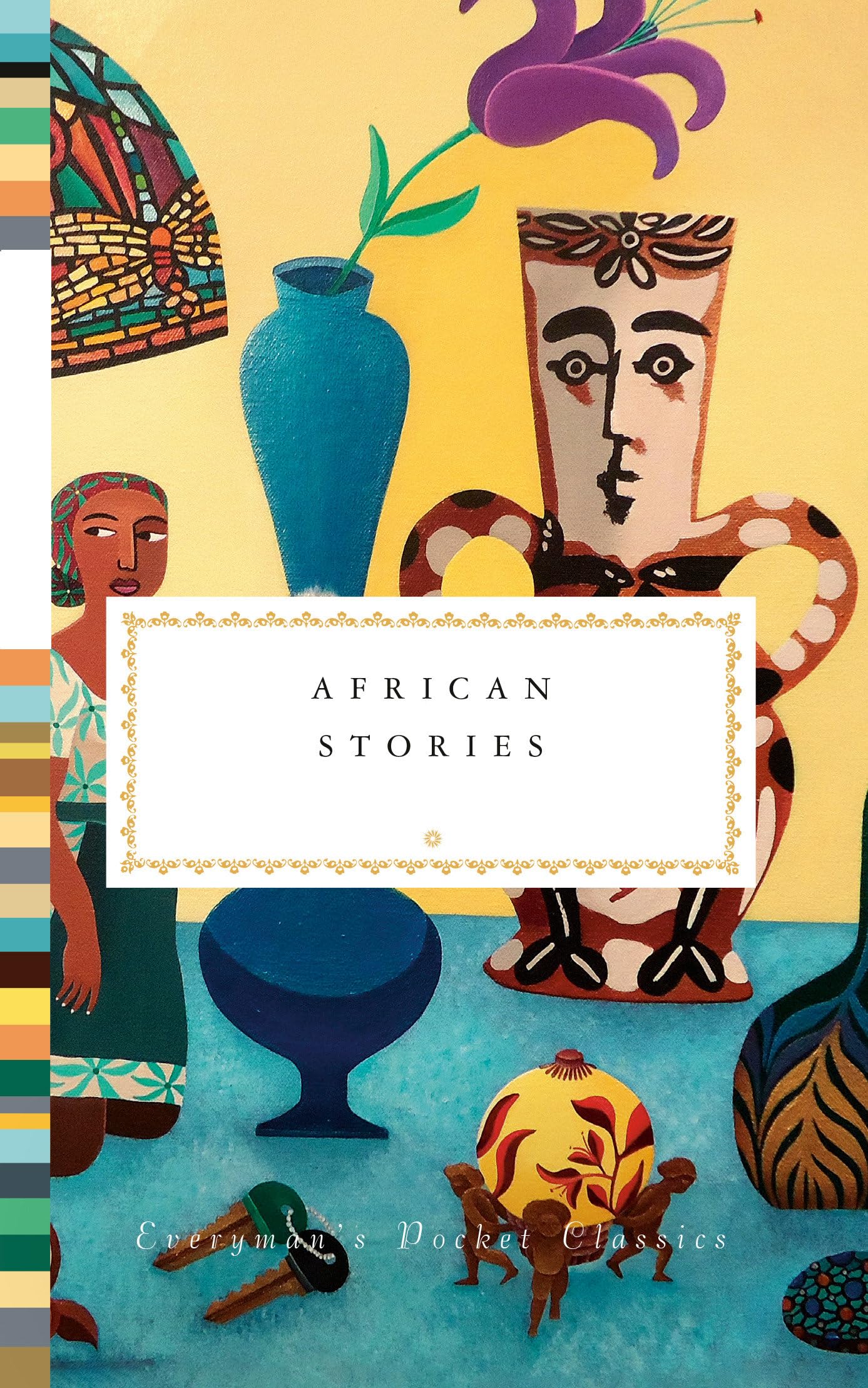



A Pocket Classics hardcover collection of 36 terrific stories by major writers from across Africa, selected by the Booker Prize–winning Nigerian poet and novelist Ben Okri Award-winning writer Ben Okri, author of the Booker Prize-winning novel The Famished Road , curates this one-volume overview of the best of African literature. Here is a pantheon of enormous talents from the twentieth and twenty-first centuries, hailing from a wide variety of countries and cultures and including multiple winners of the Nobel Prize in literature, the Booker Prize, and the Commonwealth Writers Prize. The writers include Chinua Achebe, Ngugi wa Thiong'o, Tayeb Salih, Doris Lessing, J. M. Coetzee, M. G. Vassanji, Chimamanda Ngozi Adichie, and many more. The short story form has a rich history on the African continent, drawing on a deep well of traditional oral tales, fables, and legends as well as a vital and ongoing engagement with the forces of history and modernity. Subjects range from the vicissitudes of daily life to sweeping social commentary, with such varied characters as a shopkeeper yearning for love in Abdulrazak Gurnah’s “Cages,” a faith-healing priest in Bessie Head’s “Jacob,” a freedom fighter facing apartheid in Nadine Gordimer’s “Amnesty,” and invading aliens overcome by music in Emmanuel Boundzéki Dongala’s “Jazz and Palm Wine.” Whether they touch on the spirit world, the urban experience, colonialism, politics, humor, or love, these stories are both dazzling and moving. Everyman's Library pursues the highest production standards, printing on acid-free cream-colored paper, with full-cloth cases with two-color foil stamping, decorative endpapers, silk ribbon markers, European-style half-round spines, and a full-color illustrated jacket. BEN OKRI is a Nigerian-born British poet and novelist. His books have won several awards including the Commonwealth Writers' Prize for Africa and the Paris Review 's Aga Khan Prize for Fiction. The Famished Road won the Booker Prize in 1991. He was born in Minna, Nigeria, and lives in London. Preface by Ben Okri The short story is the most compelling of literary forms. It is perhaps the most rigorous literary form after the sonnet. It has the destiny of creating, within a few pages, a brief eternity. As from a magic lamp, with a few rubbings of prose, a genie emerges to take the imagination on a journey that becomes one’s own. A dream that becomes a reality, or a reality that becomes a dream. African writers have a unique affinity with the short story form. Maybe it is the literary form that best approximates patterns of the African experience. Maybe also it is the form closest to the oral stories, legends, fables, and tales of origin that are part of traditional life. The short story is very suited to Africa. For there is something a little fantastical about African reality. This has nothing to do with the exotic, which alienates the reality of the other. The slightly fantastical nature of African life might have to do with the persistence in the modern world of ancient ways of being that are coherent and ritualistically alive. The exotic implies a deviation from an accepted code of reality. African reality is not a deviation from a commonly agreed world. It is a world unto itself. It is richly diverse and yet in each place, each land, entirely true. This is another way of saying that African reality is already fictional. It is fictional because the lands breathe stories. The African short story was born of the intersection of many conditions: the ancient African worlds, the colonial experience, encounters with world literature, postindependence disillusionment, the plethora of magazines that accompanied the emergence of an African middle class, a new African aesthetics elaborated by intellectuals in the wake of independence, the necessity for African writers to define themselves and to question the new ruling elite, and the sense of the oral tradition as representing an authentic literary matrix. This is not true for all the writers. For the white South African writers, for example, being born on the continent, being entangled in its fate, is enough to generate the urgency that characterizes writing from the land – urgency and a sense of the land itself, its complicated history and politics, and issues of identity and language and power. Many African writers tended to do other jobs for a living. They were lecturers, journalists, scientists, musicologists, professors, doctors, lawyers, government employees. For this reason the short story was the literary form best suited to writers who had only small snatches of time, writers who did not have the luxury of writing for a living. For such busy lives, poetry and the short story were greatly favoured. This is not to say that the novel languished. Far from it. The novel is the master form of the literature. It is just that the short story was handier. As a result the short story became the ready form for interrogat