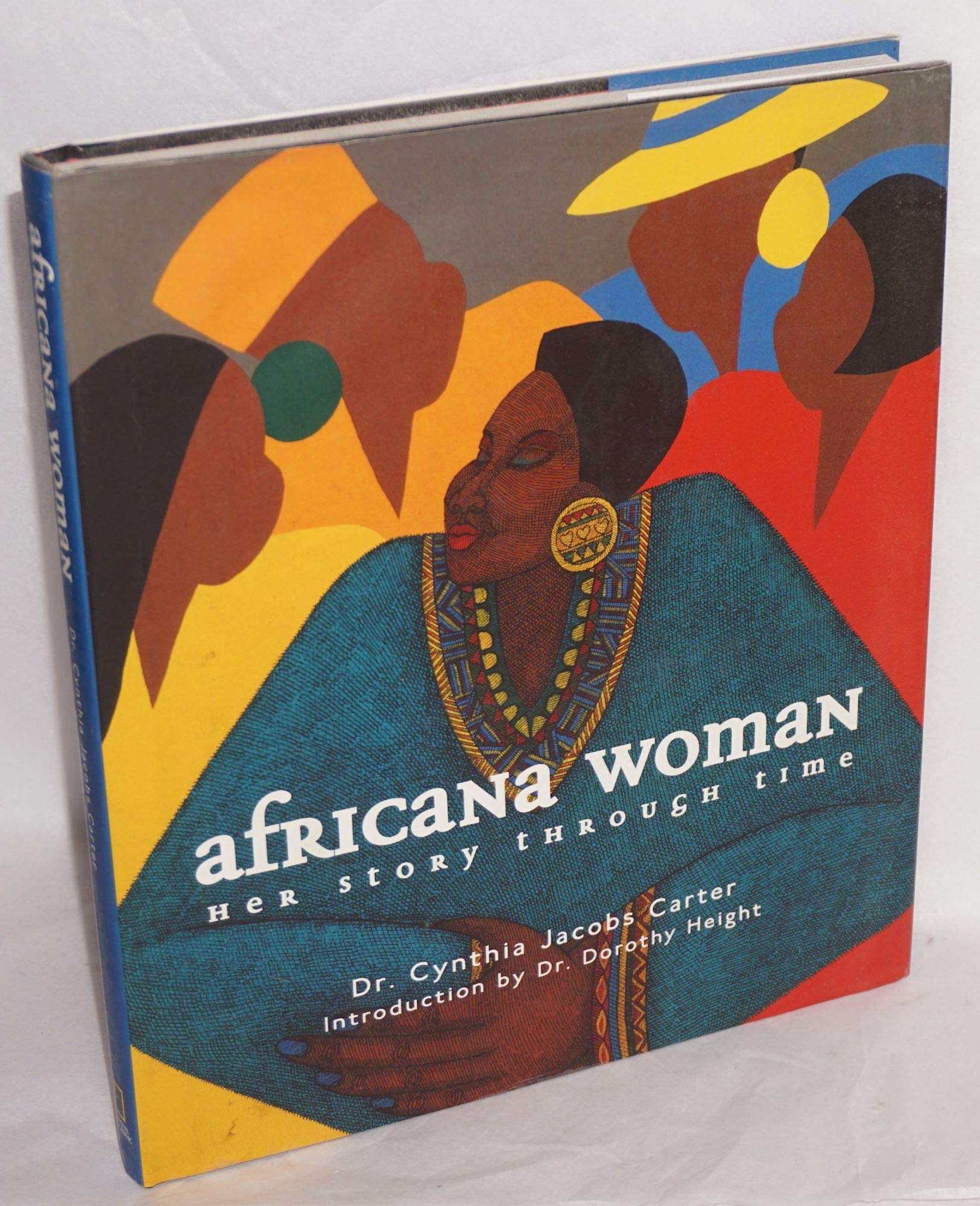



Celebrates the political, economic, social, and cultural contributions of women of African descent throughout history, from Queen Tiye, Queen of Egypt in 1300 B.C., to abolitionists Harriet Tubman and Sojourner Truth, to journalist and activist Ida B. Wells, and others, giving voice to these women in a collection of diary excerpts, songs, poetry, and artwork. Chapter 1: Royalty In ancient times only the deities lived in the world. Their mother was Nananbouclou. She hurled fired into the sky. It remains to this day. It is called Baiacou: the Evening Star. -- from an African folktale From the dawn of civilization, Africa's royal women have shown themselves to be intelligent, resourceful, courageous, passionate -- and sometimes vulnerable. Although born and raised in different parts of the continent, they all shared a common desire to forge their own destinies and to live on in eternity. Their astounding stories, true and fabled, survive today to reveal their accomplishments and their legacies. By 1500 B.C., Egypt's great pyramids had stood for more than ten centuries. Egypt had survived periods of plague, pestilence, and even opulence and now was enjoying a renaissance. The Hyksos -- invaders from southwest Asia who had ravaged and controlled Egypt for decades -- had been driven from Lower Egypt, the land encompassing the Nile River Delta and its northern valley. In addition, Egypt's armies were marching south to conquer Nubia, a fertile land that stretched along the banks of the Nile, near present-day Libya. While Egypt added new territories to its boundaries, it also grew internally -- to become the undisputed center of culture and politics in the larger eastern Mediterranean world. It was the beginning of the New Kingdom -- a period of great Egyptian power and wealth that would last four centuries, from around 1539 to 1070 B.C. Hatshepsut, one of Egypt's most fabled rulers, lived in the early years of this glory. Daughter to Pharaoh Thutmose I and Queen Ahmose-Nefertere, Hatshepsut was born around 1500 B.C. Beautiful and intelligent, Hatshepsut knew a life of great wealth and privilege. When Thutmose I died around 1492 B.C., the Egyptian court insured the continuation of the royal bloodline by wedding her, a full-blooded royal, to her half-brother. Thutmose II was the new pharaoh and the son of Thutmose I by a lesser wife. (Incestuous marriages were common among Egyptian royals since the women carried the royal blood.) Though still a very young woman, Hatshepsut ruled as Thutmose II's principal queen. She of Noble Bearing ý Great Royal Spouse ý Daughter of the God Amun ý First Lady of the Two Lands. Hatshepsut proudly wore these titles as queen. She stayed in the background when Thutmose sat on his throne, but her intelligence was always evident. Thutmose frequently left Hatshepsut in charge when he journeyed abroad -- leading successful military campaigns into Syria and Nubia that acquired both land and great wealth. Before Thutmose II died, he named his only son -- seven-year-old Thutmose III, born to a harem girl -- his successor. Since Thutmose III was too young to rule on his own, the Egyptian high court designated Hatshepsut as co-regent. A wise and ambitious woman, Hatshepsut understood her position and ruled judiciously. Although Hatshepsut could have declared war on her neighbors, she chose to focus instead on national affairs. She built education and arts facilities. She dismantled the main army and sponsored peaceful diplomatic expeditions into Punt, Asia, Greece, and strategic areas on the continent of Africa. Later, caravans and ships followed, trading in gems, ivory, ebony, oils, spices, incense, and even trees. Hatshepsut continued to rule even after Thutmose III came of age. It appears that they split the duties: She oversaw the administration while he commanded the military. A few years later, however, with Thutmose III involved in military campaigns, Hatshepsut crowned herself pharaoh. She used to her advantage the Egyptian belief that a royal birth resulted from the union between the pharaoh's mother and Amun-Re, the supreme deity. (Some experts believe that this notion, a heavenly god fathering a human child, may have sowed the seeds for Christianity.) Hatshepsut claimed that Amun-Re had come to Queen Ahmose-Nefertere in the human form of her husband, Thutmose I. Since she, Hatshepsut, was the child of that union, she concluded that she was the rightful child to rule all of Egypt. To legitimize her claim to the title of pharaoh, she ensured that the people of Egypt recognized her as pharaoh by always appearing in public in full royal male regalia: a simple robe, red-and-white crown, royal wig, and a nems (a striped cloth placed around the wig). She also donned a false beard, facial hair being strictly forbidden to all but the pharaoh. She even claimed a pharaoh's privilege and had a burial tomb carved out for herself in the Valley of the Kings, adjacent to