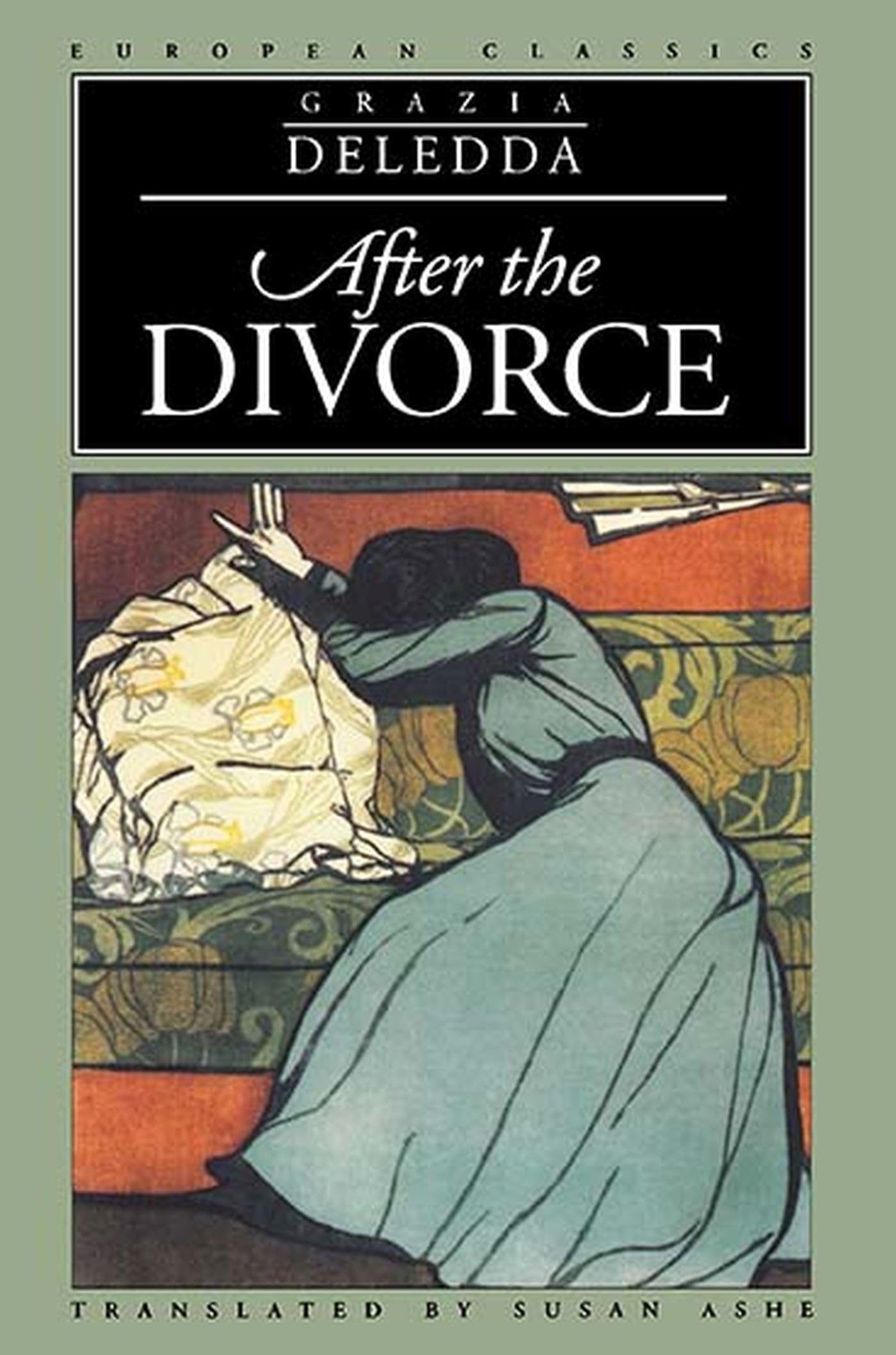



The novel begins with Costantino Ledda's conviction and sentencing for the murder of his cruel uncle. Though innocent of the crime, he accepts the guilty verdict as punishment for marrying Giovanna Era through a civil ceremony rather than an expensive church wedding. When her husband is taken away, Giovanna has no way to provide for herself, her mother, and her son, who soon dies of malnutrition. Out of desperation she divorces Costantino, according to a new law for wives of convicts, and marries a wealthy but brutish landowner. When the true murderer confesses and Costantino returns, he and Giovanna begin a forbidden and ultimately destructive affair. Deleda's tragic story of poverty, passion, and guilt portrays the primitive and remote world of the church, pre-Christian superstitions, and laws dictated from the mainland, in her native Sardinia, where society hangs in a delicate balance. Once this order is disrupted, none of these characters can escape the spiral of destruction dictated by fate, God, and society. "[Deledda] belongs to more than just her own day. She does more than reproduce the temporary psychological condition of her period. She has a background, and she deals with something more fundamental than sophisticated feeling . . . what she does do is create the passionate complex of a primitive populace." —D.H. Lawrence This is Deledda's tragic story of poverty, passion, and guilt which portrays the delicately balanced social order of her native Sardinia. In this primitive and remote world the church, pre-Christian pagan superstitions, and laws dictated from the mainland hold society in a delicate balance. Once this order is disrupted, none of these characters can escape the spiral of destruction dictated by fate, God, and society. GRAZIA DELEDDA (1871–1936) was born in Nuoro, Sardinia, which forms the setting for most of her fiction. In 1900 she moved to Rome with her husband, where she was commissioned to codify the folklore on her native island. Her subsequent work is informed and inspired by this research and by a keen understanding of the conflicts produced by the convergence of Christianity, strict social mores, and pagan superstition. In 1926 she became the second woman to receive the Nobel Prize for Literature, awarded in recognition of the enduring power of her work and its consistent impact on a global audience. Remarkably, her work is little known to English-speaking audiences. Northwestern University Press publishes another of her novels, Elias Portolu . Used Book in Good Condition