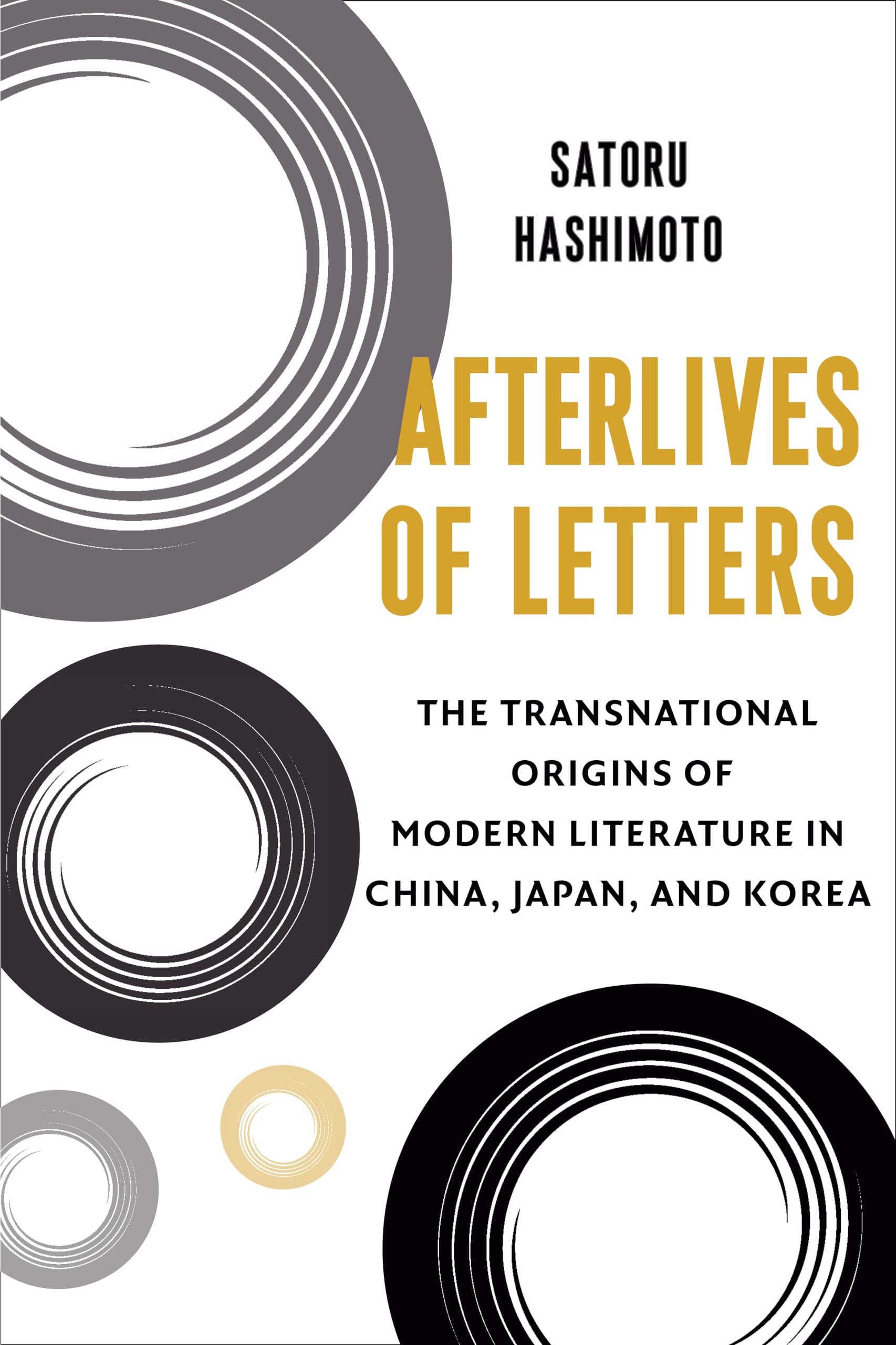
Afterlives of Letters: The Transnational Origins of Modern Literature in China, Japan, and Korea (Studies of the Weatherhead East Asian Institute,
$35.00
by Satoru Hashimoto



Honorable Mention, 2024 Aldo and Jeanne Scaglione Prize for East Asian Studies, Modern Language Association When East Asia opened itself to the world in the nineteenth century, Chinese, Japanese, and Korean intellectuals had shared notions of literature because of the centuries-long cultural exchanges in the region. As modernization profoundly destabilized cultural norms, they ventured to create new literature for the new era. Satoru Hashimoto offers a novel way of understanding the origins of modern literature in a transregional context, drawing on Chinese-, Japanese-, and Korean-language texts in both classical and vernacular forms. He argues that modern literature came into being in East Asia through writerly attempts at reconstructing the present’s historical relationship to the past across the cultural transformations caused by modernization. Hashimoto examines writers’ anachronistic engagement with past cultures deemed obsolete or antithetical to new systems of values, showing that this transnational process was integral to the emergence of modern literature. A groundbreaking cross-cultural excavation of the origins of modern literature in East Asia featuring remarkable linguistic scope, Afterlives of Letters bridges Asian studies and comparative literature and delivers a remapping of world literature. Afterlives of Letters dismantles modern literature's self-mythologization as a break with the past by showing that East Asian authors created modern literature through conscious engagement with the literary heritage of classical Chinese. -- Christopher L. Hill, author of Figures of The World: The Naturalist Novel and Transnational Form In this impressively multilingual and theoretically sophisticated analysis, Hashimoto reexamines claims that modern East Asian literature was either a radical departure from preceding classical traditions or was directly grounded on those same national traditions. Instead, Hashimoto contends that this literature was haunted by its classical legacies while also being thoroughly transnational in its contemporary incarnations. -- Carlos Rojas, author of Homesickness: Culture, Contagion, and National Transformation in Modern China Expansive in scope and meticulous in detail, Afterlives of Letters revises the established view that modern literature emerged in East Asia as a thorough break with the region’s shared cultural past. It liberates the founding fathers of “national literatures” in China, Japan, Korea, and Taiwan from their imposed canonicity, and enlivens transregional and transtemporal aspects of their writerly practices. -- Youngju Ryu, author of Writers of the Winter Republic: Literature and Resistance in Park Chung Hee’s Korea By reuse, repetition, and parody, the authors in Satoru Hashimoto’s wide-ranging, meticulous, and original study made Asian modernity out of the ruins of their classical culture, as they dared to imagine freedom from old-style and new-style empires. Literary history in its complexity here illuminates the needs of the present. -- Haun Saussy, author of The Making of Barbarians: Chinese Literature and Multilingual Asia Putting Chinese, Japanese, and Korean authors in transnational dialogue, Satoru Hashimoto brilliantly delineates how East Asian writers grappled with Western modernity while forging their own modernity from local traditions. -- Ban Wang, author of At Home in Nature: Technology, Labor, and Critical Ecology Offers a wealth of insights into the transnational origins of modern literature in East Asia. ― Journal of Japanese Studies Represents a significant scholarly achievement in the field of East Asian literary studies and should be required reading for scholars interested in the ways that modern writers continued to engage with tradition as they sought to forge a modern literature in East Asia. ― Harvard Journal of Asiatic Studies Satoru Hashimoto is assistant professor of comparative thought and literature at the Johns Hopkins University.