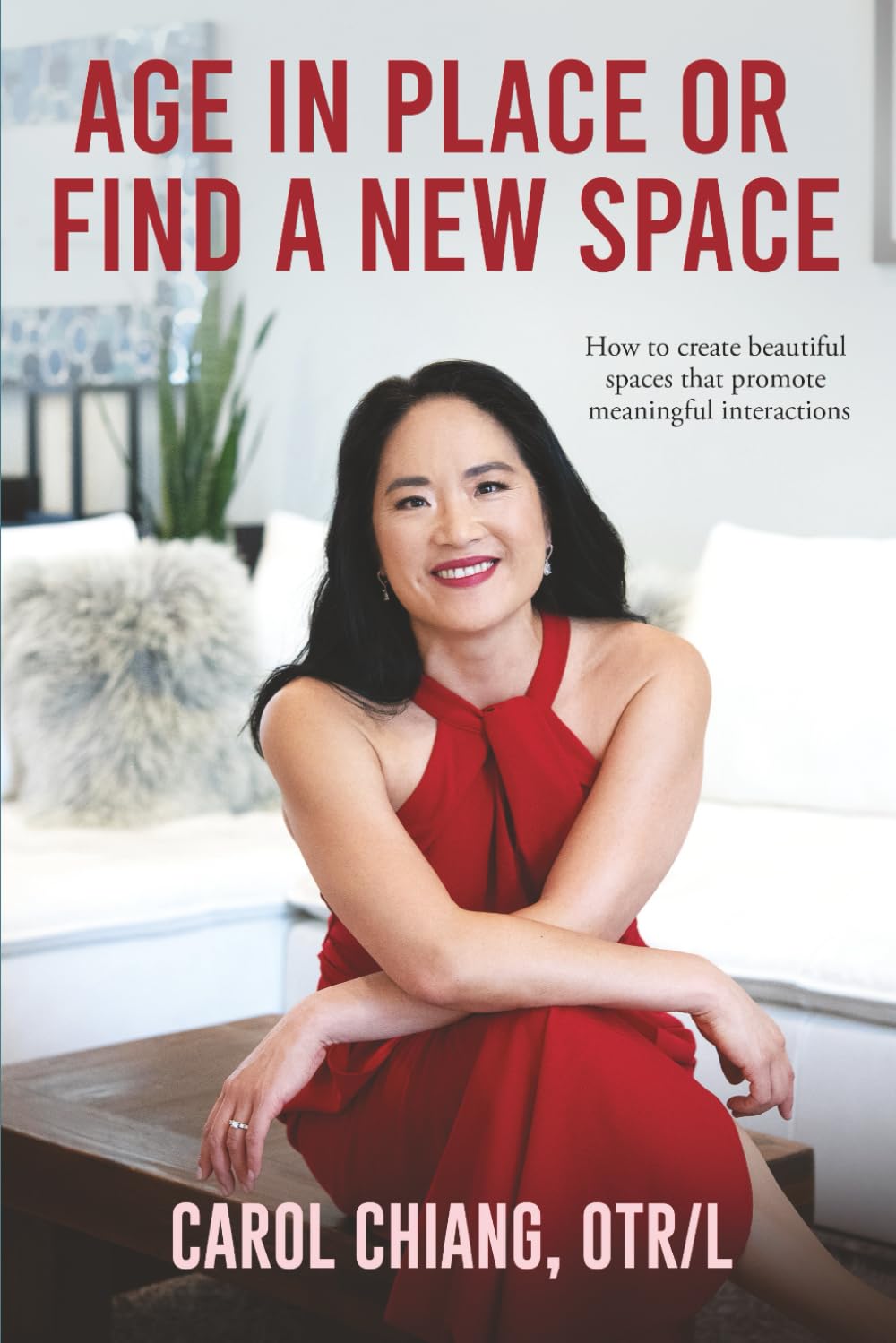
Age in Place or Find a New Space: How to Create Beautiful Spaces That Promote Meaningful Interactions
$21.99
by Carol Chiang



You want to stay in your home as you get older--but do you really know what that takes? Do you know what it will cost? And how will you know when aging in place is no longer the right option? Age in Place or Find a New Space® is your essential guide to planning with clarity, confidence, and purpose. Whether you're an aging adult shaping your future, an adult child helping your parents navigate big decisions, or a financial planner guiding clients through life-changing choices, this book gives you the tools to make smart, proactive moves. Carol Chiang, a nationally recognized aging-in-place expert and occupational therapist, brings a refreshingly honest, practical voice to the aging conversation. With humor, warmth, and real-world strategies, she shows you why thoughtful home modifications can save money in the long run-and why investing in your home now is one of the most generous social contributions you can make. Explore the real cost of aging in place, why building positive habits in your twenties can change everything, and how creating beautiful, tech-enabled spaces can dramatically reduce the fear of falling--a fear that often fuels inactivity and isolation. Carol introduces exciting future technologies---many born from space and military innovations that are already reshaping the homes of tomorrow. You'll discover how virtual rehab, robotics, voice-controlled environments, and even hologram technology can create homes that don't just house you--they actively support you. But this isn't just about high-tech solutions. Carol brings her signature MacGyver-style mindset to every chapter, offering scrappy, budget-friendly hacks alongside cutting-edge possibilities-proving that you don't need to spend a fortune to build a home you love. And with about 90,000 Americans diagnosed with Parkinson's each year, chances are you'll soon know someone living with it. Carol offers clear, Parkinson's-specific guidance to help you understand what to expect and how to truly support someone from day one. Packed with real stories, step-by-step checklists, and actionable solutions, this book will leave you informed, empowered, and ready to take action-whether you're planning for yourself, supporting someone you love, or helping clients build safer, more joyful lives at home. Kirkus Starred Review - a designation of exceptional quality given to approximately 10% of books reviews: "Seniors and their families will find here a splendid blueprint for planning a more comfortable and fulfilling retirement. A warmly reassuring primer on environments that foster graceful aging. Your house needs to change along with your lifestyle as your body declines, according to this insightful guide to age-supportive environments. The author’s discussion of these issues is comprehensive, lucid and detailed, and she includes easy-to-use checklists for readers to use when planning household revamps, along with lists of resources and companies who help with transitions. The book is also a fascinating disquisition on how we interact with our homes in ways that have profound consequences that we rarely think about, conveyed in vivid prose that’s informed by subtle, telling observations. (“The oversized armchair completely swallowed this tiny woman,” she writes of one client. “Not only did it put her in poor posture, but she also had to use momentum to stand up every single time—a major fall risk.”) Your house needs to change along with your lifestyle as your body declines, according to this insightful guide to age-supportive environments. Chiang, an occupational therapist and founder of Evolving Homes, argues that our surroundings, habits, and technology must adapt to the physical and mental impairments that come with aging. Much of the book explores home remodeling ideas, like widening doorways to facilitate wheelchairs, eliminating unnecessary steps, rugs, and other tripping hazards, vetting furniture, glass coffee tables are a low-visibility stumbling menace and installing high-tech doors that open automatically for residents. The author tours a workshop of new gadgetry, including smart faucets that can be verbally ordered to measure out six ounces of hot water and electrically powered pants that help with a hike in the hills. Fitness is a must for warding off illness and debility, she reminds readers, and she suggests a number of simple sit-and-stand and arm-raising exercises to get moving, along with tips on crafting easy-to-remember routines for preparing meals, taking meds, and staying hydrated. Other chapters cover the special needs of Parkinson's patients and the reluctance of some to make necessary accommodations like installing bathroom grab bars, which many regard as the Grim Reaper's calling card. (Chiang suggests calling them "reassurance rails". The author's discussion of these issues is comprehensive, lucid and detailed, and she includes easy-to-use checklists for readers to use when planning household revamps, along with