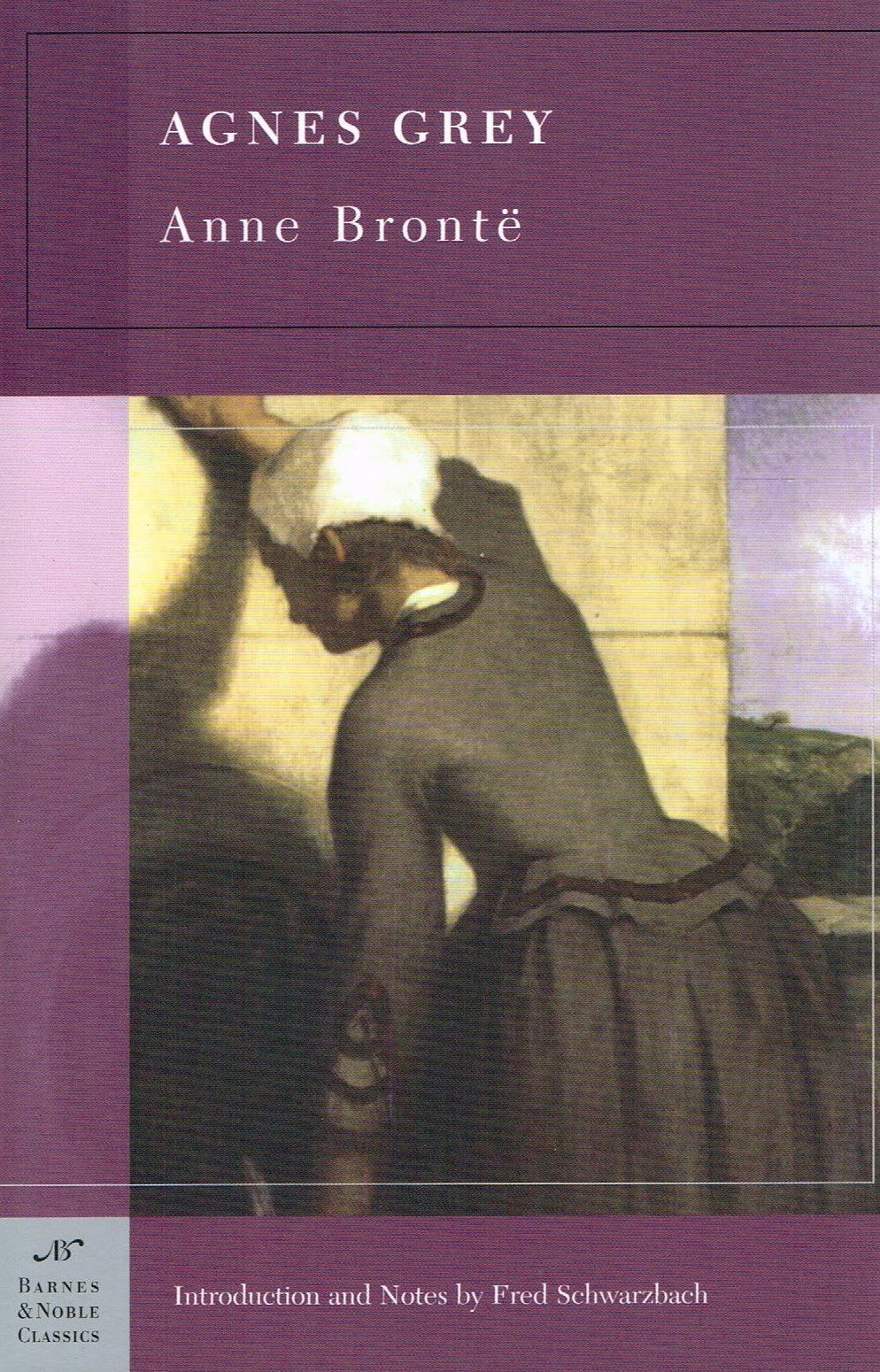



&&LDIV&&R&&LDIV&&R&&LI&&RAgnes Grey&&L/I&&R, by &&LB&&RAnne Bronte&&L/B&&R, is part of the &&LI&&R &&LI&&RBarnes & Noble Classics&&L/I&&R &&L/I&&Rseries, which offers quality editions at affordable prices to the student and the general reader, including new scholarship, thoughtful design, and pages of carefully crafted extras. Here are some of the remarkable features of &&LI&&RBarnes & Noble Classics&&L/I&&R: &&LDIV&&R New introductions commissioned from todays top writers and scholars - Biographies of the authors - Chronologies of contemporary historical, biographical, and cultural events - Footnotes and endnotes - Selective discussions of imitations, parodies, poems, books, plays, paintings, operas, statuary, and films inspired by the work - Comments by other famous authors - Study questions to challenge the readers viewpoints and expectations - Bibliographies for further reading - Indices & Glossaries, when appropriate All editions are beautifully designed and are printed to superior specifications; some include illustrations of historical interest. &&LI&&RBarnes & Noble Classics &&L/I&&Rpulls together a constellation of influences―biographical, historical, and literary―to enrich each readers understanding of these enduring works.&&L/DIV&&R&&L/DIV&&R&&LP style="MARGIN: 0in 0in 0pt"&&R &&L/P&&R&&LP style="MARGIN: 0in 0in 0pt"&&RWritten when women―and workers generally―had few rights in England, &&LI&&RAgnes Grey&&L/I&&R exposes the brutal inequities of the rigid class system in mid-nineteenth century Britain. Agnes comes from a respectable middle-class family, but their financial reverses have forced her to seek work as a governess. Pampered and protected at home, she is unprepared for the harsh reality of a governess’s life. At the Bloomfields and later the Murrays, she suffers under the snobbery and sadism of the selfish, self-indulgent upper-class adults and the shrieking insolence of their spoiled children. Worse, the unique social and economic position of a governess―“beneath” her employers but “above” their servants―condemns her to a life of loneliness. &&L/P&&R&&LP style="MARGIN: 0in 0in 0pt"&&R &&L/P&&R&&LP style="MARGIN: 0in 0in 0pt"&&RLess celebrated than her older sisters Charlotte and Emily, &&LSTRONG&&RAnne Bronte&&L/B&&R was also less interested in spinning wildly symbolic, romantic tales and more determined to draw realistic images of conditions in Victorian England that need changing. While Charlotte’s &&LI&&RJane Eyre&&L/I&&R features a governess who eventually and improbably marries her employer, &&LI&&RAgnes Grey&&L/I&&R deals with the actual experiences of middle-class working women, experiences Anne had herself endured during her hateful tenure as a governess. &&L/P&&R&&LP style="MARGIN: 0in 0in 0pt"&&R &&L/P&&R&&LP style="MARGIN: 0in 0in 0pt"&&R&&LSTRONG&&RFred Schwarzbach&&L/B&&R&&L/B&&R serves as Associate Dean and teaches in the General Studies Program of New York University. He is the author of &&LI&&RDickens and the City&&L/I&&R, the editor of &&LI&&RVictorian Artists and the City&&L/I&&R and &&LI&&RDickens’s American Notes&&L/I&&R, a contributor to the &&LI&&ROxford Reader’s Companion to Dickens&&L/I&&R, and the author of scores of articles, essays, and reviews on Victorian life and letters.&&L/P&&R&&L/DIV&&R Fred Schwarzbach serves as Associate Dean and teaches in the General Studies Program of New York University. He is the author of Dickens and the City , the editor of Victorian Artists and the City and Dickenss American Notes , a contributor to the Oxford Readers Companion to Dickens , and the author of scores of articles, essays, and reviews on Victorian life and letters. From Fred Schwarzbach’s Introduction to Agnes Grey It is impossible for any of us to approach the Brontës without calling up the Brontë myth. We are all familiar with its outlines. The isolated family house on the edge of a bleak Yorkshire moor. The four young children, Charlotte, Branwell, Emily, and Anne, their mother and elder sisters all dead, now in the care of a stern Calvinist aunt. The Reverend Patrick Brontë, a failed writer himself, reclusive, brooding, and subject to periods of dark rage. Then, through the agency of a present of toy soldiers, the children begin writing sagas in which the soldiers come to life. All four are gifted, though Branwell drinks himself to an early death, while the three young women precociously develop writing careers—Emily dying young of the family curse of tuberculosis, and Charlotte living longer, only to die shortly after her marriage. Anne, the youngest, is also the quietest and least talented; modest, religious, and industrious, she too dies of TB at an early age. The narrative, like any myth, partakes of some truths but embodies a great deal of fantasy—and a great deal of that linked to the famous Wyler-Olivier-Oberon film of Wuthering Heights (1939). To begin: The parsonage was at the edge of a large, bustling mill town; the aunt appear