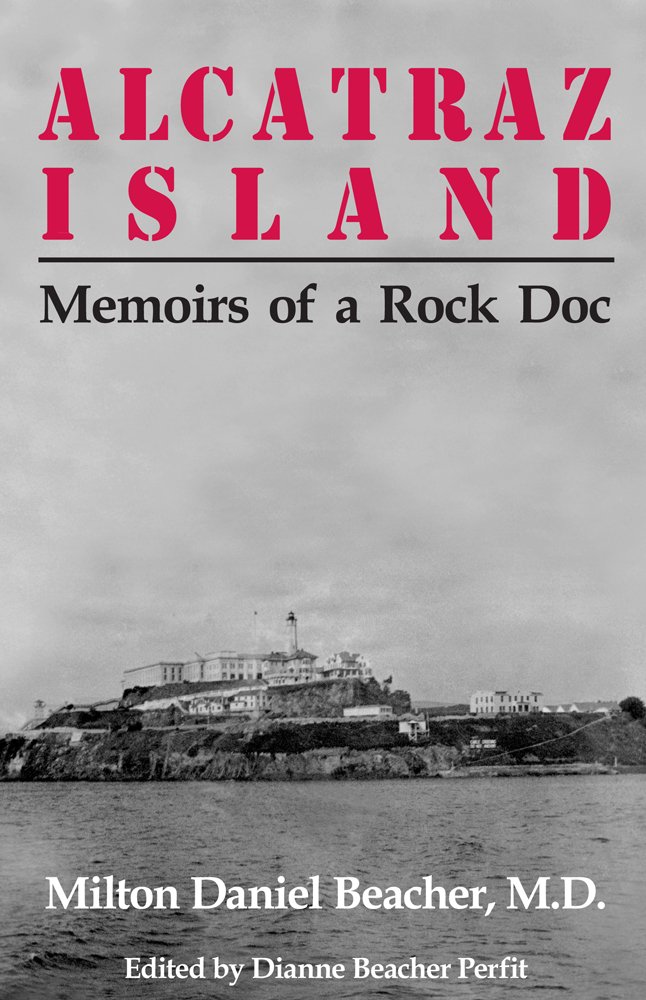



"Alcatraz Island: Memoirs of a Rock Doc" vividly chronicles the experiences of Milton Daniel Beacher, M.D., an Alcatraz medical officer from 1937-1938. Based on his original journal entries, Beacher’s memoir presents a compelling behind-the-bars depiction of life on the Rock for prisoners like Al Capone, "Machine Gun" Kelly, and Alvin Karpis. It also describes the conditions for the families that lived there, including the doctor and his wife, details of a long prison strike, the Cole/Roe escape, an attempted mass break, 18 original photographs, and a little history. Befriended by some prisoners, their first-person narratives and original poetry are memorialized. Visit www.alcatrazdoc.com for excerpts and reviews. "Readers will find themselves behind the scenes in a manner that few other texts permit . . . those interested in correctional history would do well to spend a few evenings perusing its pages." Corrections Today "A vivid, gripping book, written in gut-wrenching descriptive language . . ." The Midwest Book Review "Great addition to our library and to our bookstore." Golden Gate National Recreation Area "Rare historical treasure. Readers will inarguably "see and hear" the prisoners yammering from 1937, too. Eerie." Coral Gables Gazette "A story of the harsh life on the Rock, filled with suicides, a prisoner's strike, and a successful escape." bookviews.com "True masterpiece . . . brought the history of Alcatraz back to life . . . great tribute to your father and his memory." Michael Esslinger, Author, Letters from Alcatraz Now in its second printing, this slice of history has enhanced photographs and reviewers comments. "Readers will find themselves behind the scenes in a manner that few other texts permit . . . those interested in correctional history would do well to spend a few evenings perusing its pages.¨ Corrections Today "A vivid, gripping book, written in gut-wrenching descriptive language . . .¨ The Midwest Book Review "Great addition to our library and to our bookstore." Golden Gate National Recreation Area "Rare historical treasure. Readers will inarguably "see and hear" the prisoners yammering from 1937, too. Eerie." Coral Gables Gazette "A story of the harsh life on the Rock, filled with suicides, a prisoner¡¦s strike, and a successful escape." bookviews.com "True masterpiece . . . brought the history of Alcatraz back to life . . . great tribute to your father and his memory." Michael Esslinger, Author Milton Daniel Beacher was born March 17, 1912 in Brooklyn, New York. He graduated from James Madison High School and earned a medical degree from George Washington University in 1936. Soon after graduation, the U.S. Public Health Service sent him to Alcatraz Island as a medical officer. He arrived on April 26, 1937 along with his bride. Dr. Beacher returned to Brooklyn in 1938 and established a family practice. Some years later, he became certified in dermatology and psychiatry. In addition to being a gifted physician, Dr. Beacher was a talented artist, woodworker, and inventor. He painted, practiced psychiatry, and created fantastic things until March 30, 1993. He is buried in Miami, Florida. "Are you the new doc?¨ the guard on the pier demanded. I stared into a pair of cold, hard eyes and quickly responded, "Yes.¨ He escorted me first to the dock office where I signed the register and then to a waiting car for a ride to the "top¨ where the fortress-like prison stood. Pointing to the straps hanging from the ceiling of the car, he suggested that I hold onto them. That was good advice. Each turn was so sharp and the hills so steep that I surely would have been thrown from my seat. It was on this ride that I first saw the prisoners. Alcatraz Island was shrouded in mist and fog that April morning in 1937. The grayness had not lifted since my arrival earlier that day in San Francisco. When the Island finally peeked through the heaviness, it appeared flat, bleak and desolate. I was entranced. A smile of expectancy came to me ¡V a feeling of adventure and excitement. At the top, Dr. George Hess, the chief medical officer, and Warden Johnston awaited me in the Administration Building. Warden Johnston informed me of the absolute necessity to refrain from talking about Alcatraz to anyone on the mainland. "We have nothing to hide,¨ he said, "but we do not wish the institution to be the subject of discussion.¨ Then they fingerprinted me and took my picture with the same apparatus that did this same thing for every prisoner on Alcatraz. Unlike a prisoner, I was not surrounded by guards and was not being watched closely. I didn't feel exactly at home with so many steel-barred doors about me. This feeling emerged again later when I visited the men in isolation and solitary confinement. A solid door opened and a guard¡¦s flashlight played about the form rolled up in the blanket on the floor. "Okay,¨ he mumbled. The door was shut. "That's Karpis,¨ the guard explained. "Somebody smacked him ou