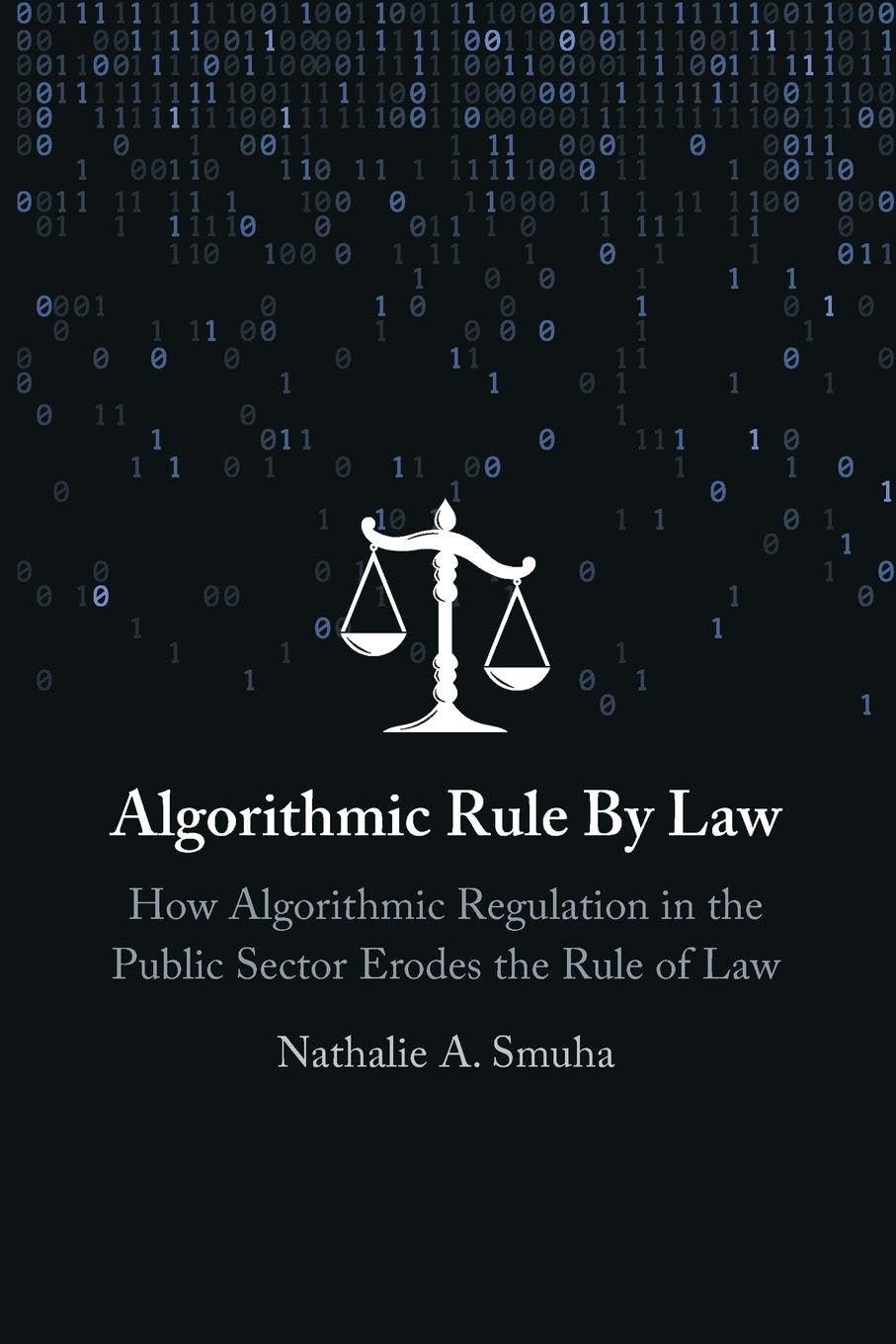
Algorithmic Rule By Law: How Algorithmic Regulation in the Public Sector Erodes the Rule of Law
$34.25
by Nathalie A. Smuha



With the promise of greater efficiency and effectiveness, public authorities have increasingly turned to algorithmic systems to regulate and govern society. In Algorithmic Rule By Law, Nathalie Smuha examines this reliance on algorithmic regulation and shows how it can erode the rule of law. Drawing on extensive research and examples, Smuha argues that outsourcing important administrative decisions to algorithmic systems undermines core principles of democracy. Smuha further demonstrates that this risk is far from hypothetical or one that can be relegated to authoritarian regimes, as many of her examples are drawn from public authorities in liberal democracies that are already making use of algorithmic regulation. Focusing on the European Union, Smuha argues that the EU's digital agenda is misaligned with its aim to protect the rule of law. Novel and timely, this book should be read by anyone interested in the intersection of law, technology, and government. This title is also available as open access on Cambridge Core. ‘Smuha’s work is a page turner on why the EU legislative toolbox must be improved - even with the AI Act as the most recent addition - to safeguard the rule of law in the age of the algorithmic leviathan, not only for experts on the intersection of the field of public law and technology regulation working towards better legal regulation, but also for experts in one of these respective fields seeking to broaden their horizon.’ O. A. (Ola) Al Khatib, Review of European Administrative Law Examines algorithmic rule by law, or how algorithmic regulation can erode the rule of law under the guise of efficiency. Nathalie A. Smuha is a legal scholar and philosopher at the KU Leuven Faculty of Law, where she examines the impact of digital technology on human rights, democracy and the rule of law. She is a member of the Leuven AI Institute and the Digital Society Institute and a member of the board of trustees of the Academy of European Law. She has held visiting positions at the University of Chicago and the University of Birmingham, and she has taken up an Emile Noël Fellowship at NYU School of Law. Previously, she worked at the European Commission and practiced law as a member of the Brussels Bar and the New York Bar. Professor Smuha is also editor of The Cambridge Handbook on the Law, Ethics and Policy of AI.