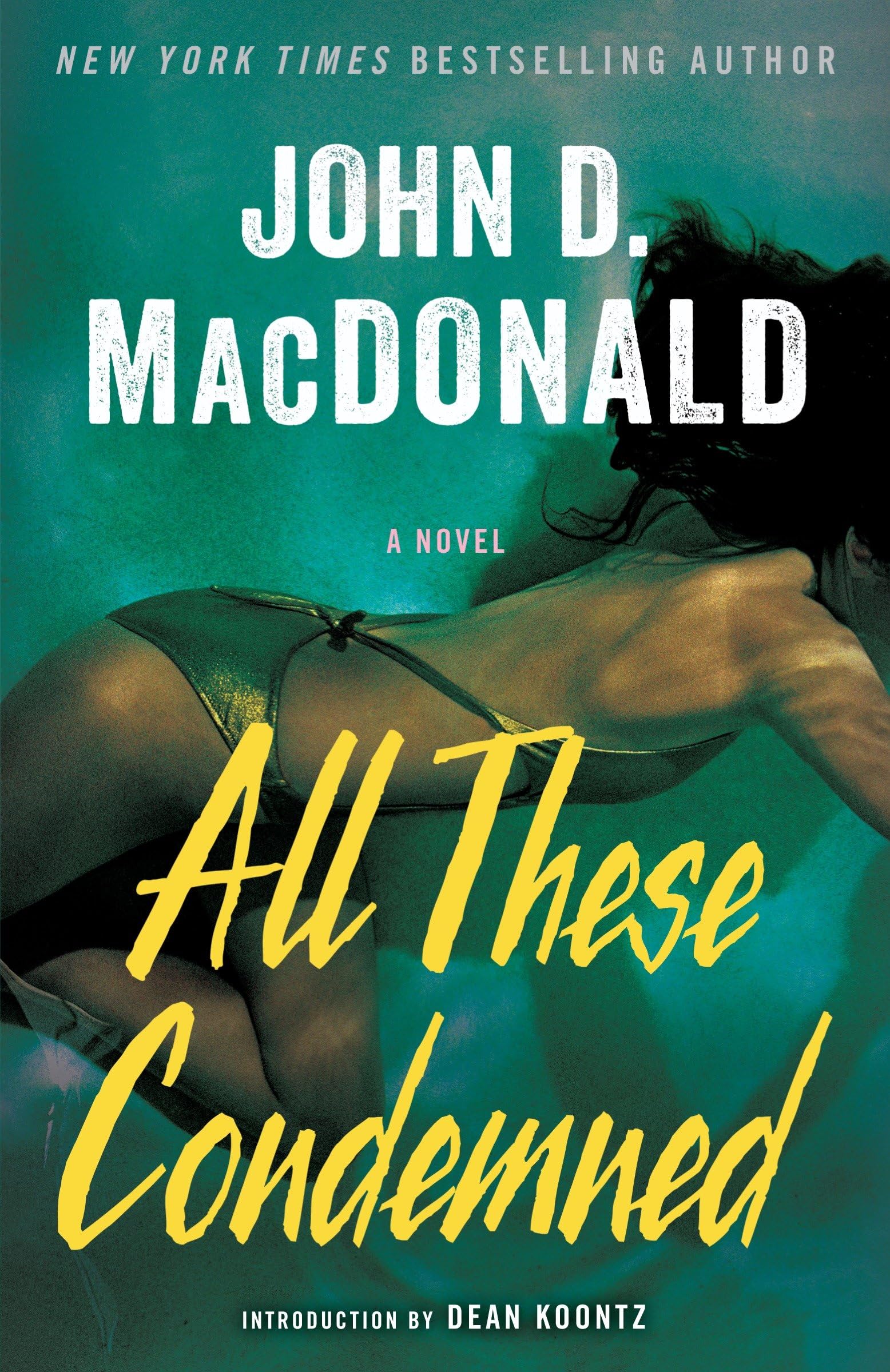



A television star wilting under the limelight. An adman with a stiff upper lip. A rising New York artist. A desperate housewife. All are victims of a cruel puppet master—and one of them is a killer. Introduction by Dean Koontz The head of a global cosmetics empire, Wilma Ferris became a self-made success by taking everything people had to give—and more. Mixing business with pleasure is her standard operating procedure. And she’s playing the same game when she invites eight of her closest friends—all of whom owe their livelihoods to Wilma—to a weekend party at her lake house. After a late-night skinny-dipping session turns into a frantic search for the missing host, it becomes apparent that one of the guests had seen enough. Wilma’s body is pulled from the cold water, but the cause of death isn’t drowning—it’s a blow to the head. Was it a crime of passion or premeditated murder? Neither would surprise any of Wilma’s guests. Each of them has a motive—or two. In the end, all will be condemned. Praise for John D. MacDonald “John D. MacDonald created a staggering quantity of wonderful books, each rich with characterization, suspense, and an almost intoxicating sense of place.” —Jonathan Kellerman “John D. MacDonald is a shining example for all of us in the field. Talk about the best.” —Mary Higgins Clark “My favorite novelist of all time.” —Dean Koontz Praise for John D. MacDonald “ The great entertainer of our age, and a mesmerizing storyteller.” —Stephen King “My favorite novelist of all time . . . All I ever wanted was to touch readers as powerfully as John D. MacDonald touched me. No price could be placed on the enormous pleasure that his books have given me. He captured the mood and the spirit of his times more accurately, more hauntingly, than any ‘literature’ writer—yet managed always to tell a thunderingly good, intensely suspenseful tale.” —Dean Koontz “To diggers a thousand years from now, the works of John D. MacDonald would be a treasure on the order of the tomb of Tutankhamen.” —Kurt Vonnegut “A master storyteller, a masterful suspense writer . . . John D. MacDonald is a shining example for all of us in the field. Talk about the best .” —Mary Higgins Clark “The consummate pro, a master storyteller and witty observer . . . John D. MacDonald created a staggering quantity of wonderful books, each rich with characterization, suspense, and an almost intoxicating sense of place.” —Jonathan Kellerman “There’s only one thing as good as reading a John D. MacDonald novel: reading it again. A writer way ahead of his time, he is the all-time master of the American mystery novel.” —John Saul John D. MacDonald was an American novelist and short-story writer. His works include the Travis McGee series and the novel The Executioners, which was adapted into the film Cape Fear . In 1962 MacDonald was named a Grand Master of the Mystery Writers of America; in 1980, he won a National Book Award. In print he delighted in smashing the bad guys, deflating the pompous, and exposing the venal. In life, he was a truly empathetic man; his friends, family, and colleagues found him to be loyal, generous, and practical. In business, he was fastidiously ethical. About being a writer, he once expressed with gleeful astonishment, “They pay me to do this! They don’t realize, I would pay them.” He spent the later part of his life in Florida with his wife and son. He died in 1986. One (Noel Hess--Afterward) When at last they found her and took her out of the water I knew I had to go down and look at her. It was more than that sweaty curiosity that surrounds the sudden death of a stranger on a city sidewalk. But there was some of that, too. In all honesty I had to admit that there was some of that, too. I had left Randy, my husband, asleep in the bedroom she had assigned to us, that smallest of the guest bedrooms. I supposed she had selected it coldly for us, with an objective consideration of our status, half guest, half employee. Randy had remained awake for a time, dithering about the future, growing increasingly more haunted, until at last emotional exhaustion had taken him, aided a bit by the sleeping pills I began to use long ago, when he first took her on as a client, even before her affairs became his exclusive concern, before she began to devour him with the dainty and absentminded finesse of a mantis. I had left him there and gone to the big living room, overlooking the lake. There was one small light in the room, in a far corner. A mammoth trooper stood at parade rest, hands locked behind him, leather creaking as he breathed with big slow lungs, looking out the window at the pattern of the lights and the boats. I wondered where the others were. I felt very tiny and feminine beside the trooper. He smelled of wool and leather and, oddly, the woods. “It must be getting chilly out there,” I said. “I could have Rosalita make some coffee.” He looked down on me. “That’s