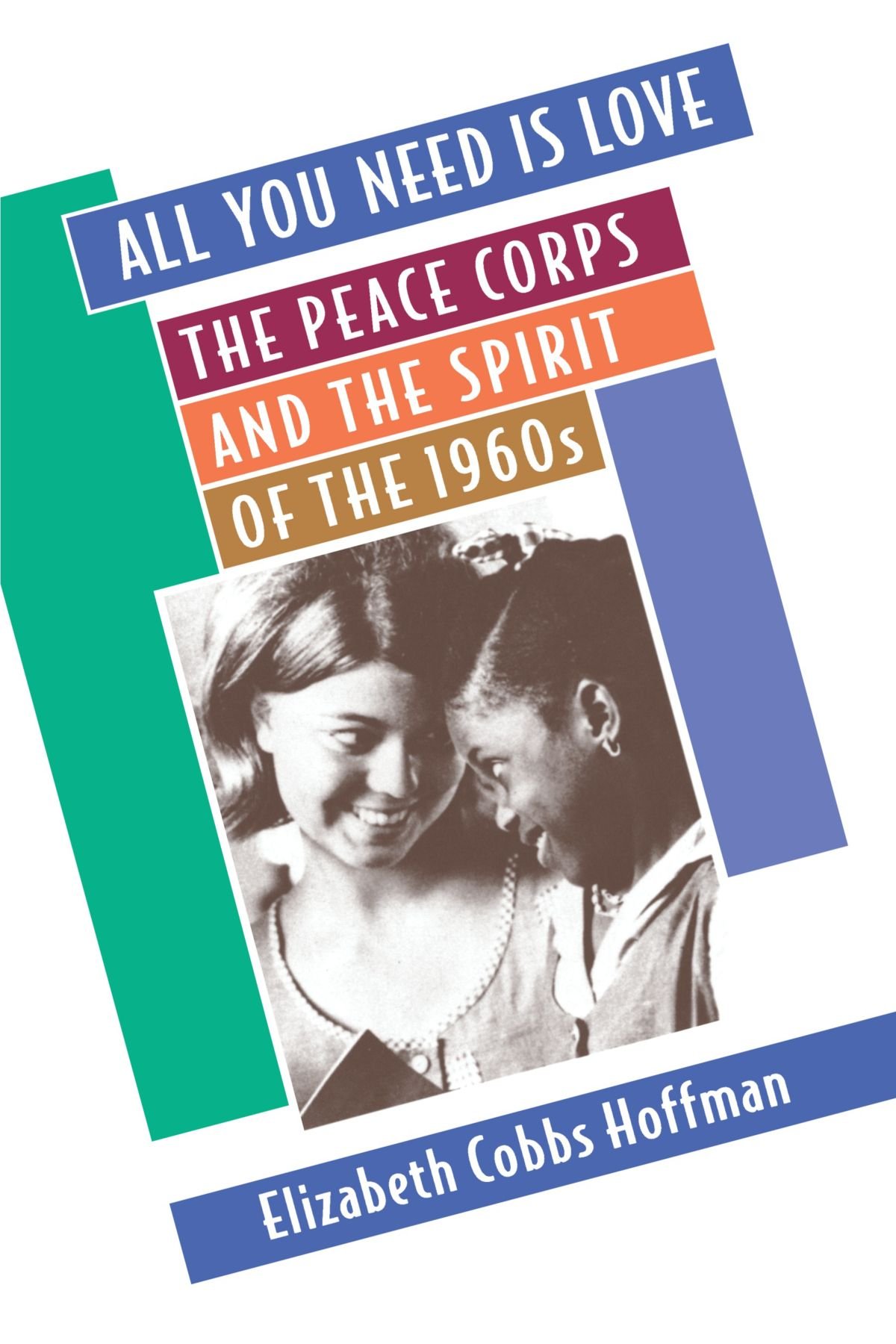
All You Need Is Love: The Peace Corps and the Spirit of the 1960s
$27.08
by Elizabeth Cobbs Hoffman



The nation was powerful and prosperous, the president was vigorous and young, and a confident generation was gathering its forces to test the New Frontier. The cold war was well under way, but if you could just, as the song went, “put a little love in your heart,” then “the world would be a better place.” The Peace Corps, conceived in the can-do spirit of the sixties, embodied America’s long pursuit of moral leadership on a global scale. Traversing four decades and three continents, this story of the Peace Corps and the people and politics behind it is a fascinating look at American idealism at work amid the hard political realities of the second half of the twentieth century. More than any other entity, the Peace Corps broached an age-old dilemma of U.S. foreign policy: how to reconcile the imperatives and temptations of power politics with the ideals of freedom and self-determination for all nations. All You Need Is Love follows the struggle to balance the tensions between these values from the Corps’ first heady days under Sargent Shriver and beyond to the questioning years of the Vietnam War, when the Peace Corps was accused of being window dressing for imperialism. It follows the Peace Corps through the years when volunteering dropped off―and finally into its renewed popularity amid the widespread conviction that the Peace Corps preserves the nation’s finest traditions. With vivid stories from returned volunteers of exotic places and daunting circumstances, this is an engrossing account of the successes and failures of this unique governmental organization, and of the geopolitics and personal convictions that underpin it. In the end, the question that is most compelling is whether the Peace Corps most helped the countries that received its volunteers, or whether its greater service was to America and its sense of national identity and mission. “In this brief but brilliant book, Elizabeth Cobbs Hoffman sets out to explain the enduring appeal of Kennedy and 'his' Peace Corps… [She] adds a welcome international perspective to a concept―and an era―that most American scholars continue to examine through their own parochial lenses… Hoffman has written a superb and―in the best sense―old-fashioned book. Although concepts such as 'national character' and 'national identity' went out of style long ago, she successfully shows how the Peace Corps embodied important strands of both. Second, Hoffman's qualified praise of the agency stands in sharp contrast to the arch, postmodern sensibility that marks so much contemporary scholarship about American politics. Finally, she writes in a lucid, jargon-free prose that will make her book accessible to any intelligent reader, not just her fellow historians. Like the Peace Corps itself, Hoffman's effort to reach the nonexpert resonates loudly with 'The Spirit of the Sixties.'” ― Jonathan Zimmerman , Journal of American History “Elizabeth Cobbs Hoffman has given us the most comprehensive, balanced history of the Peace Corps to date. Grounded in a multinational archival base and supplemented by interviews with former volunteers…her book covers the span of the Peace Corps' existence from 1961 to the 1990s… This finely crafted book demonstrates the author's sophistication in her ability to tell stories and explain developments at many levels. From the opening chapter, Hoffman deals carefully with both the ideology and the institution of the Peace Corps as each changed over time. She reveals both the construction of U.S. foreign policy by presidents and their advisers and the experiences abroad of individual volunteers. While focusing on this specifically American agency, she also clarifies the international context of 'a larger global movement of volunteers' from Britain, Canada, Australia, the Netherlands, France, Germany, the Soviet Union, and the People's Republic of China… [The 'soft' face of empire] has found one of its best and most sophisticated historians in Hoffman. Her book abounds in insights and will reward a close reading by all whose business is either the 1960s or the American relationship with the rest of the world.” ― Thomas Borstelmann , American Historical Review “A thoughtful history setting the Peace Corps in its place and time… [The] chapter [on volunteers] is the truest, most moving thing I have ever read about Peace Corps service.” ― Bruce Watson , Smithsonian Magazine “With breathtaking eloquence and a strong objective tone of analysis, Elizabeth Cobbs Hoffman has re-created the mood of the New Frontier's 'can do' ethos in the 1960s and delivered an exhaustive and up-to-date examination of successes and failures of the Peace Corps… Overall this very thoughtful and readable account of the Peace Corps' ongoing history stands as a marvelous testament to all those who have given their time, effort and skill for nearly forty years of developmental aid around the world. The Peace Corps was and is, a tool of self-interest for the United States, but