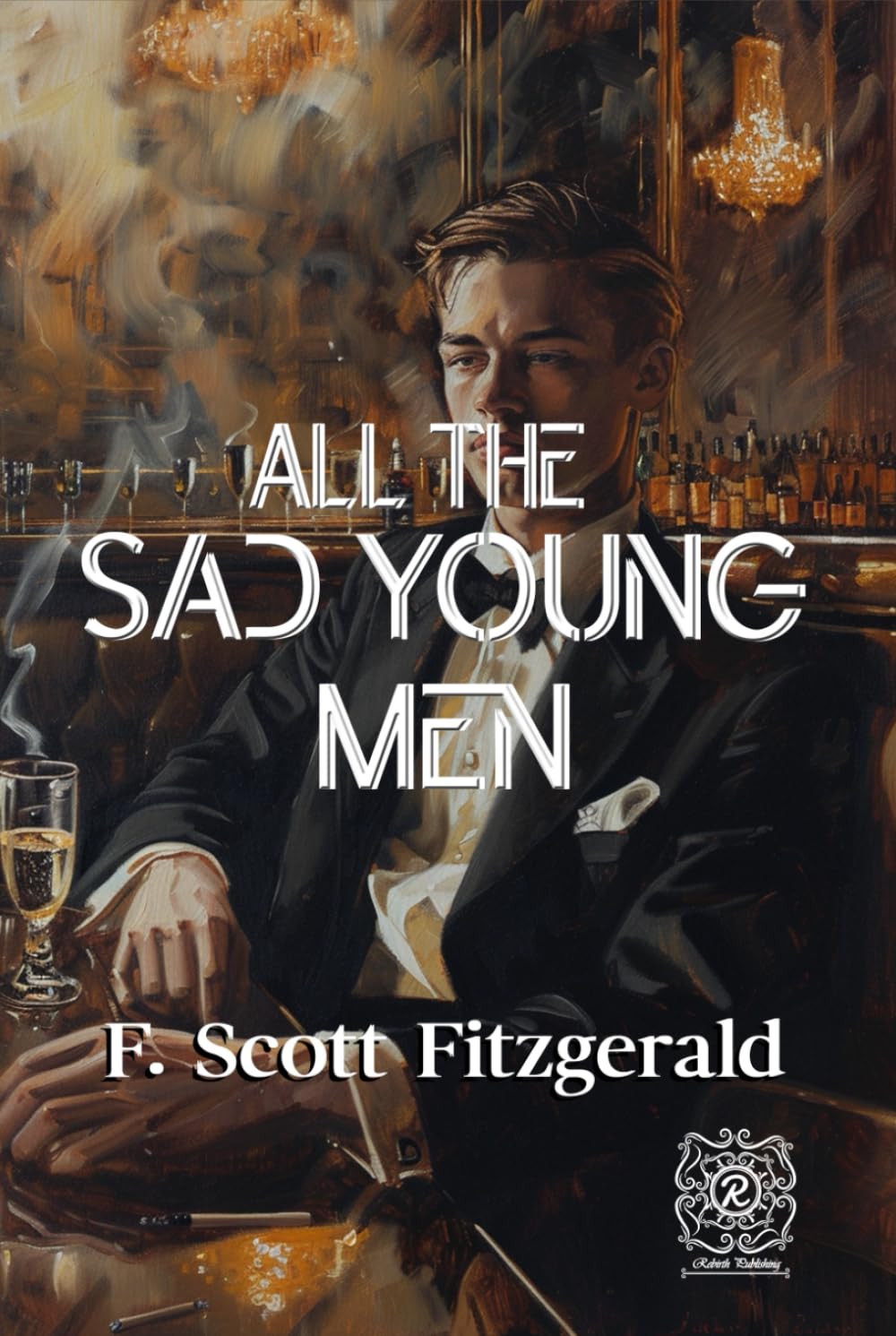
All the Sad Young Men: Rebirth Collectors' Edition | Annotated
$16.99
by F. Scott Fitzgerald



All the Sad Young Men by F. Scott Fitzgerald A Masterpiece of American Short Fiction - The Definitive Collection of Jazz Age Disillusionment Published in 1926 at the height of the Jazz Age, "All the Sad Young Men" stands as F. Scott Fitzgerald's most psychologically penetrating collection of short stories. These nine luminous tales capture a generation caught between glittering American prosperity and harsh human realities, exploring themes that remain startlingly relevant nearly a century later. The collection opens with "The Rich Boy," Fitzgerald's devastating portrait of Anson Hunter, whose privileged background becomes both blessing and curse. This masterful story establishes the collection's central preoccupation with wealth's ability to simultaneously liberate and imprison. "Winter Dreams" follows Dexter Green's pursuit of golden girl Judy Jones, transforming romantic obsession into profound meditation on the American Dream itself, examining the gap between aspiration and achievement. The remaining seven stories—including "Absolution," "The Baby Party," and "The Sensible Thing"—form a constellation exploring youth confronting disillusionment, corruption of innocence, and the price of pursuing material success. Each narrative functions as both individual artistic achievement and component of a larger examination of American character during the transformative 1920s. Fitzgerald's protagonists—predominantly young men from middle-class backgrounds seeking advancement through romance, business, or social climbing—embody the particular American optimism that believes individual effort can overcome any obstacle. Yet these stories consistently reveal such faith's limitations, as characters discover external achievements cannot transform internal realities. The "sadness" emerges not from temporary setbacks but from deeper recognition that human desire often exceeds human possibility. The collection's treatment of wealth extends beyond simple materialism criticism to examine complex psychological and social dynamics that economic inequality creates. Money functions as a character, shaping relationships, influencing moral choices, and determining individual possibilities. Love and romance operate within broader social and economic forces, as characters struggle to distinguish genuine affection from allure of status, beauty, or financial security. The technical mastery evident throughout has influenced generations of American writers. Fitzgerald's prose style—lyrical yet precise, romantic yet clear-eyed—reaches new sophistication heights. His ability to balance narrative momentum with psychological depth, create atmosphere through carefully chosen detail, and build toward revelatory moments marks him as one of the finest short story practitioners. The collection's exploration of generational anxiety, constructing meaningful identity in rapidly changing society, and psychological costs of pursuing the American Dream speaks directly to contemporary readers. These themes remain central to American cultural discourse, making the stories as relevant today as during the Roaring Twenties. "All the Sad Young Men" captures a pivotal American historical moment while exploring emotions transcending historical specificity, reminding us that fundamental human challenges remain constant even as surface manifestations change. Enhanced with Scholarly Annotations: Foreword: Explores Fitzgerald's role as architect of American melancholy, examining technical mastery and Jazz Age cultural tensions between idealism and reality. - Afterword: Analyzes the architecture of disappointment in Fitzgerald's narratives, tracing American innocence persistence and the collection's enduring literary influence.