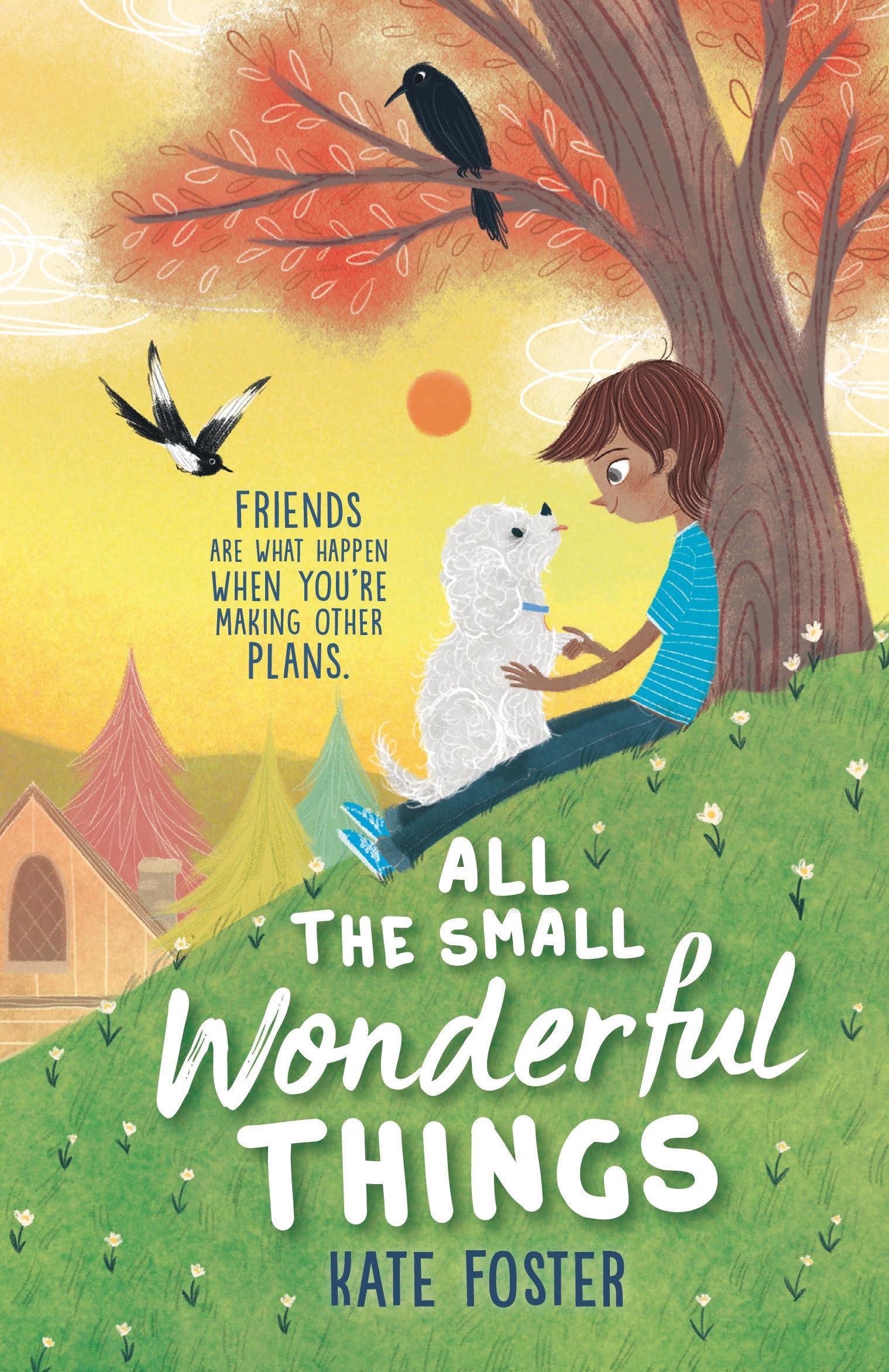



“This book will appeal to readers who love dogs and want a story about how friendship often arrives unexpectedly—and a true friend will like you for you.” — Booklist Eleven-year-old Alex knows that starting middle school will be a big change, and for an autistic person, change can be terrifying. He is sure that having a friend by his side will help. But how can he make one? Alex devises a plan to impress the kids at school by winning a trophy at the PAWS Dog Show with his trusty sidekick, Kevin the cockapoo. This should be a walk in the park, right? If only. It turns out that finding a friend is harder than Alex thought—unless, maybe, friendship is about something more than popularity. This charming story, told through Alex’s clear and honest voice, navigates relationships of all stripes between classmates, new neighbors, family, and, of course, a kid and his dog. After all, friendship isn’t one-size-fits-all—maybe it’s found in the small things where you least expect it. This charming, empathetic story centers the engaging voice of a boy who has a strong set of strategies for doing his best. —Kirkus Reviews This book will appeal to readers who love dogs and want a story about how friendship often arrives unexpectedly—and a true friend will like you for you. —Booklist Alex’s perspective as an autistic person is relayed with careful authenticity, keeping the narrative grounded in both everyday struggles to connect with others and the warmth of small, loving gestures. Foster portrays the uncomplicated support pets can provide autistic kids, sensitively representing the difficulty Alex has in reading social and emotional cues. . . . Dog-loving kids will be begging to get their paws on this one. —The Bulletin of the Center for Children's Books Foster’s effective first-person narrative gives readers insight into how the protagonist’s mind works, allowing them to observe the world the way he does. . . It is a testament to Foster’s craft in character development that readers will care so much about the earnest, good-hearted Alex and that the final, tear-jerking scene is such a surprise. —The Horn Book Kate Foster writes children’s books about friends, family, and dogs. Originally from the southeast of England, she now lives on the beautiful Gold Coast in Australia with her family and rescue dogs. Chapter One Jared’s giving me the look. I’m pretty good at recognizing the signs now. A light breeze tickles my cheeks, and I lift my chin, letting it cool my sweaty neck. Distracted, I wonder if it might be cooler inside the classrooms than outside today—probably even cooler than here in the shaded area, actually. It’s a hot day for November, though I can’t remember the weather on all the days in all the Novembers I’ve been alive. I glance away from Jared’s freckly face and his flushed, pink cheeks and concentrate harder on my mouth and my voice, on finding the right words to tell him about how far I got on Tunnels of Disaster and Doom Map Five and the forty million new Orbsicles I won last night, but I can’t stop my eyes from moving back up to him. He’s looking over my shoulder at the kids playing on the field, and his feet and hands are shifting and fidgeting. This all tells me he doesn’t want to be standing with me anymore and that his ears aren’t listening to what I’m saying. It’s the same look most people get when I’m telling them about OrbsWorld. But I absolutely have to finish telling Jared about Tunnels of Disaster and Doom Map Five. OrbsWorld is my favorite computer game ever, and last night I was messaging Jared—username rugballlove4578—and he’s already completed Map Five, and he’s the most popular boy and the best sprinter in the whole school! I decide to talk faster. “. . . and it was that ladder that I got stuck on every time for, like, two weeks, but then I figured it out and—” “Mm-hmm.” I recognize these types of response because of Mystery Game number three, and I know to watch for visual clues like body language and facial expressions because of Mystery Game number four. I learned all of this at the Be Aware classes I went to last year with Mum, Dad, and Ned. There were other families there with autistic children like me who also needed help understanding things like body language and emotions. Mum said we were lucky to live close enough that we could attend. I liked the classes, but right now, I’m not so sure they were helpful. Because the problem is, I don’t know how to make Jared interested in what I’m saying, so I just keep talking. “I had to climb the ladder halfway . . .” “Yep.” Jared takes three small steps backward, wiping his hands on his shorts. “. . . and then hop onto the platform when the ants—” “Oh yeah.” He adjusts his watch. “Um . . .” My brain has stopped working and the right words aren’t coming. “When, when the ants charge down the wall and, um, then I—” “Okay, good job for doing it, Alex. I gotta go.” Jared runs off, legs