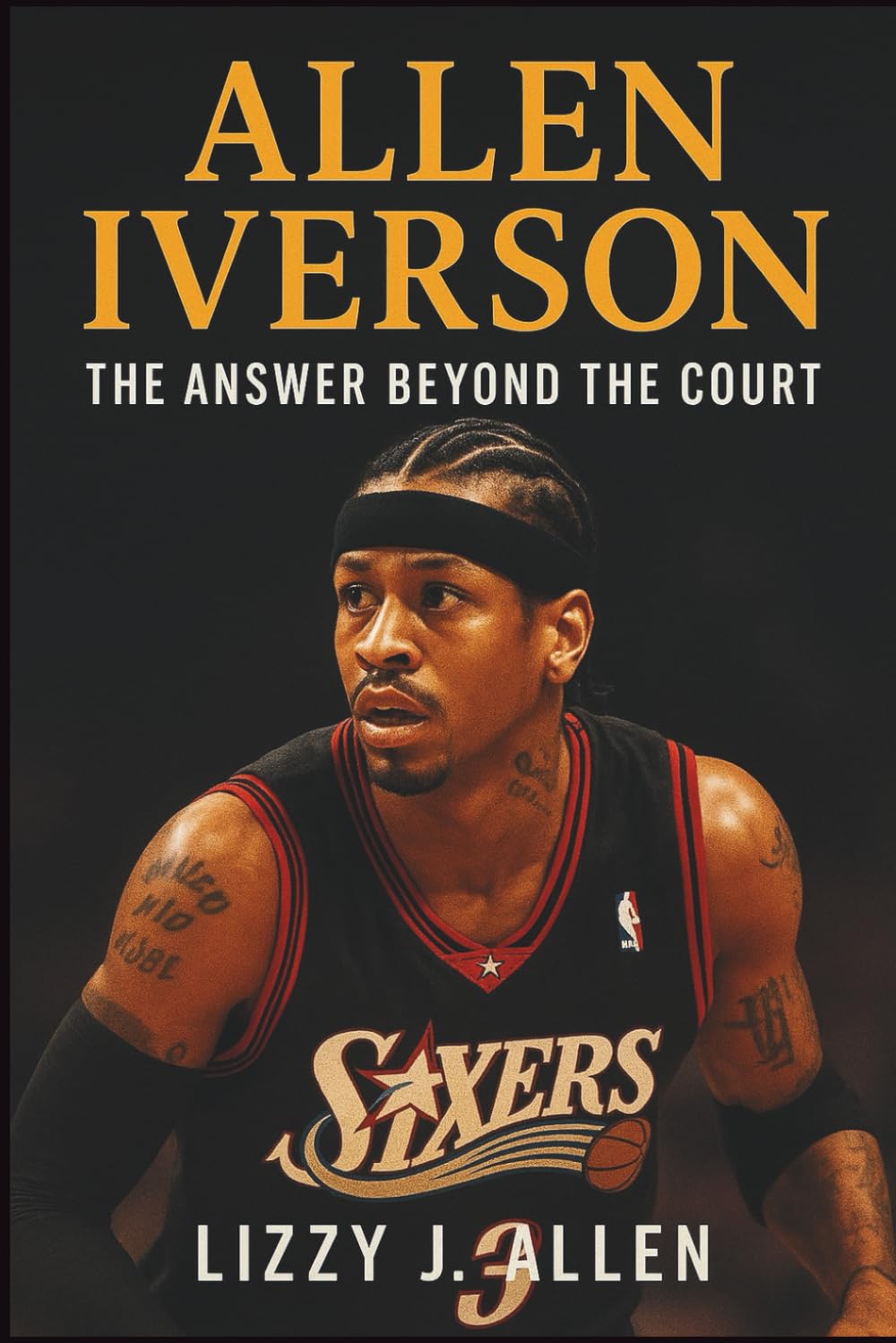



More Than a Basketball Player On June 26, 1996, at the Continental Airlines Arena in East Rutherford, New Jersey, the National Basketball Association held its annual draft ceremony. It was supposed to be just another night of young prospects shaking hands with Commissioner David Stern, donning oversized team caps, and beginning their professional journeys. But when Allen Ezail Iverson walked across that stage, cornrows freshly braided, diamond studs glinting in his ears, baggy suit hanging off his slight 165-pound frame, something shifted in the very foundation of American sports culture. The Philadelphia 76ers had just selected him with the first overall pick, but what they really drafted was a revolution they weren't prepared to handle. Iverson didn't look like the NBA's carefully cultivated image of professionalism. He didn't sound like it either. He looked like the kids in the streets of Philadelphia, Detroit, Oakland, and Atlanta. He looked like hip-hop. He looked dangerous to some, authentic to others, and absolutely unavoidable to everyone. This moment represented more than the beginning of a Hall of Fame career. It was a cultural earthquake whose tremors would be felt for decades, fundamentally altering the relationship between sports, race, commerce, and identity in America. Allen Iverson didn't just play basketball, he forced America to confront what it really thought about young Black men, about authenticity versus respectability, about who gets to define success and on whose terms. To write a book about Allen Iverson that focuses primarily on his basketball statistics would be to miss the story entirely. Yes, he was an eleven-time All-Star, a four-time scoring champion, and the 2001 NBA Most Valuable Player. Yes, he averaged 26.7 points per game over his career, made the Hall of Fame, and had moments of athletic brilliance that defy description. These facts matter, but they are footnotes to a much larger narrative. Iverson's true significance lies in what he represented off the court, in the conversations he forced, in the doors he kicked open, and in the price he paid for refusing to walk through them on anyone's terms but his own. His story is inseparable from the evolution of hip-hop from underground art form to dominant cultural force. It is inseparable from America's ongoing struggle with race, from the corporatization of rebellion, from the collision between authenticity and commercialism. When we look at today's NBA, where players freely express themselves through fashion, music, and social media; where tattoos cover nearly every player's body; where cornrows, durags, and streetwear are not just accepted but celebrated, we are looking at the world Allen Iverson fought to create. But we often forget that he fought that battle largely alone, absorbing criticism, enduring punishment, and sacrificing opportunities because he believed that being true to himself mattered more than being palatable to others.