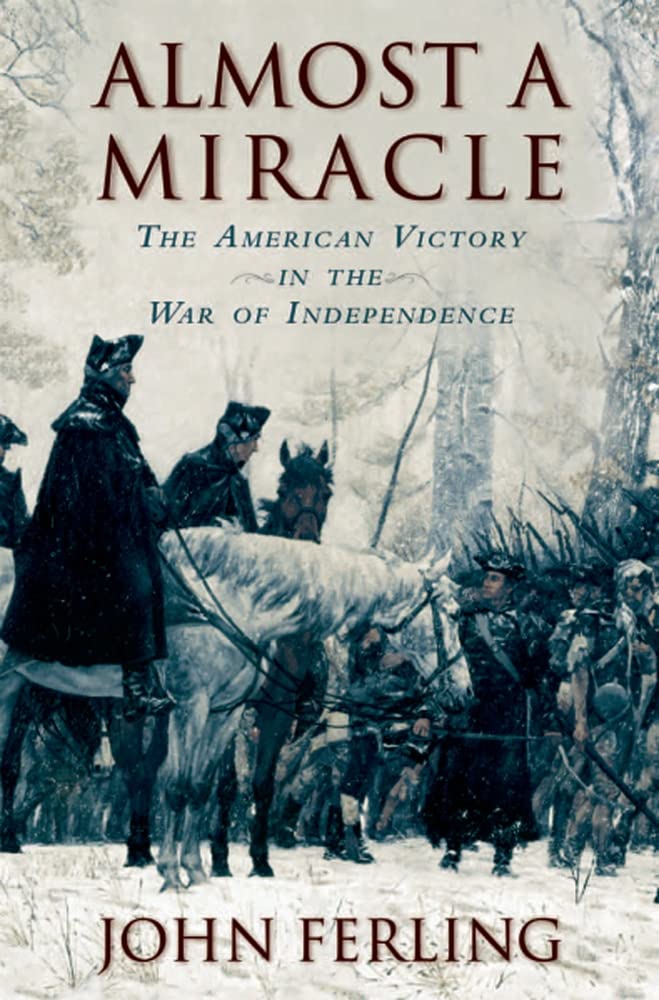



In this gripping chronicle of America's struggle for independence, award-winning historian John Ferling transports readers to the grim realities of that war, capturing an eight-year conflict filled with heroism, suffering, cowardice, betrayal, and fierce dedication. As Ferling demonstrates, it was a war that America came much closer to losing than is now usually remembered. General George Washington put it best when he said that the American victory was "little short of a standing miracle." Almost a Miracle offers an illuminating portrait of America's triumph, offering vivid descriptions of all the major engagements, from the first shots fired on Lexington Green to the surrender of General Cornwallis at Yorktown, revealing how these battles often hinged on intangibles such as leadership under fire, heroism, good fortune, blunders, tenacity, and surprise. The author paints sharp-eyed portraits of the key figures in the war, including General Washington and other American officers and civilian leaders. Some do not always measure up to their iconic reputations, including Washington himself. Others, such as the quirky, acerbic Charles Lee, are seen in a much better light than usual. The book also examines the many faceless men who soldiered, often for years on end, braving untold dangers and enduring abounding miseries. The author explains why they served and sacrificed, and sees them as the forgotten heroes who won American independence. Ferling's narrative is also filled with compassion for the men who comprised the British army and who, like their American counterparts, struggled and died at an astonishing rate in this harsh war. Nor does Ferling ignore the naval war, describing dangerous patrols and grand and dazzling naval actions. Finally, Almost a Miracle takes readers inside the legislative chambers and plush offices of diplomats to reveal countless decisions that altered the course of this war. The story that unfolds is at times a tale of folly, at times one of appalling misinformation and confusion, and now and then one of insightful and dauntless statesmanship. Ferling, a history professor, is the author of nine books on the American Revolution and early American wars. In his new book, he posits that the War of Independence was so vast that hardly anyone living east of the Appalachian Mountains was untouched. Many civilians were killed, including Indians and the residents of some coastal towns, both of whom were deliberately targeted, and countless others fell victim to diseases that soldiers on both sides spread unwittingly. He points out that his book seeks to explain why America won the war and why the British, despite their many advantages, lost it. One of the book's many well-developed themes is that the war came much closer to ending short of a great American victory than many now realize. It also looks at how wars were waged in the eighteenth century and explores how soldiers and civilians experienced the war. Ferling admits that he came to see both more flaws and greater virtues in Washington's leadership, that he gained a deeper appreciation of General Nathanael Greene, and that he saw General Charles Lee as a tragic figure. George Cohen Copyright © American Library Association. All rights reserved "Ferling's narrative purpose dominates the structure of the book, but he artfully manages to do more than merely retell the events of the war."--Wayne Lee, The Journal of Southern History "Arguably the best, and certainly one of the most stimulating, single-volume histories of the American Revolution.Exhaustively researched and clearly written..."-- Publishers Weekly Starred Review "Comprehensive and engaging...Grand stuff and sweeping themes...Ferling is particularly strong in recreating the relentless misery of the war in Georgia and the Carolinas, an essential theater that is overlooked in many popular recountings."-- Washington Post Book World "In his richly detailed battle-by-battle account of the war, Ferling succeeds where other military histories fail by providing helpful background for those who don't know their flanks from their feints. He also brings the military leaders to life, exploring their backgrounds, their dispositions, their willingness to take risks."-- Christian Science Monitor "Monographs on the military history of the American Revolution are beyond count, but Ferling (emer., Univ. of West Georgia) has put together new and old materials in a compelling way...Upon finishing the book, readers will understand how true the title is. George Washington's flaws, the intricacies of congressional relations with the army and navy, the tactics of guerilla warfare, and the horrors of the battlefield--all are presented in a readable and academically sound manner. The vignette and brushstroke fit together flawlessly. General readers and specialists alike will applaud this work. Highly recommended."-- CHOICE "Rich, detailed, and sound."-- The Weekly Standard "John Ferling i