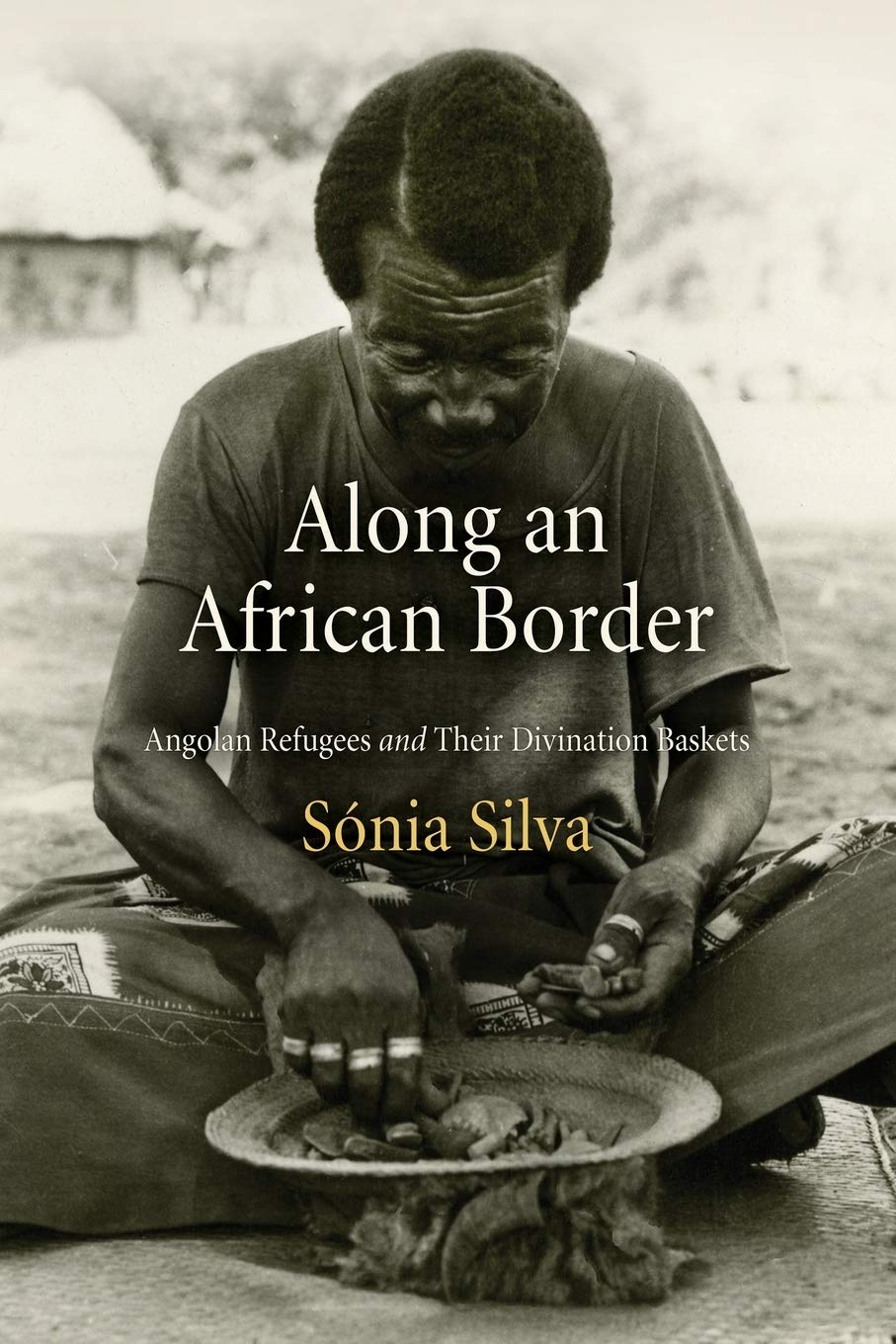
Along an African Border: Angolan Refugees and Their Divination Baskets (Contemporary Ethnography)
$29.95
by Sonia Silva



The divination baskets of south Central Africa are woven for a specific purpose. The baskets, known as lipele , contain sixty or so small articles, from seeds, claws, and minuscule horns to wooden carvings. Each article has its own name and symbolic meaning, and collectively they are known as jipelo . For the Luvale and related peoples, the lipele is more than a container of souvenirs; it is a tool, a source of crucial information from the ancestral past and advice for the future. In Along an African Border , anthropologist Sónia Silva examines how Angolan refugees living in Zambia use these divination baskets to cope with daily life in a new land. Silva documents the special processes involved in weaving the baskets and transforming them into oracles. She speaks with diviners who make their living interpreting lipele messages and speaks also with their knowledge-seeking clients. To the Luvale, these baskets are capable of thinking, hearing, judging, and responding. They communicate by means of jipelo articles drawn in configurations, interact with persons and other objects, punish wrongdoers, assist people in need, and, much like humans, go through a life course that is marked with an initiation ceremony and a special burial. The lipele functions in a state between object and person. Notably absent from lipele divination is any discussion or representation in the form of symbolic objects of the violence in Angola or the Luvale's relocation struggles—instead, the consultation focuses on age-old personal issues of illness, reproduction, and death. As Silva demonstrates in this sophisticated and richly illustrated ethnography, lipele help people maintain their links to kin and tradition in a world of transience and uncertainty. "Silva's close study makes a valuable addition to the growing repertoire of ethnographic accounts of divination in Africa and the peoples who continue to invoke it as a pivotal cultural institution. . . . It is a tightly woven work that parallels the craftsmanship that Silva details in her study of divinatory baskets." ― History of Religions "With great originality, [Silva] accesses the life stories of these human subjects through the material objects with which they (inter-)relate. . . . Silva provides a stimulating model for any researcher hoping to partner with individuals in their efforts to confront the myriad ways they are objectified, whether by circumstances, by the state, or by scholarship." ― Journal of Religion in Africa "In addition to a useful debate between the economics and business awareness approach, or the personification of ritual, this book contains very useful and detailed descriptions of basket divination rituals and Angolan basket weaving techniques that will be useful to the general reader and students of African studies." ― Journal of American Academy of Religion "A thought-provoking study of the dynamics of divination in a refugee population seeking stability in a disrupted world through an ancient and effective 'way of knowing.' Using the frame of a divination basket's life history from birth to adulthood, Silva provides a rich contextual study of the various paths to understanding presented by the core cultural institution of divination: material culture and art, economic theory, gender relations, the nature of knowledge, ethnography, jurisprudence, and personhood." ― Philip M. Peek, Drew University Sonia Silva teaches anthropology at Skidmore College. Introduction A lipele is a basket that contains sixty or so small articles, from seeds, claws, and minuscule horns to coins and wooden carvings. These articles have individual names and symbolic meanings; collectively, they are known as jipelo . People in northwest Zambia will tell you that a lipele is first and foremost a material object, a chuma , much like a food basket, a hammer, a stool, or a house. Yet they will also say that the lipele is an extraordinary object. A lipele , it is said, is capable of thinking, hearing, judging, and responding; it communicates by means of jipelo articles drawn in configurations, punishes wrongdoers, assists people in need, and, much like humans, goes through a life course. This is not to suggest that the lipele is seen as a human person and self, a mutu . In my two years of fieldwork in Chavuma, a district of northwest Zambia located along the Angolan border, no one showed interest in such ontological quandaries, but it took little time and research to realize that the lipele lacks at least one basic human attribute: a human body ( mujimba wamutu ). What, then, is the lipele ? What kind of entity is this, which is and is not a thing and is and is not a person? The Fetish in "Fetish" The idea of fetish comes to mind, but the term is loaded with prejudice. Fetish derives from fetisso , a Pidgin word that emerged in the mercantile, multicultural context of the Guinea Coast in the sixteenth and seventeenth centuries (Pietz 1985,