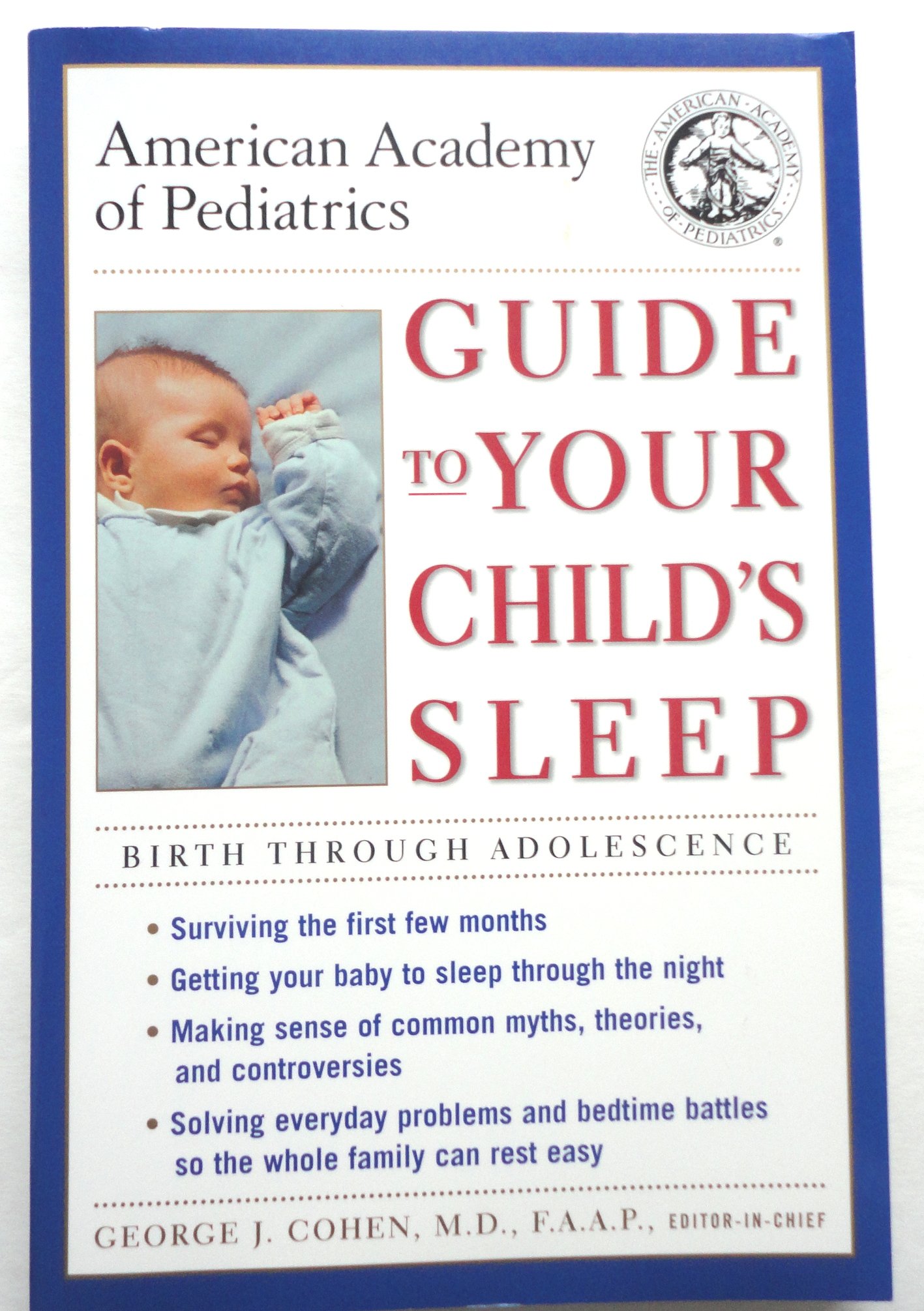
American Academy of Pediatrics Guide to Your Child's Sleep: Birth Through Adolescence
$19.29
by American Academy Of Pediatrics



The foremost medical authority on children's health, the American Academy of Pediatrics, has collected in these pages the best advice on getting newborns, toddlers, and school-age children to sleep. Packed with practical tips, this guide offers invaluable information, answers questions from parents, and provides reassuring ad-vice for preventing SIDS, getting your baby to sleep through the night, and solving sleep-wake problems. Above all, the Academy weighs in on the controversies over the most popular child-sleep advice--by evaluating the pros and cons of these conflicting theories--enabling parents to make the best decisions for their families. Here, in a compact and accessible package, is information to ensure that even the most bleary-eyed parents and their children get a good night's sleep. Everything you want to know about night terrors, midnight ramblers, larks and owls, and snoring in children can be found between the pages of this handy guide from the American Academy of Pediatrics. Representing a consensus of its 55,000 members, it offers reassurance to parents of newborns and young children with explanations of normal sleep patterns and common problems such as night waking and monsters under the bed. The guide emphasizes the importance of bedtime rituals and good sleep hygiene, physical problems that may affect sleep quality, and differences in temperament and developmental stages. Controversies such as the family bed vs. cribs for newborns and whetherAor for how longAto allow a baby to cry at bedtime are also addressed. Though this is written largely for parents of infants and young children, it does touch upon the sleep problems of school-age children and adolescents: if you have to pry your teen out of bed with a crowbar in the morning, this book will tell you why and what can be done about it. A list of sleep centers is appended. Recommended for public libraries and parenting/consumer health collections.AAnne C. Tomlin, Auburn Memorial Hosp. Lib., NY Copyright 1999 Reed Business Information, Inc. The foremost medical authority on children's health, the American Academy of Pediatrics, has collected in these pages the best advice on getting newborns, toddlers, and school-age children to sleep. Packed with practical tips, this guide offers invaluable information, answers questions from parents, and provides reassuring ad-vice for preventing SIDS, getting your baby to sleep through the night, and solving sleep-wake problems. Above all, the Academy weighs in on the controversies over the most popular child-sleep advice--by evaluating the pros and cons of these conflicting theories--enabling parents to make the best decisions for their families. Here, in a compact and accessible package, is information to ensure that even the most bleary-eyed parents and their children get a good night's sleep. George J. Cohen, M.D., F.A.A.P. , is attending pediatrician at Children's National Medical Center and a professor of pediatrics in Washington, D.C. The American Academy of Pediatrics is an organization of more than 55,000 primary-care pediatricians, pediatric medical subspecialists, and pediatric surgical specialists dedicated to the health, safety, and well-being of infants, children, adolescents, and young adults. Previous AAP books include the Guide to Your Child's Nutrition and Guide to Your Child's Symptoms. Avoiding Bedtime Battles So the Whole Family Sleeps Well Sooner or later, almost every parent must deal with a child's sleeptime problems. In early infancy, the first task is to help your baby learn to sleep longer at night and stay awake for increasingly longer periods during the daytime. A few months on, separation anxiety makes its first appearance. During this phase, which may come and go for at least a year and possibly much longer, parents have to persuade their child over and over again that they're around to protect him, that it's safe to go to sleep, that "Good night" doesn't mean "Good-bye forever!" Other issues crop up throughout childhood. Each one is different, just as each child is unique. And yet the problems fall into predictable patterns, such as bedtime resistance, nighttime fears that keep a child sleepless, the midnight rambler who roams the house, the child who insists she can only sleep in her parents' bed. As each new problem arises, parents not only implore, "How can we get our child to sleep?" but also wonder, "When will we ever get a night's sleep?" While sleep disturbances are common in childhood, they shouldn't be ignored. One study of 3-year-olds receiving treatment for sleep problems found that 84 percent of the children had had their problems since infancy. Another study showed that college students with sleep troubles had had familiar difficulties since early childhood. Unlike some minor behavioral issues, sleep problems usually don't just go away if you ignore them. Troubles with sleep can dog youngsters throughout the school years, causing d