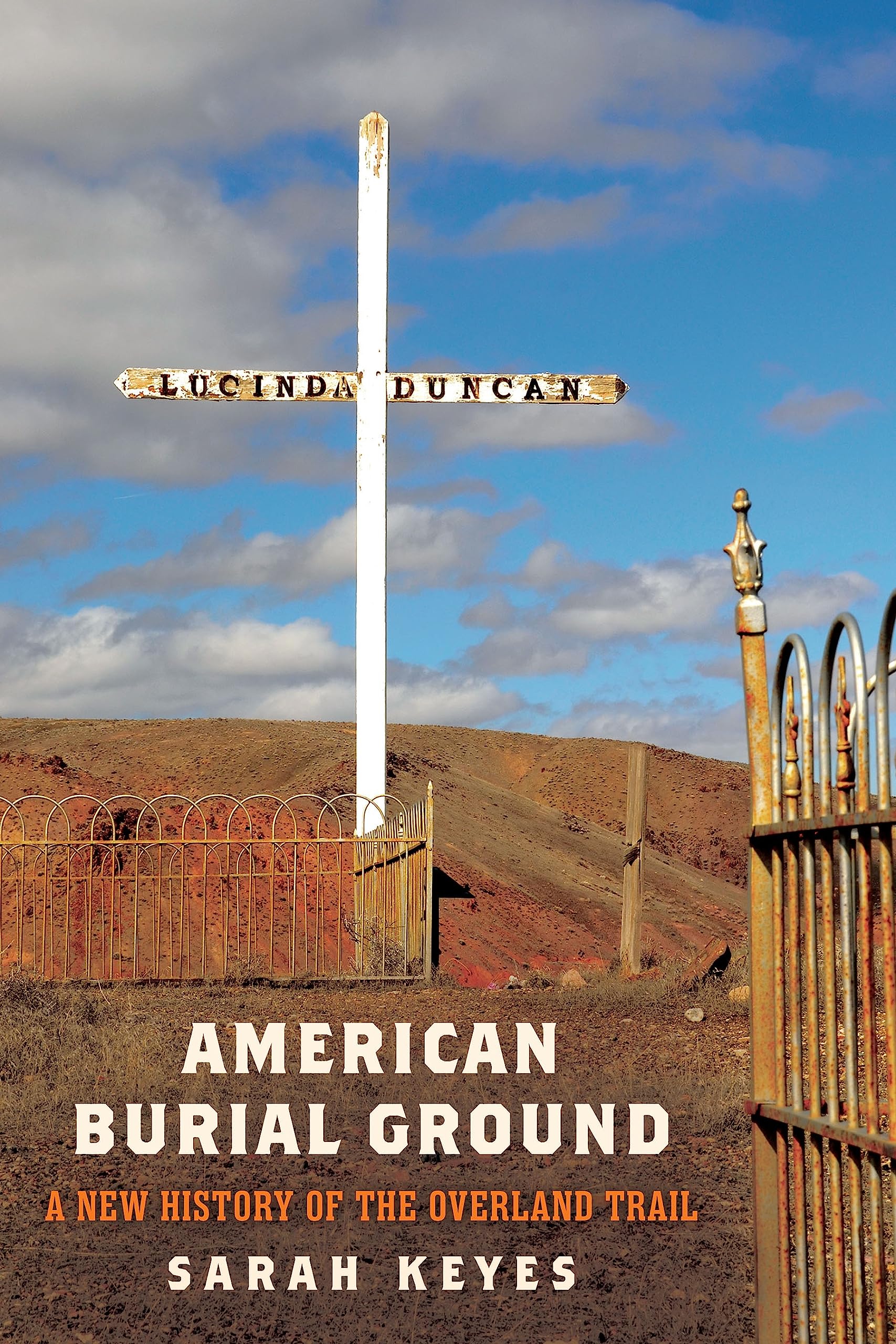
American Burial Ground: A New History of the Overland Trail (America in the Nineteenth Century)
$29.95
by Sarah Keyes



In popular mythology, the Overland Trail is typically a triumphant tale, with plucky easterners crossing the Plains in caravans of covered wagons. But not everyone reached Oregon and California. Some 6,600 migrants perished along the way and were buried where they fell, often on Indigenous land. As historian Sarah Keyes illuminates, their graves ultimately became the seeds of U.S. expansion. By the 1850s, cholera epidemics, ordinary diseases, and violence had remade the Trail into an American burial ground that imbued migrant deaths with symbolic power. In subsequent decades, U.S. officials and citizens leveraged Trail graves to claim Native ground. Meanwhile, Indigenous peoples pointed to their own sacred burial grounds to dispute these same claims and maintain their land. These efforts built on anti-removal campaigns of the 1820s and 30s, which had established the link between death and territorial claims on which the significance of the Overland Trail came to rest. In placing death at the center of the history of the Overland Trail, American Burial Ground offers a sweeping and long overdue reinterpretation of this historic touchstone. In this telling, westward migration was a harrowing journey weighed down by the demands of caring for the sick and dying. From a tale of triumph comes one of struggle, defined as much by Indigenous peoples’ actions as it was by white expansion. And, finally, from a migration to the Pacific emerges instead a trail of graves. Graves that ultimately undergirded Native dispossession. "No future work on the Overland Trail should ignore this book. Like the graves―both white and Native― that play so important a role here, this book is now a marker on the historiographical landscape." ― Overland Journal " American Burial Ground is a fascinating look at both U.S. and Native American attitudes and practices involving use of place. . . . Keyes’s extensive use of Native examples well into the twenty-first century provides a multifaceted approach to U.S. history that will benefit scholars of western history and Native American history for years to come." ― Journal of American History "Using travel narratives, memoirs, ethnohistory, and anthropology, Keyes provides an important corrective to histories of settler colonialism that overemphasize the state. . . . American Burial Ground is a compelling history of the Overland Trails that weaves together environmental, intellectual, and cultural history in a concise narrative. . . . Keyes’s impressive research and broad topical coverage will interest any scholar of the nineteenth century." ― The Journal of the Civil War Era "Historiographically speaking, this is the first major work on the overland trails in nearly forty years, as Keyes notes in her introduction. In this fact alone, it is a significant contribution. It is also, however, a compelling read, thanks to the fact that Keyes is an excellent writer, making good use of the exceptionally rich, evocative, and at times quite graphic source material about the trails and their aftermath. As she does this, she deftly manages to walk the line between critical scholarly analysis of aggressive settler colonialism and basic compassion for people - Indigenous and emigrant alike - caught up in such terrible circumstances. American Burial Ground will make good (if often grim) reading for scholars, students, and the broader public. It speaks to the consequences of colonialism for all those whom it touches and is a powerful accounting of the violence of being wrenched from your home - and your dead - and the struggle to find another place, and to make meaning, amid and after the tumult of the nineteenth century." ― Oregon Historical Quarterly " American Burial Ground offers a new history of the overland migration to Oregon and California, centered on the impact of death on the emigrants and its subsequent memorialization. . . . Mourning the dead may express innocent and common human sentiments, but Keyes shows that the dead of the Overland Trail became the objects of national myths that were everything but innocent or affirmative of a shared humanity. The book does important deconstruction work. The recounted myths of suffering and death were clearly central elements in the ensemble of ideologies that legitimized the settler-colonial takeover of the U.S. West." ― Pacific Historical Review "Keyes tells this new and painful story of the Overland Trail by sifting through a tremendous cache of emigrants’ personal narratives and pairing these with other forms of American culture, including depictions of the Trail in fiction, visual culture, tourist guidebooks, poetry, monuments, and film―the existence of which attests to the enduring reach of this migration in the American imagination. . . . There is just so much to admire about this work and Keyes’s ability to craft a revision of this history that is long overdue. Those interested in the history of the American West, cultural memor