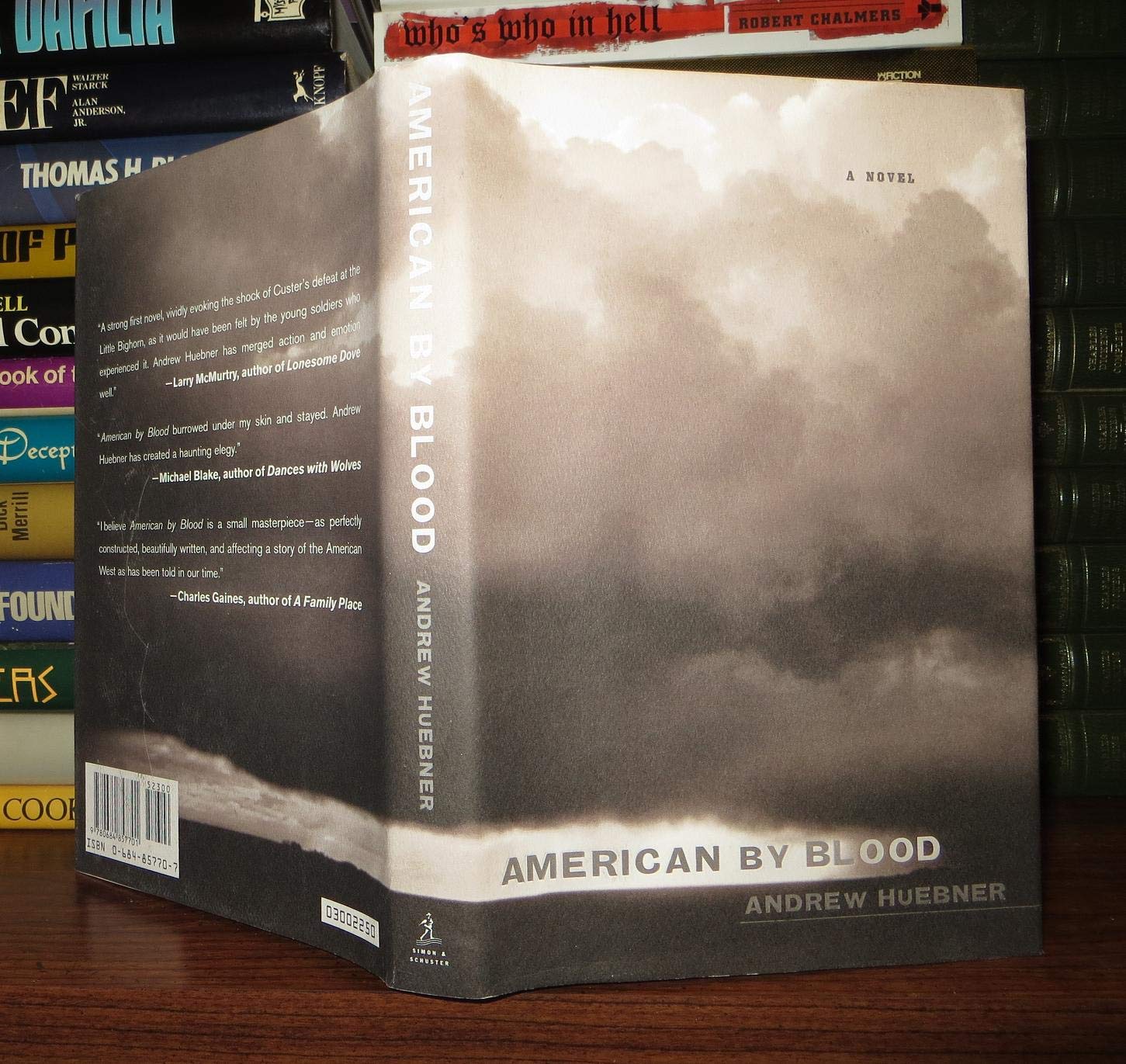



Upon arriving at Little Bighorn, three U.S. Army scouts find the bloody remains of Custer's troops and become determined to seek their revenge in their fight to clear the land of Indian tribes once and for all. Custer's Last Stand was an immense shock to white Americans who hated thinking that ragged Indians could defear the pride of the U.S. Cavalry. In this first novel, Huebner (English, CUNY) follows the story of a scout who missed the massacre by one day - from the LAst Stand to the demise of teh Nez Perce a year later. Based on the life of his great-great-grandfather, who left New Jersey for the army in 1876, Huebner provides a historically accurate accound, and his characters -who speak in a manner that catches an endereducated grit-are realistically portrayed. His wrting style is Spartan, and the book is, in the end, a relentlessly grim and merciless personal tale filled with killings, toruture, rape, and vengenace. A difficult read, it is recommended for large collections. --Robert Conroy, Warren, Copyright 2000 Reed Business Information, Inc. This is a simple story simply told and simply devastating. It is the story of American soldiers, many born somewhere else, who arrived at the Little Bighorn a day late for the battle. Instead, they had to deal with the puddles of blood, pockets of smoke, bodies and body parts left afield, and the insects and animals feasting on them. They also had to deal with an overall stench terrible enough to make seasoned troopers turn in their saddles, wipe away tears, and retch. Huebner's characters are all real, including his own great-great-grandfather, August, killed in one of the lesser battles that followed Sitting Bull's slaughter of Custer's army. Key characters also include James Bradley, who was first to discover the massacre, and a humble man named William Gentle who killed Crazy Horse. The author has opted to omit quotation marks and favors short paragraphs and very short sentences. The resulting style makes for some of the purist prose ever found in a historical novel, and it intensifies the drama in the process. Huebner does for the Little Bighorn what Thomas Wolfe, in his short story "Chickamauga," did for the carnage at that bloodiest of Civil War battles--and that takes some doing. Budd Arthur Charles Gaines author of A Family Place I believe American by Blood is a small masterpiece -- as perfectly constructed, beautifully written, and affecting a story of the American West as has been told in our time. -- Review The actual battles at the historical core of Huebner's book are inherently moving... -- The New York Times Book Review , Steven Varni Andrew Huebner was born in New Jersey, grew up in North Carolina, and now lives in New York City. This is his first novel. Chapter One They rode up over a trail to a rise with the three scouts in the lead. As they passed through a patch of juniper trees, the sun turned hot and the very air around them, with the sawing legs of the hoppers and the twits of the birds, seemed to hum with heat. Before them was a valley now with dew burning light on the spots of dying, browned grass. Tall sprigs of Queen Anne's Lace caressed the horses' legs and speckled the soldiers' boots with their sex. Coming over a rise they saw the white things on the hills. Bradley's horse snorted, hesitating, sniffing the air. He kicked it on ahead. Hah, he called to it. No one else spoke. Not even Shit, what in the hell, or Goddamn. Maybe it was the smell, or the flies, or the wild dogs. The dogs were everywhere, they darted under the legs of their horses. They yelped wildly at their horses and gnawed brazenly at their boots. The soldiers kicked at them and hollered. The dogs had blood on their yaps. Their eyes rolled back white in their heads. There were so many flies. A fog of them attacked the Private called Gentle, his eyes, nose, in his mouth when he yelled and cursed, kicked his horse's flank and rode through it. The smell was like a film that permeated their souls through the pores of their skin. They drew their hankies and bandannas from their saddlebags and tied them around their noses like bandits. Their necks pricked and their backs tingled. From the south a crow cawed, then another. The big, black birds flapped overhead, close enough to Gentle that he could hear their wings. He ducked as they passed. When he looked around, no one was watching. The Lieutenant's lead point, Private August Huebner, was the first of them to spot the dead. As he rode alongside the river he saw a horse and looked that way. Its labored breathing sounded raw and strange, head all swelled, an empty eye-hole, leaking pus. Bradley drew his pistol and shot it. His hand shook a bit, and he had to use the other to steady. Keep your eyes open, he said. Dried blood had flowed in a path into a pond-like place, had turned the land under them black. Their horses stepped lightly on it, like they were walking now on some new surface.